
Beyond the Binary: Fundraising isn't just 'good vs bad money'
Posted on 02 Sep 2026
CATHERINE BROOKS on "Diversity, inclusion and community engagement" in Radical Moderate.
Posted on 10 Nov 2025
By Trish Prentice
DR TRISH PRENTICE on "The future of radical moderation" in Radical Moderate.
Is Australian society more deeply divided or are existing differences simply more apparent in our increasingly connected and communicative world, asks DR TRISH PRENTICE, Senior Researcher with the Scanlon Foundation Research Institute.

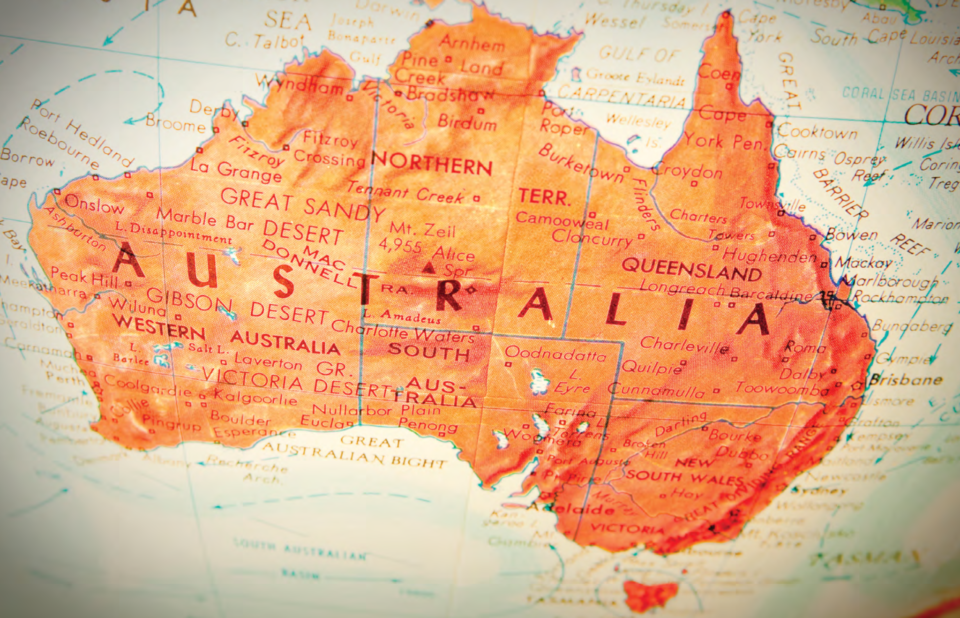
Recently, various commentators have suggested that Australia is polarised or at least greatly at risk of becoming so. Yet polarisation is a difficult phenomenon to study. How do we know when division in a society reaches an unhealthy level?
Where is the tipping point between robust disagreement and social fragmentation, and who decides when we have reached that point?
There are also different ways to measure polarisation. We can measure the extent of divergence of people’s views on a particular issue (ideological polarisation).
We can measure how people feel about others that they disagree with (affective polarisation), and we can measure people’s perceptions of polarisation – which is not actually measuring polarisation itself.
All of these factors can make determining whether Australia is polarised difficult to determine.
This study on polarisation was conducted as part of the 2024 Mapping Social Cohesion study. Drawing on 45 in-depth interviews with Australians across a range of political views, age groups and backgrounds, the study sought to understand how Australians perceive unity and division in society and how the dynamics of public conversation are shifting.
As a qualitative study, it provides a snapshot of Australians’ perceptions during a particular period in 2024. Yet it also revealed worrying trends that we should take note of.
When asked whether Australians today are more united or divided in their beliefs and opinions, a majority of participants – particularly older Australians – said "more divided." They described a sense of political and generational fragmentation, growing partisanship, and the erosion of national identity. Many highlighted the increasing prevalence of antagonism between opposing viewpoints, especially in the political spheres.
Younger Australians, however, tended to offer a more qualified view. While many acknowledged that disagreements appear more prominent today, they did not necessarily see this as a sign of deeper division. Rather, they suggested that digital platforms – especially social media – have simply created more spaces for expression. As one 18-year-old participant observed, divergent opinions are now much more visible. This raises an important distinction: is Australian society more deeply divided, or are existing differences simply more apparent in our increasingly connected and communicative world?
The interviewees identified several areas in which Australians appear sharply divided. These include immigration, First Nations peoples’ rights and the Voice to Parliament, the war in Gaza, and climate policy.
Older Australians more frequently pointed to immigration and cultural change as polarising, while younger participants highlighted the war in Gaza, foreign affairs, and taxation.
Despite these divisions, the study also revealed areas of common concern. Both younger and older participants cited the cost of living as a unifying issue. Younger Australians also spoke of shared commitments to environmental sustainability and social justice, while older Australians pointed to enduring cultural reference points – such as sport and ANZAC Day, as well as the importance of universal healthcare – as sources of cohesion.
One of the more concerning findings was a perception of entrenchment – a hardening of attitudes that many older Australians, in particular, described. Several lamented the decline of civil debate and the rise of dogmatism on both ends of the political spectrum. "There’s no exchange," said one 71-year-old interviewee. "It’s just ‘I’m right. I’m right… there’s no middle ground. There’s no compromise."
This dynamic was often accompanied by reports of partisan animosity – negative sentiment between groups or opposing sides in public debate. Over a third of older respondents said they observed growing antagonism between ideological or demographic groups. Some spoke of a generalised hostility in the public sphere, while others named specific targets of criticism – political parties, activists, or social groups.
Some individuals reported they were actively self-censoring themselves in social circles, even amongst family members or friends. Topics participants were loath to raise in conversation included gender, religion, and foreign policy, amongst others.

However, the study also found evidence of a continuing commitment to democratic discourse.
Many participants reaffirmed the importance of public discussion. They described it as central not only to the functioning of democracy but also to individual and societal growth. One participant likened debate to the deliberative processes within families: a means through which values are shaped and understanding is deepened.
Several participants provided examples of how dialogue had influenced their own views – on issues ranging from environmental policy to taxation – suggesting that people remain open to persuasion when debate is conducted respectfully and with good evidence.
Despite their awareness of rising tension and division, several individuals also expressed a sense of enduring social trust. They noted a continued feeling of community belonging and affirmed that, notwithstanding disagreements, Australians remained connected by shared experiences and civic values.
The research also highlighted the important role that institutions play in shaping public discourse. Teachers, community organisations and religious groups were widely seen as fostering unity and respectful engagement. In contrast, political parties and media organisations were more often viewed as contributing to division – either by framing issues in adversarial terms or by amplifying polarising rhetoric.
Given the observation of these concerning trends, what can be done to strengthen Australia’s social cohesion amid polarising forces?
I think there are several things we can do.
First, we must reassert the value of civic dialogue. This includes fostering environments – online and offline – where disagreement can occur without personal denigration, and where curiosity, not outrage, is rewarded. Political leaders must show moral courage in seeking consensus, even at the expense of short-term advantage. Leaders in politics, media, education, and civil society must model the kind of discourse they wish to see.
Second, we need to cultivate a shared civic identity that transcends party lines and cultural differences. The research suggests Australians still want to feel part of something larger than themselves – whether it’s through sport, service, or shared struggle.
Third, we must safeguard spaces for respectful disagreement. Universities, schools, workplaces, and community forums all have a role to play in modelling how to disagree without dehumanising the other. Supporting educators, community leaders and faith groups to convene cross-cutting conversations is a promising starting point.
Finally, we should not overlook the power of humility. As this study shows, people can and do change their minds. The willingness to change one’s mind is a democratic virtue – one that the study’s participants have shown is still present in Australian society.
Australia is not yet defined by irreconcilable division, but nor is it immune from the forces that have polarised other democracies. The research suggests that Australians are concerned about the tone and quality of public discourse but remain committed to the values that underpin it.
Maintaining cohesion in such a context will require conscious effort. It will depend on nurturing institutions that encourage dialogue rather than discord, on fostering media and digital spaces that elevate thoughtful engagement, and on the courage of individuals to remain open to others even, and especially when, they disagree.
Social cohesion is not about eliminating difference but about sustaining the relationships and values that allow a diverse society to flourish together. It remains an achievable goal – despite forces working actively against it – if we choose to pursue it.
Trish Prentice is a qualitative researcher specialising in social cohesion. She has worked across government, academia, business, and the not-for-profit sector in Australia and overseas, including in Egypt with an organisation promoting Arab-West understanding and in Geneva with a UN-affiliated human rights group. She holds degrees in Education and Law, has managed research projects in Indonesia, Singapore, Pakistan, and Australia, and joined the Scanlon Foundation Research Institute in 2020
Posted on 02 Sep 2026
CATHERINE BROOKS on "Diversity, inclusion and community engagement" in Radical Moderate.

Posted on 11 Nov 2025
I’ve seen what happens when fear of conflict wins out over taking a principled stand.
Posted on 10 Nov 2025
JOEL DEANE on "The future of radical moderation" in Radical Moderate.

Posted on 10 Nov 2025
ROD MARSH on "The future of radical moderation" in Radical Moderate.
Posted on 10 Nov 2025
DR SIMON LONGSTAFF AO on "The future of radical moderation" in Radical Moderate.

Posted on 10 Nov 2025
DAN LALOR on "The future of radical moderation" in Radical Moderate.

Posted on 10 Nov 2025
SIMON WALLER on "The future of radical moderation" in Radical Moderate.

Posted on 10 Nov 2025
KATE TORNEY OAM on "Navigating complexity & building resilience" in Radical Moderate.

Posted on 10 Nov 2025
KOS SAMARAS on "Navigating complexity & building resilience" in Radical Moderate.
Posted on 10 Nov 2025
BRETT DE HOEDT on "Advocacy and social change" in Radical Moderate.

Posted on 10 Nov 2025
JEN RILEY on "Navigating complexity & building resilience" in Radical Moderate.

Posted on 10 Nov 2025
VIOLET ROUMELIOTIS on "Diversity, inclusion and community engagement" in Radical Moderate.