
Beyond the Binary: Fundraising isn't just 'good vs bad money'
Posted on 02 Sep 2026
CATHERINE BROOKS on "Diversity, inclusion and community engagement" in Radical Moderate.
Posted on 10 Nov 2025
By Rod Marsh
ROD MARSH on "The future of radical moderation" in Radical Moderate.
There are tools, rules of engagement and a considered approach that could move Australia beyond the simplistic slogans and debate-rejecting stances of opposing groups in our society, writes ROD MARSH, independent chair, facilitator and strategic advisor.

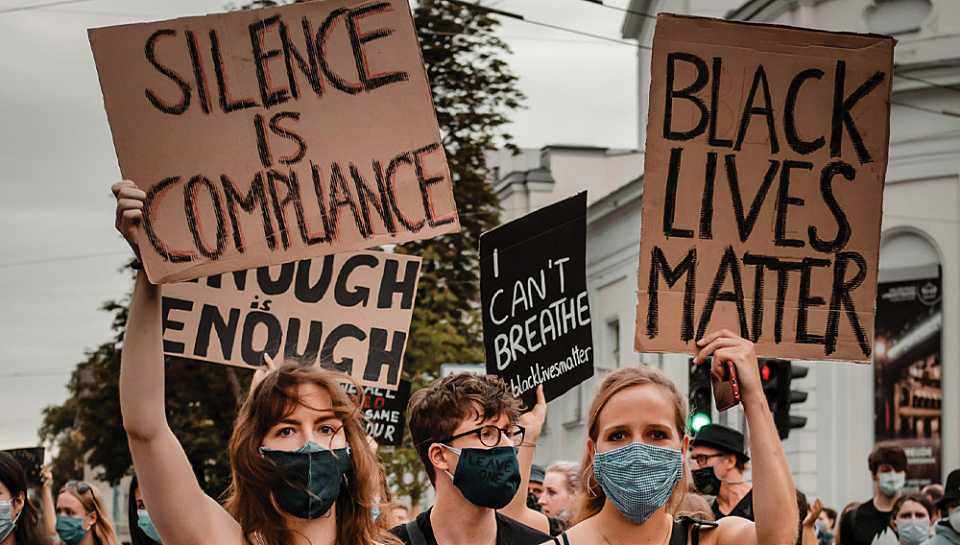
When "march for Australia" rallies were held across Australia at the end of August, the pattern was familiar: viral footage, moral certainties, zero compromise, planned rallies in response. From climate protesters who glue themselves to masterpieces to parents battling school boards over gender curricula, modern politics has confused virality with virtue. The result is a kind of secular evangelism where movements compete not on what works but on what spreads.
"Just follow the science." "Rights are non-negotiable." "Stop the boats." "No debate." The slogans differ; the cadence is identical. Australia’s Operation Sovereign Borders cut arrivals by 90% but polarised debate for a decade. Germany’s Energiewende promised a green revolution but delivered some of Europe’s highest electricity prices. These campaigns rally supporters and travel well online. They also harden attitudes, narrow the space for learning, and transform political opponents into moral enemies.
Two structural shifts explain this drift. Education has replaced income as the sharpest political fault line in rich democracies. As Thomas Piketty documents, graduates have drifted left on cultural issues while business owners lean right — his "Brahmin left" versus "merchant right."
These are the people who staff political parties, NGOs and newsrooms, shaping which arguments feel "obvious."
The media’s business model amplifies the split.
Subscriptions reward loyal, like-minded audiences; the market favours affirmation over hedging. When people see a stance as moral conviction, they become less open to compromise and counter-evidence. Moral language supercharges this mix – each side’s certainties become the other’s proof of bad faith.
The hazard is closure – when dissent becomes heresy and questions turn taboo. It arrives through the thought-terminating cliché that ends inquiry by formula. "Trans women are women" obscures the genuine tensions between trans and women’s rights explored by thinkers like Kathleen Stock, Holly Lawford-Smith or Rosa Freedman. "Always was, always will be" and "If you don’t know, vote no" – the competing mantras of Australia’s Voice referendum – flattened a complex constitutional question into incompatible moral absolutes. As climate scientist Mike Hulme notes, we need "liquid knowledge" – mobile and responsive – not brittle certainties that shatter on contact with complexity.
Against this drift stands the Radical Moderate – not a centrist splitting differences, but someone who disciplines ideology with evidence and faction with process. This is not compromise; it is institutional design. The point of liberal government is not to enforce one group’s preferences through statute and shame but to organise cooperation among people who disagree.
This stance has deep roots. Madison’s Federalist No. 10 understood that faction could not be eliminated, only channelled. The common law learns by cases rather than proclamations. Federalism creates what U.S. Supreme Court Justice Louis Brandeis called "laboratories of democracy" – many centres trying things and copying what works. Free speech and peer review are devices for organised error-correction. These institutions do not eliminate conflict; they metabolise it into progress.
The Radical Moderate updates this tradition for an age of viral politics.
Radical moderation is a procedural stance that keeps ideological mobilisation answerable to evidence, and evidence answerable to fairness and consent. This prevents disagreement from mutating into demonisation – opponents remain merely mistaken, never malevolent.
Four pillars give it spine:
Muddle through – on purpose. Charles Lindblom’s "science of muddling through" beats grand designs. The New Deal, often invoked as bold action, actually proceeded through furious experimentation – the NRA failed, Social Security endured. When Australia introduced HECS in 1989, it started with a simple income-contingent loan, then gradually refined thresholds and rates based on evidence. Now dozens of countries copy the model.
Polycentric problem-solving. Complex systems learn faster when many centres try, watch and copy. When cannabis legalisation swept America, states became laboratories – Colorado’s tax structure, Illinois’s expungement provisions, Vermont’s home-grow rules. Australia’s states provided similar experiments during COVID: Western Australia’s hard border, NSW’s attempt to "live with the virus," Victoria’s lengthy lockdowns. Each approach generated evidence others could learn from, though tribal loyalties often prevented learning.
Score resolvable claims. Philip Tetlock’s forecasting tournaments show prediction improves when you train people, make them work in diverse teams, and score outcomes as the future reveals itself. The Reserve Bank of Australia now publishes fan charts showing its confidence intervals and tracks its forecasting errors publicly, emphasising Tetlock’s point: humility and learning from errors beats ideological certainty every time.
Contain conflict, don’t suppress it. Chantal Mouffe is right: politics is ineradicably agonistic. The task is turning enemies into adversaries who compete under constraints. Taiwan’s "vTaiwan" online consultation platform brings opposed groups into structured digital deliberation on contentious issues like Uber regulation. Rules that reward persuasion and penalise bulldozing keep passion in play while preventing total war.

These principles need concrete protocols:
Split solutions from values. Every major proposal should separate "what we value" (equity, sovereignty, stewardship) from "how we’re responding" (a concrete proposal). The Voice referendum collapsed partly because it merged constitutional recognition (a value statement) with a specific representative body (an institutional solution) into one indivisible question. Splitting these two ideas into separate questions would have clarified where Australians agreed and where they differed.
Commission adversarial collaborations. Where experts disagree, make them co-design a test that both sides accept would validate or change their views. Instead, on important questions we tend to have duelling PhDs using different data to talk past each other. Adversarial collaboration is the alternative to what Daniel Kahneman calls "angry science."
Cultivate curiosity over suspicion. "[M]oral judgment is so much more common than constructive thought," Walter Lippmann wrote a century ago, "Yet in truly effective thinking the prime necessity is to liquidate judgments, regain an innocent eye, disentangle feelings, be curious and open-hearted." Yes, some actors argue in bad faith. But assuming danger in every disagreement makes dialogue impossible – the suspicion itself becomes self-fulfilling. Curiosity reveals not just opponents' reasoning but blind spots in our own. The insight we lose by treating opponents as enemies includes insight into ourselves.
Use mini-publics for values and distribution. Forecasting reveals what is likely; it cannot determine what is right or fair. Ireland’s citizens’ assembly broke the abortion deadlock precisely because 99 ordinary citizens, given time and evidence, found terms politicians couldn’t. Melbourne’s People’s Panel, 43 randomly selected residents, produced politically feasible proposals on a 10-year financial plan that improved the City Council’s thinking. These approaches are not silver bullets but beat letting Guardian Australia, Sky News or social media write the social contract.
Respect sacred values. If a community treats a landscape or identity as non-fungible, don’t start with price. The Jabiluka uranium dispute showed what happens when you do: decades of deadlock. When mining companies learned to begin with recognition and listening to Indigenous voices rather than compensation, opposition could become negotiation. Trigger the taboo-trade-off reflex and you entrench resistance forever.
Design around media incentives. If business models pull outlets toward tribe-pleasing frames, build counter-pressures: editorial exchanges between partisan outlets, public audits of stated predictions, funding for stories that challenge audiences rather than comfort them. The Guardian’s reader-funded model frees it from advertisers but chains it to its base’s priors. Acknowledge this reality and design around it.
Critics will object from all sides.
"We don’t have time for incrementalism on climate change." Yet the Manhattan Project and Apollo Program – icons of bold action – succeeded through rapid experimentation, not grand plans. Germany’s renewable leap without enough storage or grid upgrades created backlash that slowed the energy transition across Europe. Evangelical ambition without learning creates large, slow mistakes.
"Some values are non-negotiable – human rights, dignity, democracy itself." True. But distinguishing foundational principles from their policy applications is exactly what liberal institutions do. Indigenous recognition is non-negotiable for many Australians; whether it requires a Voice, treaty, or truth-telling commission is negotiable. The Radical Moderate defends the former while submitting the latter to evidence and deliberation.
"This assumes good faith, but what about disinformation and democratic sabotage?" Not everyone deserves a seat at the table. Actors who reject the game’s basic rules – accepting electoral defeat, eschewing violence, acknowledging demonstrable facts – exclude themselves from participation. The question is who decides exclusion and how? Better transparent criteria than shadowy deplatforming.
"Ordinary people want meaning, not scorecards." The most successful Radical Moderate reforms embedded technical changes in narratives about national values. Medicare’s introduction succeeded through Labor’s story about fairness, rather than actuarial arguments. The GST passed when Howard won a mandate on tax reform, not economic modelling. Citizens’ assemblies and local experiments give people more agency than performative culture wars that change nothing but the mood.
"Every great advance required moral clarity – abolition, suffrage, civil rights, Mabo." Yes, but these movements succeeded precisely when they moved from pure moral appeal to institutional coordination. The 13th Amendment took institutional changes that continued through the civil rights era and up to the present. The Mabo decision required careful legal reasoning, followed by new institutions like the National Native Title Tribunal, not just moral force. Marriage equality advanced through nation-by-nation experimentation that proved the sky wouldn’t fall. The Voice failed partly because it skipped the intermediate steps – time and experiment, legislated bodies, demonstrated success – that might have built confidence.
History suggests this approach travels. Rome’s laws spread because they helped strangers transact. The Han bureaucracy lasted centuries because it solved problems of coordination across vast distances. The Westminster system persists because it channels conflict through ritual combat rather than violence. What lasts is not zealotry but structures that help diverse people cooperate. The European Union, for all its flaws, shows that ancient enemies can become mere adversaries through institutional design.
Australia knows this in its bones. Compulsory preferential voting forces parties toward the median. The federal system lets states experiment – voluntary assisted dying, container deposit schemes, four-year terms. The Fair Work Commission turns industrial warfare into arbitrated peace. These aren’t sexy institutions, but they work.
The Radical Moderate promises no harmony. Politics remains conflict all the way down. But with the right rules, democracies can learn fast enough to govern while keeping passion in play and opponents as opponents, not enemies.
In an age of secular evangelism, that may be the most radical proposition of all.
Rod Marsh is an independent chair, facilitator and strategic advisor with broad experience across public, private and NGO sectors. He has led strategic planning, governance and policy work in areas including natural resource management, justice, corruption prevention, energy and climate change. He has worked with governments, businesses and communities in Australia and internationally, and chaired advisory committees on key policy issues.
Posted on 02 Sep 2026
CATHERINE BROOKS on "Diversity, inclusion and community engagement" in Radical Moderate.

Posted on 11 Nov 2025
I’ve seen what happens when fear of conflict wins out over taking a principled stand.

Posted on 10 Nov 2025
JOEL DEANE on "The future of radical moderation" in Radical Moderate.

Posted on 10 Nov 2025
DR TRISH PRENTICE on "The future of radical moderation" in Radical Moderate.

Posted on 10 Nov 2025
DR SIMON LONGSTAFF AO on "The future of radical moderation" in Radical Moderate.

Posted on 10 Nov 2025
DAN LALOR on "The future of radical moderation" in Radical Moderate.

Posted on 10 Nov 2025
SIMON WALLER on "The future of radical moderation" in Radical Moderate.

Posted on 10 Nov 2025
KATE TORNEY OAM on "Navigating complexity & building resilience" in Radical Moderate.

Posted on 10 Nov 2025
KOS SAMARAS on "Navigating complexity & building resilience" in Radical Moderate.
Posted on 10 Nov 2025
BRETT DE HOEDT on "Advocacy and social change" in Radical Moderate.

Posted on 10 Nov 2025
JEN RILEY on "Navigating complexity & building resilience" in Radical Moderate.

Posted on 10 Nov 2025
VIOLET ROUMELIOTIS on "Diversity, inclusion and community engagement" in Radical Moderate.