
Beyond the Binary: Fundraising isn't just 'good vs bad money'
Posted on 02 Sep 2026
CATHERINE BROOKS on "Diversity, inclusion and community engagement" in Radical Moderate.
Posted on 10 Nov 2025
By Dr Simon Longstaff AO
DR SIMON LONGSTAFF AO on "The future of radical moderation" in Radical Moderate.
Rather than be viewed as lacking in conviction, moderation should be embraced as something vital for the life of a democracy, writes SIMON LONGSTAFF, Executive Director of The Ethics Centre.
It is an interesting quirk of the English language that the word "radical" has come to mean "extreme".
As it happens, the original meaning of the term, as it developed in the 14th Century, related to the "root" (or ground). That is, it referred to something "vital for life". Only much later did the term "radical" become associated with a form of political extremism.
For my part, I hope that we might recover something of the original concept as a way of "grounding" the practice of moderation. Seen in this light, "moderation" should not be regarded as something insipid or lacking in conviction. Rather, it should be embraced as something vital for the life of a democracy.
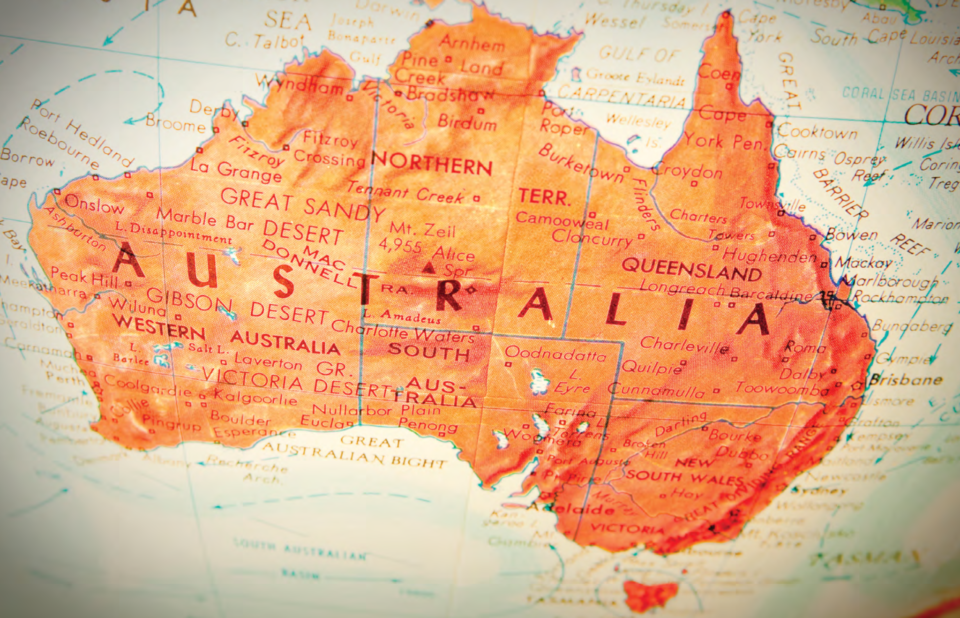
An aspiration for democratic life in Australia is that traditional sources of division are best left behind when coming to this continent. This lesson was not quickly or easily learned.
Colonisation brought with it all of the social ills that plagued the coloniser’s homeland. Most notable were divisions between Roman Catholics and Protestants, between free settlers and convicts, between the different classes… the list could go on.
In some cases, these divisions only faded to irrelevance in the latter part of the 20th Century. Fade they did though. Part of the reason for this lies in the land itself.
As the traditional owners have learned over millennia, typically one can only flourish in this country when cooperating with others. That is why being cast out from community often amounted to a death sentence. So, although the lessons have been learned by the rest of us only slowly and painfully, the country we call home has been schooling us to avoid the kind of extremes that can lead to fatal divisions.
Unfortunately, our modern lives tend to be defined by disengagement from our natural environment.
Water is on tap. Our homes are often automatically heated and cooled. We travel in hermetically sealed vehicles that effectively isolate us from the world through which we move. There has been an equivalent "dislocation" in our social lives. The lives of far fewer people are entwined with the communities in which we live.

The decline in organised religion means that there is less mingling in shared places of worship. Online shopping means we are less likely to congregate in those "cathedrals" of capitalism (shopping centres). Sporting venues (large and small) seem to be the last remaining place for large-scale, collective gathering and an ‘embodied’ experience of community which ignores all distinctions of wealth, rank and status.
This "atomisation" of our lives has been exacerbated by the rise of social media – which has displaced yet another form of ‘communal experience’ offered by a shared mass media.
There is something very "grounding" in encountering stories about the world that you never thought to look for. That is possible when you pick up a newspaper and scan its pages. Every now and then your eye is drawn to an article that offers a view of the world that challenges your own. That is far less likely to happen when your sources of information
and engagement are curated to fit your existing beliefs and prejudices.
The corrosive danger in this is exacerbated when belonging to online communities becomes a source of personal identity. This is because those communities have a tendency to escalate the conditions under which each person proves their right to "belong". That is, the demands one needs to meet in order to enjoy acceptance tend to become more extreme.
"There is something very ‘grounding’ in encountering stories about the world that you never thought to look for."
For example, the expectation that you should express disapproval of views that are at odds with the group "norm" can escalate over time to a point that you must drive out ("cancel") anyone who deviates from the crystalline, ideological purity that defines the group’s identity. Not surprisingly, the demand for such purity ultimately causes irreparable fractures.
Radical moderation is an antidote to this tendency.
It makes a strong, positive claim for a mode of engagement that distinguishes between "listening" and "agreeing". As my colleague, Tim Dean, would say, it invites people to come into a shared space where you are not "safe from" ideas that challenge your worldview but, instead, "safe to" experience such an encounter.
Of course, holding open such spaces requires that there be sufficient people with the moral courage to be radically moderate. At the root of such a disposition lies one of the most fundamental principles of ethics – "respect for persons".
This is the idea that every person has an intrinsic dignity that exists irrespective of their beliefs or conduct – no matter how much this might offend or threaten anyone else. This is truly a "radical" claim that provides the ground on which we encounter each other.
It establishes moderation as a positive duty based on the recognition that even those who seem to be most fundamentally at odds with us deserve to have their intrinsic dignity affirmed. We do this not by "shutting them out of our world" – but by maintaining a space in which engagement is possible. Radical moderates maintain that space even if no one is willing to enter.
In his poem The Four Zoas, William Blake writes, "Wisdom is sold in the desolate market where no one comes to buy." I can attest to the sad truth of this. Yet, radical moderation requires that we lay out our wares all the same.
Because only then is it possible to build the kind of community that sustains us all.
Dr Simon Longstaff AO is Executive Director of The Ethics Centre and a director of Our Community. Along with Richard Evans, Simon co-founded the Festival of Dangerous Ideas (FODI). The Ethics Centre’s purpose is to bring ethics to the centre of everyday life. Simon is an Adjunct Professor of the Australian Graduate School of Management at UNSW, a Fellow of CPA Australia, the Royal Society of NSW, and the Australian Risk Policy Institute.
Posted on 02 Sep 2026
CATHERINE BROOKS on "Diversity, inclusion and community engagement" in Radical Moderate.

Posted on 11 Nov 2025
I’ve seen what happens when fear of conflict wins out over taking a principled stand.
Posted on 10 Nov 2025
JOEL DEANE on "The future of radical moderation" in Radical Moderate.

Posted on 10 Nov 2025
ROD MARSH on "The future of radical moderation" in Radical Moderate.

Posted on 10 Nov 2025
DR TRISH PRENTICE on "The future of radical moderation" in Radical Moderate.

Posted on 10 Nov 2025
DAN LALOR on "The future of radical moderation" in Radical Moderate.

Posted on 10 Nov 2025
SIMON WALLER on "The future of radical moderation" in Radical Moderate.

Posted on 10 Nov 2025
KATE TORNEY OAM on "Navigating complexity & building resilience" in Radical Moderate.
Posted on 10 Nov 2025
KOS SAMARAS on "Navigating complexity & building resilience" in Radical Moderate.
Posted on 10 Nov 2025
BRETT DE HOEDT on "Advocacy and social change" in Radical Moderate.

Posted on 10 Nov 2025
JEN RILEY on "Navigating complexity & building resilience" in Radical Moderate.

Posted on 10 Nov 2025
VIOLET ROUMELIOTIS on "Diversity, inclusion and community engagement" in Radical Moderate.