
Beyond the Binary: Fundraising isn't just 'good vs bad money'
Posted on 02 Sep 2026
CATHERINE BROOKS on "Diversity, inclusion and community engagement" in Radical Moderate.
Posted on 10 Nov 2025
By Joel Deane
JOEL DEANE on "The future of radical moderation" in Radical Moderate.
In an increasingly polarised and uncertain world, Radical Moderates must have the values to know what they stand for, the perspective to be able to identify the enemies of progress, and the backbone to stand up for their principles, writes poet, author, journalist and speechwriter JOEL DEANE.
I was asked to write an essay about the legacy of embracing a "Radical Moderate" style of leadership.
What, I was encouraged to consider, might history say about those who embrace this leadership style?
On the face of it, the subject matter sounded easy.
Couldn’t I just dash off some random thoughts – posing as wise – about the Sisyphean fate of the progressive: to be forever shouldering social policy boulders up economic-rationalist hills. It turns out I couldn’t. Instead, my chosen subject confounded me for a week.
The first reason why I struggled to write this essay was defining the term. I wrote hundreds and hundreds of words – more like literary landfill – defining and redefining the term ‘radical moderate’, wheeling through Australian political history to make lateral connections without ever resolving the point in my mind.
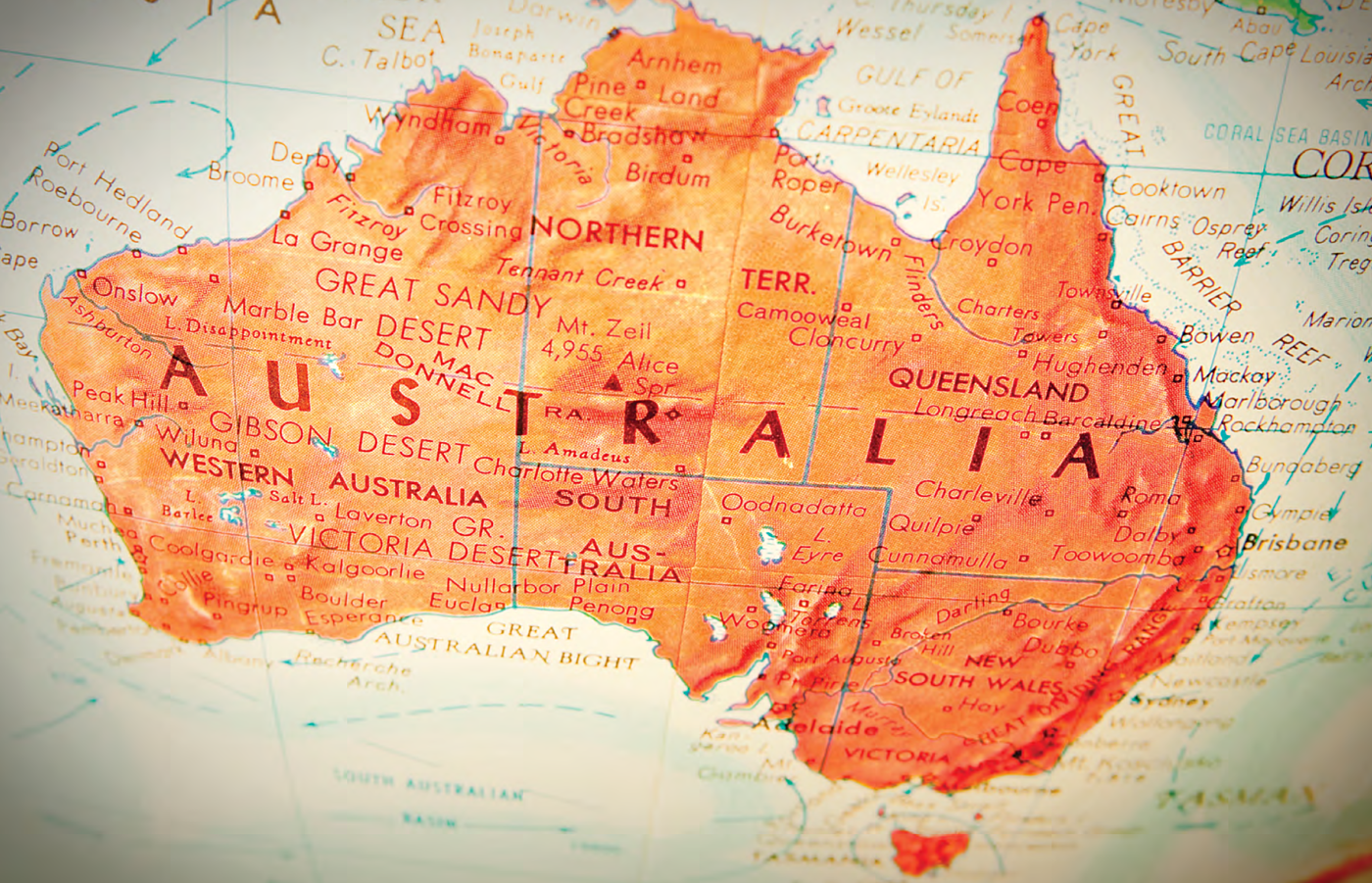
I knew that most Australians equate radicalism with far-left politics, going back to the Australian Communist Party. I knew that, counter-intuitively, the most dangerous radicals in Australian political history – the ones most likely to resort to violence – have come from the far-right. I knew that one of the largely unspoken parts of our history – together with the White Australia policy, the Stolen Generations, and the frontier wars – is the fact that an undercurrent of fascism has persisted in Australian far-right politics since the 1920s.
And I knew that, although the fortunes of Australian fascists – like Australian communists – have waxed and waned, they have been gathering strength since 9/11.
The trouble for me, I realised, was that I’m not comfortable to identify as a Radical Moderate because I equate Australian radicalism more with the far-right – a group I’ve opposed all my life – than the far-left.
By the way, that doesn’t mean I’m a fan of the far-left.
It’s just that, having seen first-hand how fundamentalist thought can twist the minds of well-meaning people, I’m opposed to extremism of all kinds – religious, political, economic; whatever – and, therefore, am more likely to call myself a unionist or a progressive or a humanist than a Radical Moderate.
My next semantic struggle was "moderate".
Reading that word reminded me of a book launch I’d attended where I met a fellow poet. We chatted amiably, ticking all the boxes of social niceties, until politics came up and my companion’s expression changed. She pulled a face and said that, as I’d worked as a staffer for the Australian Labor Party, we were on opposite sides of the political fence.
"Why?" I asked. She answered: "I’m progressive; I vote for the Greens." I was floored by the assumptions behind that statement. My companion and I had just met and knew nothing about each other’s positions on any political or policy matters, yet she assumed the worst about me. By the way, this kind of reflex antagonism is not unique to the Greens. I’ve seen plenty of Labor, Liberal and National supporters carry on in similar ways.
Why the aggro? Pick your cause. It could be the rise of social media, the fall of mainstream media and the shrinking middle class, the tech-bro powered march of libertarianism and neo-liberalism’s disdain for societal institutions, rises in tribalism and the denial of scientific fact, or maybe just all of the above.
In our cruel new world, moderation is – together with other old-fashioned virtues such as equality, justice, community – misunderstood. But moderation, like compromise, is fundamental to democracy. Otherwise, how can a nation of 26 million souls expect to coexist if we can’t moderate ourselves? Think beyond self-interest? Be prepared to compromise for the common good?
All of which brings me back to being a Radical Moderate. How could I write about the hypothetical future legacy of a leader who commits to being a Radical Moderate (read: progressive democrat) when the present is so uncertain?
"Radical Moderate leaders need to understand the machinery of Australian society and democracy—and commit to generational rather than revolutionary change."
Currently, democratic societies around the world are facing their greatest test since the rise of communism and fascism in the 1920s. The generation of people who lived through the horrors of the 1930s and 1940s – horrors created by unfettered radicalism on the far right and far left – have died, and the loss of that collective memory, together with growing economic inequality, is one of the major reasons why the world is in the grips of a pandemic of extremism. That’s why, right now, leaders need to be thinking more about legitimacy than legacy – and ensure their words and actions are founded on an understanding of our past.
With that in mind, I decided to share three quick stories offering glimpses into Australia’s Radical Moderate legacy.
The first story involves Vladimir Lenin. In 1922, the newly formed Soviet Union hosted a gathering of international communists and revolutionaries. Jock Garden, a Sydney-based Baptist minister-turned-communist, was a part of the Australian delegation. Garden, who migrated to Australia from Aberdeen and tended to harangue people in a Scottish burr, met Lenin and tried to convince the Soviet leader that there was rising worker unrest in Australia. Lenin wasn’t impressed. He reportedly scoffed: "If things are as favourable as you say, Comrade Garden, you had better go back to Australia and start the revolution."
Lenin had a point. Australia has never been a nation of revolutionaries. Instead, the Commonwealth of Australia was created by committee, through a series of colonial conventions and plebiscites, then an Act of the British Parliament. Domestically, the only Australians forced to fight for their freedom were the Aboriginal and Torres Strait Islanders in the frontier wars.
The battle of the Eureka Stockade, by comparison, was more about equity and justice than freedom. Internationally, 1942 was the closest Australia came to an existential moment where its citizens felt their nation’s freedom – perhaps even its existence – was at stake, because that was the year that Singapore fell, Darwin was bombed, and Sydney Harbour was attacked by submarines. The Australia of 1942 responded to that crisis with radical action, mobilising the entire country for the war effort.
The lesson: Australians don’t back radical action unless they feel they have no other option. They prefer incremental, generational progress through systemic, universal initiatives such as Medicare, compulsory superannuation and the National Disability Insurance Scheme.
Compulsory and proportional voting are the systemic forces that have kept Australian politics to the middle of the road since Federation because they reward consensus rather than extremism. Thanks to compulsory voting, we all vote; and thanks to proportional voting, our electorates end up with the politician they hate the least rather than the one they love the most.
This democratic version of the tall-poppy syndrome moderates Australian public discourse because the major political parties are fighting over the same group of undecided voters rather than catering to their own rusted-on supporters. Radical Moderate leaders need to understand the machinery of Australian society and democracy – and commit to generational rather than revolutionary change.
"Radical Moderate leaders need to understand that the real enemies of progress – the radicals who want to destroy the Australian way of life – don’t always look or sound like revolutionaries."
My second story involves Field Marshal Sir Thomas Blamey. Blamey was Australia’s leading soldier during World War Two. A former Victorian police commissioner, he was highly esteemed by establishment figures. In fact, Blamey was so highly esteemed that an impressive statue of the Field Marshal – a modernist version of an equestrian pose with the soldier astride his jeep rather than his horse – was erected outside the gates of Victoria’s Government House in the 1950s.
But Blamey was opposed to democracy. He plotted to overthrow an elected federal government in the 1930s and install a dictator. He was also the clandestine leader of a fascist militia known as the White Army. And, in the 1940s, he was the staff officer who questioned the bravery of the 2/16 Battalion – the raw conscripts who heroically fought elite Japanese forces to a standstill on the Kokoda Trail – and, in a notorious address to the bedraggled survivors of that legendary battle, said, "The rabbit that runs away is the rabbit that gets shot."
Australian history is peppered with people like Blamey. Far-right authoritarians who didn’t trust the Australian people to govern or, in the case of the 2/16 Battalion, defend themselves.
Radical Moderate leaders need to understand that the real enemies of progress – the radicals who want to destroy the Australian way of life – don’t always look or sound like revolutionaries.
My third story goes back to 1989, when I was working as a journalist for a Sunday newspaper in Melbourne. I was just 20 and had dodgy shorthand, but my chief of staff, Peter Maher, took a liking to my prose style. As a result, Peter regularly sent me on scouting missions across regional Victoria with a photographer. On one of those trips, winding through the Otways, I asked a local furniture maker whether there were any locals worth interviewing. His answer was instantaneous: Harvey Buttonshaw.
I jotted down directions to Harvey’s place in my spiral notepad – this was before Google Maps – and followed a winding road to a gate, then a dirt driveway to a house that sat in the crook of a small valley. The house, an old weatherboard with a wraparound veranda, was off grid. There was no electricity, sewerage or mains water. Just an old man armed with an axe.
Buttonshaw, whippet-thin in his mid-seventies, was chopping wood and swearing like a trooper because he’d just whacked his shin with the blunt of the axe. He invited me inside and, over a cup of tea, told me about his exploits fighting the fascists during the Spanish Civil War, being alongside George Orwell when he was wounded in the neck, joining the French Foreign Legion, then deserting after the Legion came under the control of the Vichy French and he was ordered to fight the Allies during World War Two. It was an incredible story of political conviction and personal courage.
Harvey died in the 1990s, but he’s been on my mind for the past decade. Buttonshaw wasn’t a communist. Like Orwell, he was a man of fundamentally humanitarian convictions who was prepared to fight for his beliefs. I’ve wondered what he would think of this generation of strongmen – the Putins, Trumps, Xis, Modis – and what actions he would take.
I’m not saying that Radical Moderate leaders need to be like Buttonshaw and literally take up arms to prove their bona fides, but they do need to be able to have the values to know what they stand for, the perspective to be able to identify the enemies of progress, and the backbone to stand up for their principles.
Leaders with that combination of values, vision and backbone are most likely to earn the legitimacy they need to build the kind of support that drives change and creates a legacy.
Joel Deane is a poet, novelist, journalist and speechwriter. An author of nine books, he has been a finalist for numerous literary awards, including the Walkley Book Award, Prime Minister’s Literary Award and the Melbourne Prize for Literature. He works as a freelance writer.
Posted on 02 Sep 2026
CATHERINE BROOKS on "Diversity, inclusion and community engagement" in Radical Moderate.

Posted on 11 Nov 2025
I’ve seen what happens when fear of conflict wins out over taking a principled stand.

Posted on 10 Nov 2025
ROD MARSH on "The future of radical moderation" in Radical Moderate.
Posted on 10 Nov 2025
DR TRISH PRENTICE on "The future of radical moderation" in Radical Moderate.
Posted on 10 Nov 2025
DR SIMON LONGSTAFF AO on "The future of radical moderation" in Radical Moderate.

Posted on 10 Nov 2025
DAN LALOR on "The future of radical moderation" in Radical Moderate.

Posted on 10 Nov 2025
SIMON WALLER on "The future of radical moderation" in Radical Moderate.

Posted on 10 Nov 2025
KATE TORNEY OAM on "Navigating complexity & building resilience" in Radical Moderate.
Posted on 10 Nov 2025
KOS SAMARAS on "Navigating complexity & building resilience" in Radical Moderate.
Posted on 10 Nov 2025
BRETT DE HOEDT on "Advocacy and social change" in Radical Moderate.

Posted on 10 Nov 2025
JEN RILEY on "Navigating complexity & building resilience" in Radical Moderate.

Posted on 10 Nov 2025
VIOLET ROUMELIOTIS on "Diversity, inclusion and community engagement" in Radical Moderate.