
Save Izzy: campaign calls on government to restore funding for vital services directory
Posted on 07 Oct 2026
A major public campaign launched this morning is calling on the federal government to restore…
Posted on 10 Jun 2026
By Nick Place, journalist, Community Directors
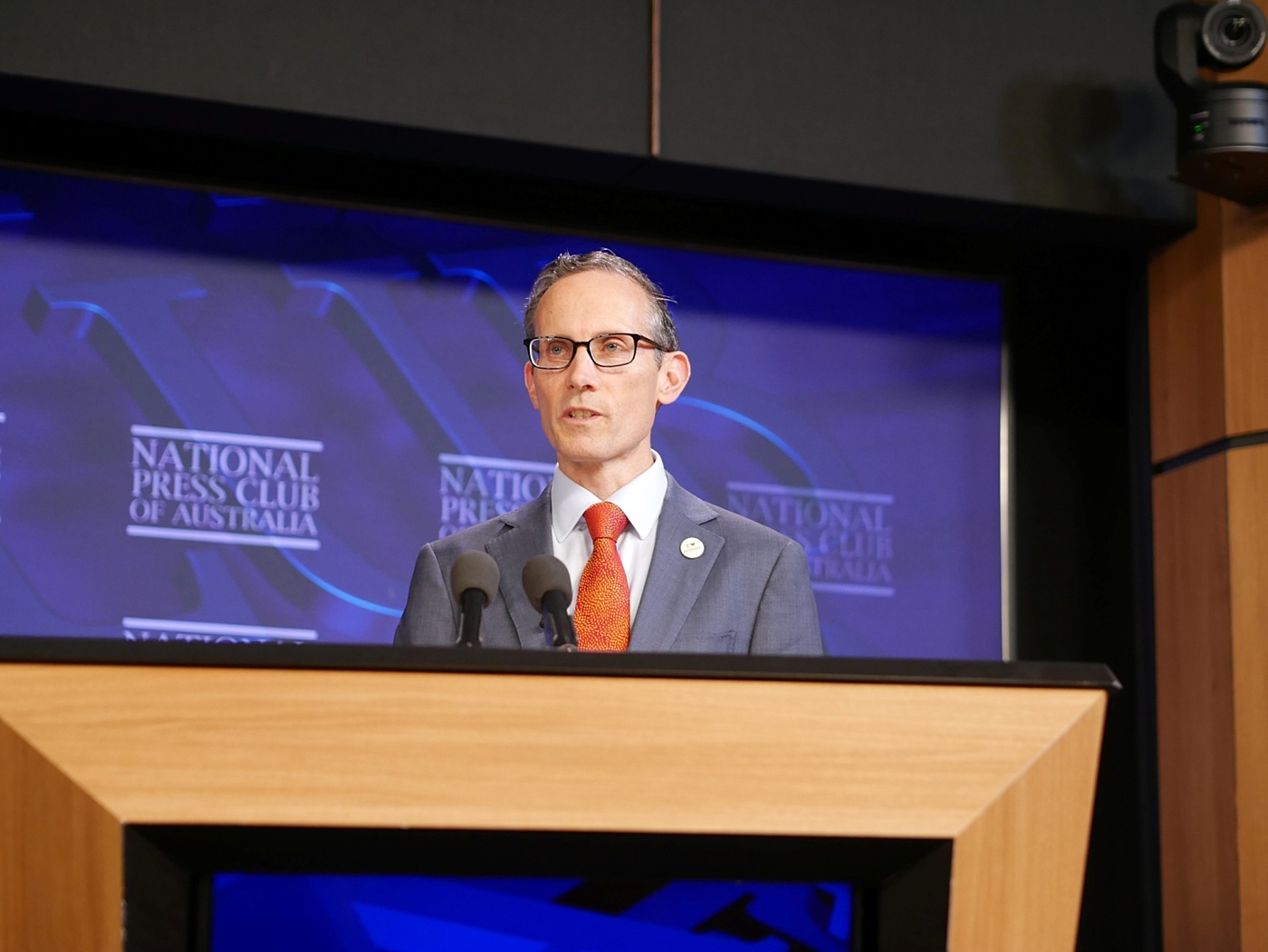
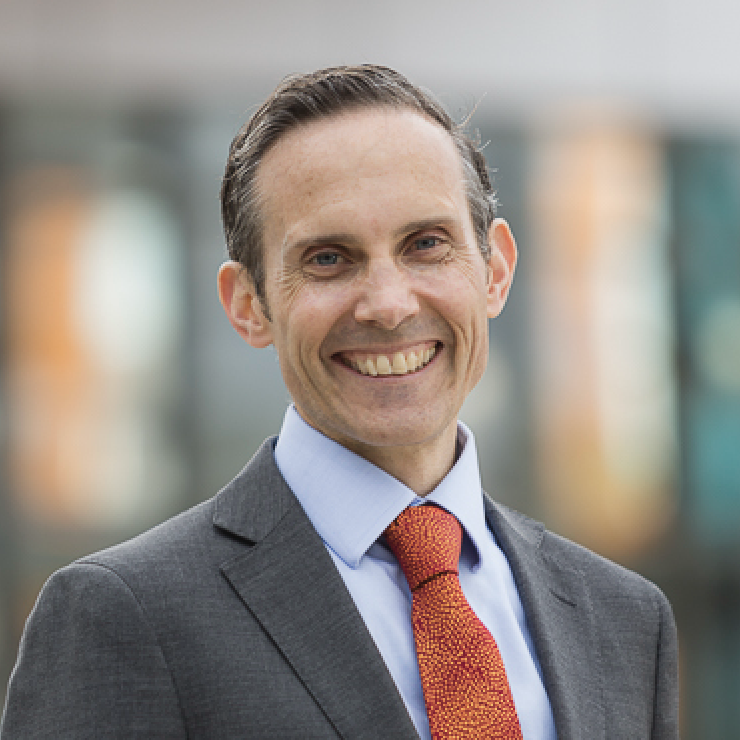
Australia’s charities minister, Dr Andrew Leigh, has called for the nurturing of a ‘trust agenda’ to rebuild trust, civil society, and a commitment among people, governments and organisations to work together for the common good.
“Australia remains, by global standards, a generous and cohesive country. Yet the broad pattern is plain. Civic life has thinned. Fewer volunteers. Fewer joiners. Less trust. That should concern every Australian. A country with fewer volunteers, fewer joiners and less trust is a country with a thinner safety net beneath daily life,” he will tell the National Press Club today.
In a major NPC speech, Leigh will say the work to repair our social capital requires a commitment from all levels of society and government, including the previously announced lifting of mandatory annual distributions from Giving Funds to six per cent of net assets.
He says his personal goal is for “community foundations to become part of the ordinary architecture of Australian life (by 2036),” explaining that: “Over the coming decade, I want many more Australians to have a trusted local foundation where they can give, bequeath, volunteer or help decide what their community needs.”
The Minister will use the speech to push for more bequest planning among financial advisers, and said he was working on improving digital systems and understanding in the not-for-profit and philanthropic sectors so organisations could capitalise on the potential of AI and technology.
Leigh said the government had an ongoing commitment to considering major reforms from the Productivity Commission’s Future Foundations for Giving report and the Not-for-profit Sector Development Blueprint, a 10-year plan developed through consultation with the sector.
However, only some of these reforms could happen quickly, he said, which will frustrate those in the sector who have been pushing for more action.
A new financial commitment in today’s speech was $2 million to enable the Australian Charities and Not-for-profits Commission (ACNC) and the Australian Securities and Investments Commission (ASIC) to align their registration demands, removing duplication and streamlining charity paperwork – a frustration that Leigh said he had heard at many charity town-hall meetings.
“Good regulation should protect trust while preserving purpose,” he said. “The aim is regulation with a backbone, rather than regulation with a clipboard addiction.”
The Minister also recapped some of the government’s recent work in the sector, saying, “We have also worked with states and territories to establish national fundraising principles. We have created a new tax-deductible category for community foundations. We have streamlined tax-deductible charity processes for environmental organisations, harm prevention charities, cultural organisations and overseas aid organisations. We have removed the two-dollar minimum threshold for tax-deductible donations, helping make small gifts easier, including round-up giving at the checkout.”
The heart of today’s speech was an examination of how to combat Australia’s splintering society and eroded social cohesion.
Leigh said research showed clearly that the number of Australians involved in associations, as well as social, civic and political groups and unions, was down and had been deteriorating for decades. Fewer Australians were taking part in organised sports, community groups or church, and research showed that our pursuits are becoming more solitary, he said, adding that we have fewer close friends and know fewer of our neighbours’ names than we did in the 1980s.
Leigh said new General Social Survey data showed that between 2019 and 2025, the percentage of Australians who felt that most people could be trusted fell from 55 per cent to 50 per cent, formal volunteering fell from 30 per cent to 23 per cent, and involvement in social groups fell from 51 per cent to 45 per cent.
While government spends much of its time dealing with physical capital such as roads and bridges, or human capital such as education and building a skilled workforce, Leigh said there was also a need to nurture and build social capital, which was, he said, “the invisible infrastructure of a country: whether people trust one another, join together, volunteer to help the needy and feel responsible for more than themselves.”
The ramifications of a failure of social capital were stark, he said.
“When social capital is strong, communities solve problems sooner. Businesses transact with less friction. Governments of different stripes collaborate. People have someone to call when the diagnosis comes, when the house floods, when the job vanishes, when the neighbour needs a hand,” he told the Press Club.
“When social capital weakens, a country becomes lonelier, scratchier, less resilient and harder to govern. Everything takes more checking, more guarding, more legal drafting, more suspicion. The national mood gets brittle. Problems that could be solved around a table are left to fester,” he said.
“A charity is often where an Australian first learns that citizenship is a verb.”
Australians had shown often that they are generous and willing to work together and for others, usually in the wake of natural disasters such as fires or floods, he said. However, the challenge was to make such generosity more durable and less episodic – turning helping into joining.
“This is where charities come in,” he explained. “A charity is often where an Australian first learns that citizenship is a verb.”
“Charities do more than deliver services. They create belonging. They carry memory. They build trust by giving people repeated opportunities to work alongside others.”
Leigh said the current government had worked hard to make Australian charities feel respected, and to understand that they had a right to advocate as well as to deliver support services.
“One of the great errors in public debate is to treat charities as subcontractors for government,” he said. “Many charities do deliver programs, often with public support. Yet their value runs deeper. Charities can see where official systems are missing people. They can advocate. They can innovate. They can ask uncomfortable questions. A confident democracy lets charities speak.”
Much has been said about the estimated $5.4 trillion wealth transfer expected in the next two decades, as generational wealth changes hands. Leigh said JBWere’s Bequest Report estimated that about $150 billion is already transferred through estates in Australia each year.
But only about seven per cent of Australian wills include a charity, a lower rate than in the United States or United Kingdom – even if it does add up to around $1.3 billion per year. More gifts could be left in wills, he said, if people were better connected to causes, communities and charities.
“A very large river of wealth is flowing across generations,” he said. “Only a thin stream reaches the community sector.”
Bequests were essential for charities because they often offered unrestricted funding, he said, allowing organisations to secure and increase new capabilities, systems, reserves and talent, as well as consider long-term strategy. But they can’t happen without strong social capital.
“Growing bequests requires culture, systems and trust,” Leigh said.
“The cultural part begins with more Australians feeling able to talk about death, wills and legacy. Families do better when hard conversations happen early. Communities do better when planning replaces confusion. Charities do better when a donor’s wishes are clear, shared and written down.
“The systems part means making the path easier. Many Australians still never write a will, regarding it as a life admin task somewhere between cleaning the gutters and seeing the dentist. Others write one and never consider a charitable gift. Others include a gift that becomes vulnerable to challenge. A good bequest strategy meets each barrier: make will-writing easier, make the giving option visible, make the wording clear and durable," he said.
“The trust part belongs to all of us. People leave bequests to institutions they trust. Trust grows from sound governance, clean accounts, clear purpose and visible impact.”
Leigh called on professional bodies and accountants to be capable of offering advice about giving funds as well as self-managed super funds, and to connect with charities, community foundations and philanthropic organisations so they could better play a meaningful role in strengthening a culture of generosity beyond the ultra-wealthy.
“Bequest giving should feel less like a niche practice for grand donors and more like a normal part of Australian estate planning,” he said. “The great wealth transfer should become a great trust transfer.”
A key to a thriving giving sector in Australia was rebuilding the notion of community and collaboration in a social media–driven age of outrage, reaction and division, he said. Australia needed to move from being a nation of spectators to being participants to rebuild our social capital.
“At heart, this is about recovering the habit of acting together. Civil society is a contact sport,” the minister said.
“Social media trains us to react. Community life asks us to commit. A [social media] feed gives us the illusion of participation. A committee gives us minutes, rosters, awkward conversations and the miraculous discovery that people who disagree on politics can still organise a sausage sizzle.
“That may sound humble. It is how democratic muscle is built.
“Every community group is a small school of democracy. People learn to chair meetings, keep accounts, resolve disputes, welcome newcomers, share credit, absorb disappointment and try again. These are democratic skills. A country loses them at its peril,” he warned.
Posted on 07 Oct 2026
A major public campaign launched this morning is calling on the federal government to restore…

Posted on 07 Oct 2026
The Australian Literacy & Numeracy Foundation (ALNF) has announced a partnership with mining…

Posted on 07 Oct 2026
A conference in Darwin will this morning hear detailed, strategic plans for how Australia could…

Posted on 30 Sep 2026
Not-for-profit leaders have been warned to be wary of approaches from potential “funding partners”…
Posted on 30 Sep 2026
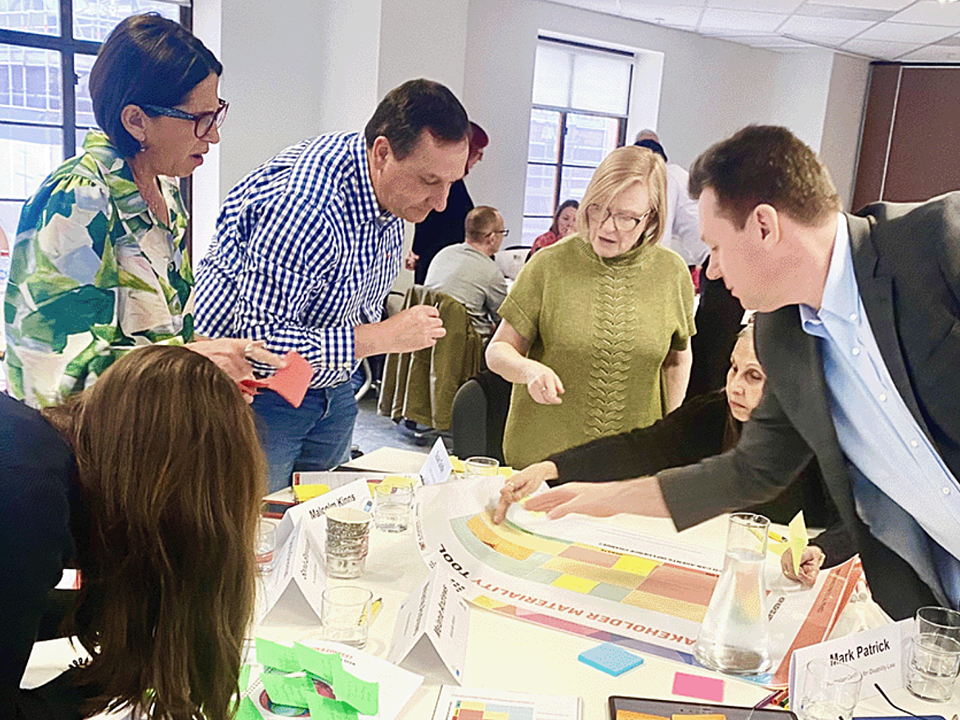
More than 200 fully funded Centre for Social Impact (CSI) scholarships will help equip for-purpose…

Posted on 30 Sep 2026
Personal stories are among the most powerful tools a charity can have to raise funds and awareness,…

Posted on 23 Sep 2026
A just-released major global survey of charities has found that demand for charity assistance has…
Posted on 23 Sep 2026
Fresh from welcoming delegates to last week’s Philanthropy Australia conference in Brisbane,…

Posted on 23 Sep 2026
A national strategy to develop Australia's regional cities is needed to break the housing…

Posted on 23 Sep 2026
Eight years after a report to Treasury first suggested the charities regulator should be more…

Posted on 17 Sep 2026
Australia’s biggest gathering of philanthropists, which drew more than 1200 delegates to Brisbane…
Posted on 16 Sep 2026
A new partnership between Paul Ramsay Foundation (PRF) and Atlassian Foundation aims to attract…