
Billion-dollar community funding pool is making a difference
Posted on 21 Oct 2026
Backed by tangible successes and government support, community foundations are gaining momentum as…
Posted on 21 Oct 2026
By Nick Place, journalist, Community Directors

If your charity takes a stance that happens to align with a political party’s stance in a public debate, that’s okay. But telling people to vote for that party? Not okay.
These are the subtleties of pre-election activities for charities registered with the Australian Charities and Not-for-profits Commission (ACNC).
In a recent advisory, the ACNC reminded charities what they can and can’t do in the heat of an election campaign – for most charities, the advice will seem like common sense.

Tasmanian local government elections are due to be held next Tuesday, Victoria’s state election looms next month, and the New South Wales state election will be held early next year.
The ACNC is clear that charities have a right to an opinion on social matters.
“In the lead-up to an election, some charities may want to make their voices heard in the political arena,” the advisory said. “Charities can campaign on political issues to advance their charitable purposes, including during election periods, as long as they meet the requirements of charity law and other relevant legislation.”
A key to not falling foul of Electoral Act laws is that all activities by a charity must remain consistent with and connected to the organisation’s “charitable purpose”, as defined by its governing documents and activities. Having a “political purpose” can see a charity disqualified, so the distinction is an important one.
“Advocacy and campaigning can be a legitimate and effective way of furthering the charitable purposes of a charity,” the ACNC explained. “However, it is important that charities do not cross the line into having a disqualifying political purpose and that they maintain independence from party politics.
“A charity’s policy position on a matter of concern may be similar to, or align with that of, a particular political party. In such a situation it is okay for the charity to continue to campaign on that issue, provided that this does not amount to the charity having a purpose of promoting or opposing a particular political party or candidate.”
Don’t hand out how-to-vote cards, and don’t produce material asking your members to vote for a certain candidate, the commission said.
The ACNC cautioned the “responsible people” within a charity to maintain a helicopter view of how the charity was representing itself, its people and its views in an often-heated pre-election atmosphere. Social media posts, campaigning by staff or board members, and other overt activities could affect the charity’s standing among the community, it said.
“It is important that charities do not cross the line into having a disqualifying political purpose and that they maintain independence from party politics.”
“Public perception is important, and a charity’s Responsible People should be aware of the perception of any advocacy or campaigning,” the ACNC said. “In the lead-up to an election there are increased risks that, in the minds of the public, charity advocacy or campaigning can be associated with a particular political party.”
Many charities are leaders in tackling social issues, so such a charity has a right and a purpose when it comes to advancing public debate about potential solutions and policy ideas.
A charity can promote or oppose a potential law change being advocated by a political party, for example, where that stance is consistent with its charitable purpose.
Similarly, a charity involved in advancing education has a right to advocate and campaign on education issues, and might align more with one party than another in post-election policy planning.
However, that charity would cross the line legally were it to start actively promoting or opposing a political party or candidate standing for office.
Stating that your charity supports a party’s or candidate’s policies on your charity’s area of expertise, and letting voters make up their own mind, is different from producing flyers saying: “Vote 1 this candidate because we agree with their policies.”
A charity cannot take part in unlawful activities or activities that are contrary to public policy, the rule of law, or the constitutional system, and it cannot threaten the safety of the public or national security.
The key is for a charity’s leaders to understand where the lines are between what’s acceptable and what’s not, the ACNC said, and to draw very clear boundaries for the charity’s communications and pre-election activities.
“In practice, this means that a charity can campaign if it is satisfied that what it is doing is advancing its charitable purpose, its governing document (its constitution or rules) does not prevent the activity, and it does not have a disqualifying political purpose,” the ACNC said.
Charities can even ask to meet candidates standing for election to push a specific case relating to their charitable work, the ACNC said.
“For example, a charity that also has the charitable purpose of advancing social or public welfare and delivers services to victims of violence can promote a change to the law which would increase criminal penalties for perpetrators of family violence.
“It can do this in a variety of ways – such as meeting with elected representatives or officials or making written submissions. If board members are open and transparent about such engagement, this can help ensure public perceptions of political neutrality.”
The ACNC said the advice it offered was based on the Commonwealth Electoral Act, which relates to federal elections, and the election rules for states and territories may differ.
“Different Australian jurisdictions regulate third parties – including charities – differently,” it said. “These regulations can commonly include things like annual or ‘real time’ disclosure requirements, authorisation requirements and limits on foreign donations. They may also include donation or spending caps. For more information on these regulations, refer to the website of the electoral law regulator in your state or territory.”
The ACNC’s advisory is here.
Posted on 21 Oct 2026
Backed by tangible successes and government support, community foundations are gaining momentum as…
Posted on 21 Oct 2026
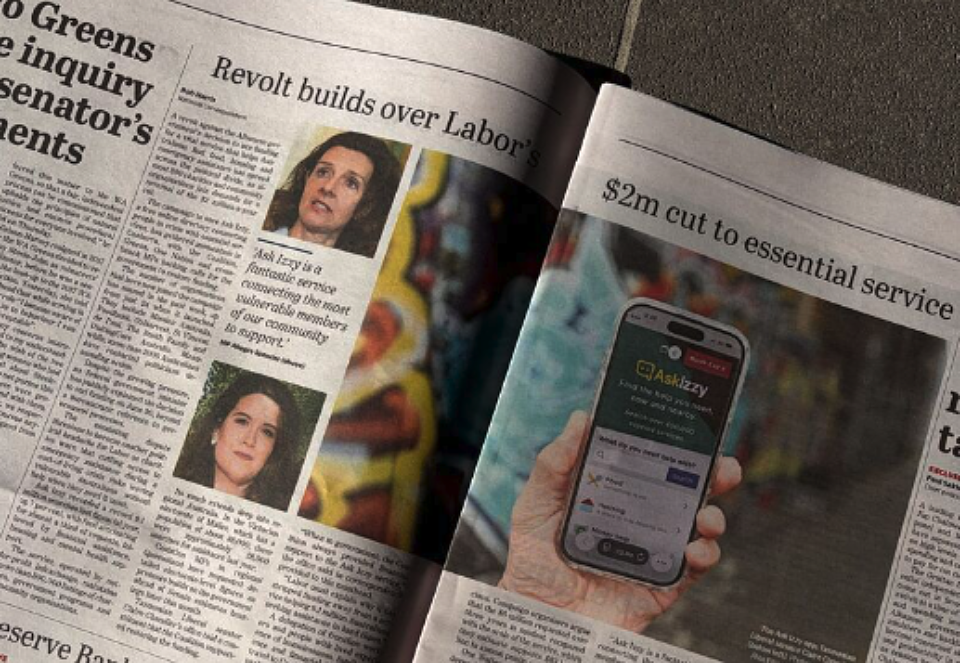
A national campaign to restore federal funding for Ask Izzy has attracted such strong grassroots…

Posted on 21 Oct 2026
In the wake of an act of violence against federal independent MP Helen Haines, Charities Minister…

Posted on 14 Oct 2026
The federal government’s special envoy for social housing and homelessness, Josh Burns MP, has…

Posted on 14 Oct 2026
The Reserve Bank’s move to ban card payment surcharges has led to complications for charities and…

Posted on 14 Oct 2026
A special guest with her finger on the pulse of one of the biggest issues facing Australia –…

Posted on 07 Oct 2026
A major public campaign launched this morning is calling on the federal government to restore…

Posted on 07 Oct 2026
The Australian Literacy & Numeracy Foundation (ALNF) has announced a partnership with mining…

Posted on 07 Oct 2026
A conference in Darwin will this morning hear detailed, strategic plans for how Australia could…

Posted on 30 Sep 2026
Not-for-profit leaders have been warned to be wary of approaches from potential “funding partners”…

Posted on 30 Sep 2026
More than 200 fully funded Centre for Social Impact (CSI) scholarships will help equip for-purpose…

Posted on 30 Sep 2026
Personal stories are among the most powerful tools a charity can have to raise funds and awareness,…