
Save Izzy: campaign calls on government to restore funding for vital services directory
Posted on 07 Oct 2026
A major public campaign launched this morning is calling on the federal government to restore…
Posted on 17 Jun 2026
By Mohiuddin Ahmed, associate professor in cyber security, Adelaide University
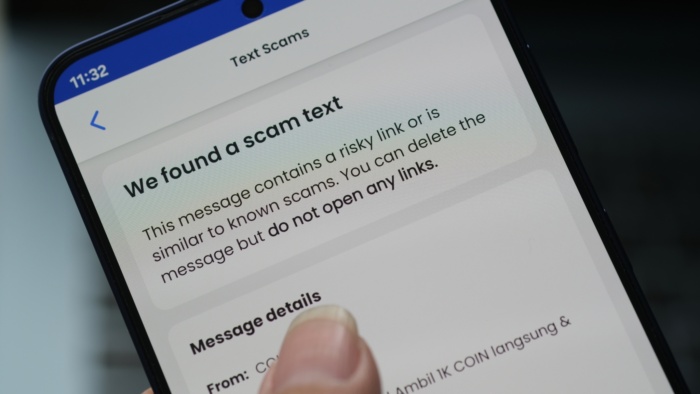
NFPs and for purpose organisations need to be aware of the need to verify their “sender ID” from July 1 onwards – or risk having their texts ignored or even reported as scams. The initiative is a good one – placing ‘unverified’ on, say, a text from your bank that is not actually from your bank. But as this article from The Conversation makes clear, there is a potential downside for any business – or charity – that hasn’t taken action by the end of this month.
From July 1, when you get a text claiming to be from the Australian Taxation Office, Australia Post or any other organisation, the first thing to check for will be one little word: “unverified”.
If it says that, be extra careful.
Australia’s phone companies blocked more than 153 million scam text messages in 2025 alone, as part of their obligations under the industry’s scam code. Yet many others are still getting through to our phones.
Until now, scammers have been able to mislabel the top of their texts to pretend to be from banks, government or other legitimate businesses.
From July 1 this year, that’s changing.

Major government agencies and big businesses have been preparing for this change for months. But 97 per cent of businesses in Australia – 2.6 million in total – are small businesses, employing fewer than 20 people.
Along with community organisations, they’ve been warned to act fast to register their “sender ID” – or risk having their texts ignored or even reported as scams from July onwards.
When you get a text message, it shows the sender’s name if that’s saved in your contact list, or else the phone number if it’s not saved.
Businesses can also text their customers with their organisation’s name at the top of a message. That’s known as the “sender ID”.
Scammers have been taking advantage of this process for years to trick their victims. For instance, you might get what appears to be a message from “AusGov” or “AUPost”: fake sender IDs close enough to the real “myGov” or “AusPost” IDs that they can fool people.
From July 1, under a much-needed government initiative, those scam text messages will show up on your phone under a single “unverified” message thread.
It’s a new way to signal it may be a scam. Over time, the goal is to eventually block more of those scam texts.
Australians lost more than A$2 billion to scams of all varieties in 2025. According to official Scamwatch data, email is still by far the number-one way Australians report being contacted by scammers. But texting is still a common method for scammers.
After July 1, scammers may try to get around it by writing the so-called organisation at the top of the text message – like a “PayPal” text scam going around now.
But from July 1, that same text would say “unverified” at the top, hopefully giving some people pause before they ring the fraudsters.
“While this is a welcome crackdown on scammers, there could be unintended consequences for businesses and community organisations that don’t register their sender ID before July.”
While this is a welcome crackdown on scammers, there could be unintended consequences for businesses and community organisations that don’t register their sender ID before July.
Legitimate – but unregistered – texts risk ending up being lumped into the “unverified” thread, along with actual scams.
The national regulator, the Australian Communications and Media Authority (ACMA), last month acknowledged some small and medium-sized businesses and organisations may not realise the changes apply to them too. It warned “failing to register may mean consumers miss important messages or no longer trust them”.
From local childcare centres and tradespeople to small community groups, if you don’t want your message to be ignored from July 1, now is the time to register your sender ID.
There are two registration options available:
It’s a similar three-step process in both cases. In both cases, you have to start by contact your telco or message provider. Then you’ll need to verify your organisation.
Don’t leave this until the last minute: start now.
After July 1, any text message received from an “unverified” source should be treated carefully.
Since many legitimate businesses are yet to get on the Sender ID register, remember: an “unverified” text will not automatically be a scam.
But play it safe anyway. Use different means – such as looking up their official contact number to call them – to confirm it’s legitimate, rather than texting back or using links or numbers in their message.
On the other hand, if you think a new “unverified” message is suspicious, you can help by reporting it.
The easiest way to report a scam text is to forward it to 7226, a reporting line supported by phone companies.
Alternatively, you can also report it via the Scamwatch website. It is a longer five step process, probably designed to avoid false alarms given the volume of reported scams.
As well as checking for “unverified” after July 1, Scamwatch already recommends these security steps.
Stop: Never interact with a suspicious message in a hurry, even if scammers try to pressure you, such as with “Hi Mum” tactics. And never share your pin, password or codes in response to an unexpected text or call.
Check: Make sure the person or organisation you’re dealing with is real. For instance, check if the phone number or email address on their official website matches what’s in the suspicious text.
Protect: Contact your bank immediately if you’ve shared financial details or think money is being stolen. Change passwords if you think they’ve been compromised.
Scamwatch lists more support services, such as not-for-profit IDCARE if you need help as an individual or small business.
Mohiuddin Ahmed is associate professor in cyber security, Adelaide University
This article is republished from The Conversation under a Creative Commons license. Read the original article.
Posted on 07 Oct 2026
A major public campaign launched this morning is calling on the federal government to restore…

Posted on 07 Oct 2026
The Australian Literacy & Numeracy Foundation (ALNF) has announced a partnership with mining…

Posted on 07 Oct 2026
A conference in Darwin will this morning hear detailed, strategic plans for how Australia could…
Posted on 30 Sep 2026
Not-for-profit leaders have been warned to be wary of approaches from potential “funding partners”…

Posted on 30 Sep 2026
More than 200 fully funded Centre for Social Impact (CSI) scholarships will help equip for-purpose…

Posted on 30 Sep 2026
Personal stories are among the most powerful tools a charity can have to raise funds and awareness,…

Posted on 23 Sep 2026
A just-released major global survey of charities has found that demand for charity assistance has…
Posted on 23 Sep 2026
Fresh from welcoming delegates to last week’s Philanthropy Australia conference in Brisbane,…

Posted on 23 Sep 2026
A national strategy to develop Australia's regional cities is needed to break the housing…
Posted on 23 Sep 2026
Eight years after a report to Treasury first suggested the charities regulator should be more…

Posted on 17 Sep 2026
Australia’s biggest gathering of philanthropists, which drew more than 1200 delegates to Brisbane…
Posted on 16 Sep 2026
A new partnership between Paul Ramsay Foundation (PRF) and Atlassian Foundation aims to attract…