
Beyond the Binary: Fundraising isn't just 'good vs bad money'
Posted on 02 Sep 2026
CATHERINE BROOKS on "Diversity, inclusion and community engagement" in Radical Moderate.
Posted on 10 Nov 2025
By Adj. Professor Susan Pascoe AM
ADJUNCT PROFESSOR SUSAN PASCOE AM on "Principled leadership and good governance" in Radical Moderate.
For an outstanding example of an effective Radical Moderate, look no further than the late Pope Francis, argues Adjunct Professor SUSAN PASCOE AM, chair, Community Directors Council.
It’s an unsettling feeling directly facing hostile senators in Senate Estimates when sustained critique comes from the government of the day and not the opposition. How to respond?
As inaugural Commissioner of the Australian Charities and Not-for-profits Commission, my colleagues and I decided to prepare carefully, rehearsing every possible line of attack, to respond with unfailing politeness, and to maintain respect for parliamentary process and our legislated role.
To do this we needed political nous borne of assiduous environmental scanning, a confidence in our interpretation of the ACNC Act (Cth 2012), a capacity to read the interpersonal dynamic in the chamber, and resultant behaviour which modelled values and respected norms of parliamentary process.
No doubt to the Government of the day (who opposed our existence) we were radical. To the recently unseated Opposition, however, we were moderately implementing an Act of the Parliament – simply doing our job as democratic procedure prescribed.
This is a simple example of the challenges in determining what constitutes radical or moderate behaviour – it is in the eye of the beholder.
Is it an oxymoron to conceive of radical moderation? Or is it a hybrid disposition needed in a fractured and fractious world? Is there a role for people of credibility to identify and occupy the common ground and to work toward the common good? Is such a conception naïve and idealistic? I don’t think so.
We live in historically disruptive times. The rancour and incivility which marks much political discourse; the attempts to normalise extremist views and actions; the rise in authoritarian regimes globally; the attendant stifling of advocacy and media; and the systematic undermining or dismantling of democratic institutions all call for response.
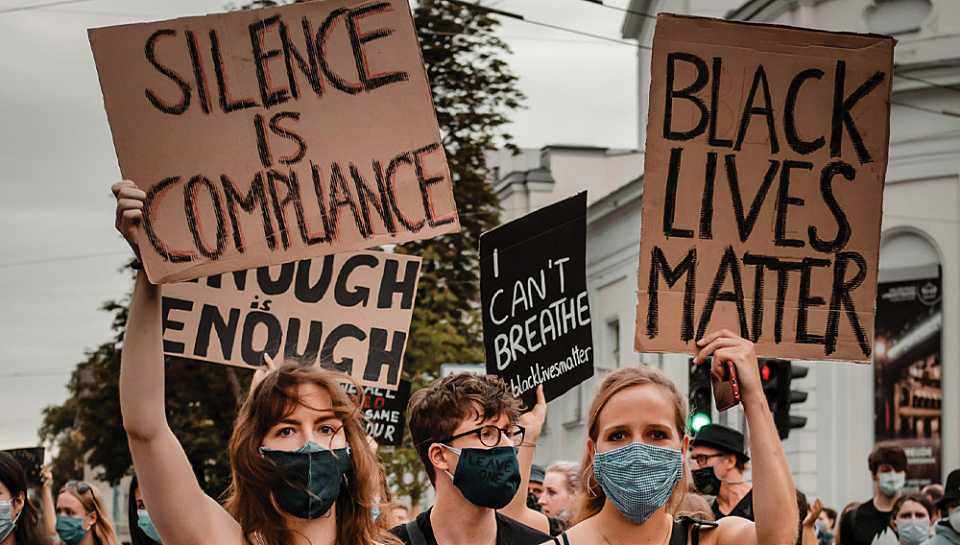
Passivity, or waiting for others to take action will not suffice. Activism is one response, such as those distressed by government inaction in the pace of climate change making their voices heard: this can be an individual consumer making purchasing choices in harmony with their values and beliefs or collective action such as letter writing, demonstrations or litigation.
Advocacy is critical, and many in the community and charitable sector play an effective role maintaining a focus on justice, equity and sustainability locally and globally.
There is a role for the Radical Moderate, the principled pragmatist, the daringly prudent. Such people can be disruptive with positive effect, holding their causes and enterprises together. They can attract critique and adulation contemporaneously, reflecting the outlook of those who react to them.
A good exemplar is Pope Francis. His death on Easter Monday 21st April 2025 prompted a global outpouring of grief at his passing, and gratitude for his voice of compassion and conviction. As British Labor MP Maurice Glassman wrote of him, "He defies the orthodoxies of left and right in the name of common-good policies in which there is an active reconciliation between estranged interests, including class interests."
"We live in historically disruptive times. The rancour and incivility which marks much political discourse; the attempts to normalise extremist views and actions; the rise in authoritarian regimes globally; the attendant stifling of advocacy and media; and the systematic undermining or dismantling of democratic institutions all call for response."
Pope Francis tried to hold together a church believed to be overly ‘Europeanised’ by many in the global south where numbers are growing, and out of touch in the more prosperous north where numbers are declining and touchstone issues related to the role of women and the acceptance of LGBTQI+ invite reproach.
The changes he introduced into the Catholic Church as Pope over a period of twelve years may seem lame to outsiders, but they initiated a cultural revolution it will be hard to erase. He was committed to being simultaneously pastoral and traditional, describing the church as a "field hospital", going to the margins in keeping with the social teaching of a "preferential option for the poor and vulnerable".
He modelled behaviours of humility, compassion, fortitude and engagement, choosing to stay in the Vatican workers accommodation, Casa Santa Marta, rather than the papal palace; installing a huge sculpture in St Peter’s Square graphically depicting the circumstances of migrants and refugees; standing firm on core values in the face of critical onslaught from opponents; and making himself accessible both in Rome and on numerous global visits to ‘the peripheries’, demonstrating values in action.
This is the courage of a leader of conviction – a Radical Moderate.
In the political sphere, there is a critical need for leadership that holds together consensus in the face of a cacophony of opposing views. During our most recent federal election, the major parties sought to attract an historically high number of undecided voters – and marginalise the independents and minor parties. Global trade disruption and Trumpian politics bled into our discourse, and many voters again cast their lot with the teal independents.
The old political arrangement of a "two-party system" is fragmenting. The future political dynamic calls for radical moderation. What are some of the qualities and behaviours that make this situation workable?
Continuously scanning the local and global environment to anticipate and plan for disruption to be positioned to resist coercion and anti-democratic approaches
Adopting a disposition of humility which recognises that the "strongman" leader is an archaic model that underinvests in the power of collectivism and community capability
Understanding we live in a globally connected world, and there is inherent decency and neighbourliness in sharing our riches and knowledge with others, especially in humanitarian crises
Exercising good judgement free of entrenched ideological dogma or righteous certitude
"There is a role for the radical moderate, the principled pragmatist, the daringly prudent. Such people can be disruptive with positive effect, holding their causes and enterprises together."
Aside from political leadership, how each of us responds depends on our disposition and experience.
The birth of the ACNC described here illustrates the need for personal credibility, consistency, and integrity with work teams, the community, and the political process. To offset the bureaucratic and parliamentary onslaught of a hostile government we had to be adroit, well prepared, and effective communicators.
We had to be radical moderates, continuing to implement an Act of Parliament not supported by the government of the day who did not have the numbers to remove us and quash the legislation. We needed stoicism, empathy for our team who chose to stay despite the uncertainty, and engagement with both supporters and detractors.
This story has a happy ending – we survived, and under the current Commissioner, the ACNC is thriving. Values and dispositions such as prudence and pragmatism, courage, conviction, nous, and nimbleness, got us there – all attributes of the "Radical Moderate". And some of those hostile senators were convinced.
Susan Pascoe was inaugural ACNC Commissioner, and also chairs the Australian Council for International Development (ACFID) and the Principals Australia Institute Certification Advisory Board. She was appointed as Adjunct Professor at the University of Western Australia in November 2018.
Posted on 02 Sep 2026
CATHERINE BROOKS on "Diversity, inclusion and community engagement" in Radical Moderate.

Posted on 11 Nov 2025
I’ve seen what happens when fear of conflict wins out over taking a principled stand.
Posted on 10 Nov 2025
JOEL DEANE on "The future of radical moderation" in Radical Moderate.

Posted on 10 Nov 2025
ROD MARSH on "The future of radical moderation" in Radical Moderate.

Posted on 10 Nov 2025
DR TRISH PRENTICE on "The future of radical moderation" in Radical Moderate.

Posted on 10 Nov 2025
DR SIMON LONGSTAFF AO on "The future of radical moderation" in Radical Moderate.

Posted on 10 Nov 2025
DAN LALOR on "The future of radical moderation" in Radical Moderate.

Posted on 10 Nov 2025
SIMON WALLER on "The future of radical moderation" in Radical Moderate.

Posted on 10 Nov 2025
KATE TORNEY OAM on "Navigating complexity & building resilience" in Radical Moderate.
Posted on 10 Nov 2025
KOS SAMARAS on "Navigating complexity & building resilience" in Radical Moderate.
Posted on 10 Nov 2025
BRETT DE HOEDT on "Advocacy and social change" in Radical Moderate.

Posted on 10 Nov 2025
JEN RILEY on "Navigating complexity & building resilience" in Radical Moderate.