
Save Izzy: campaign calls on government to restore funding for vital services directory
Posted on 07 Oct 2026
A major public campaign launched this morning is calling on the federal government to restore…
Posted on 24 Jun 2026
By Nick Place, journalist, Community Directors

Victoria’s Minister for Women and Girls, Gabrielle Williams, reflected that it was “a strange time to be alive, and a strange time for women stepping into positions of leadership” as she congratulated graduates of the 2026 Joan Kirner Emerging Leaders program on Monday.
The minister was referring to the fact that some governments around the world, and some with ambitions of governing in Australia, were seeking to wind back long-established women’s rights.
“It’s strange to be stepping into leadership and finding ourselves having discussions and fighting frontiers that we thought had been long ago won,” she told the graduates at an event at Our Community House. “It just feels like all of these hard-fought gains have been rolled before our eyes, and it’s a reminder that you can’t rest on your laurels, you can’t assume that just because we’ve had a victory that it’s going to be that way forever.”
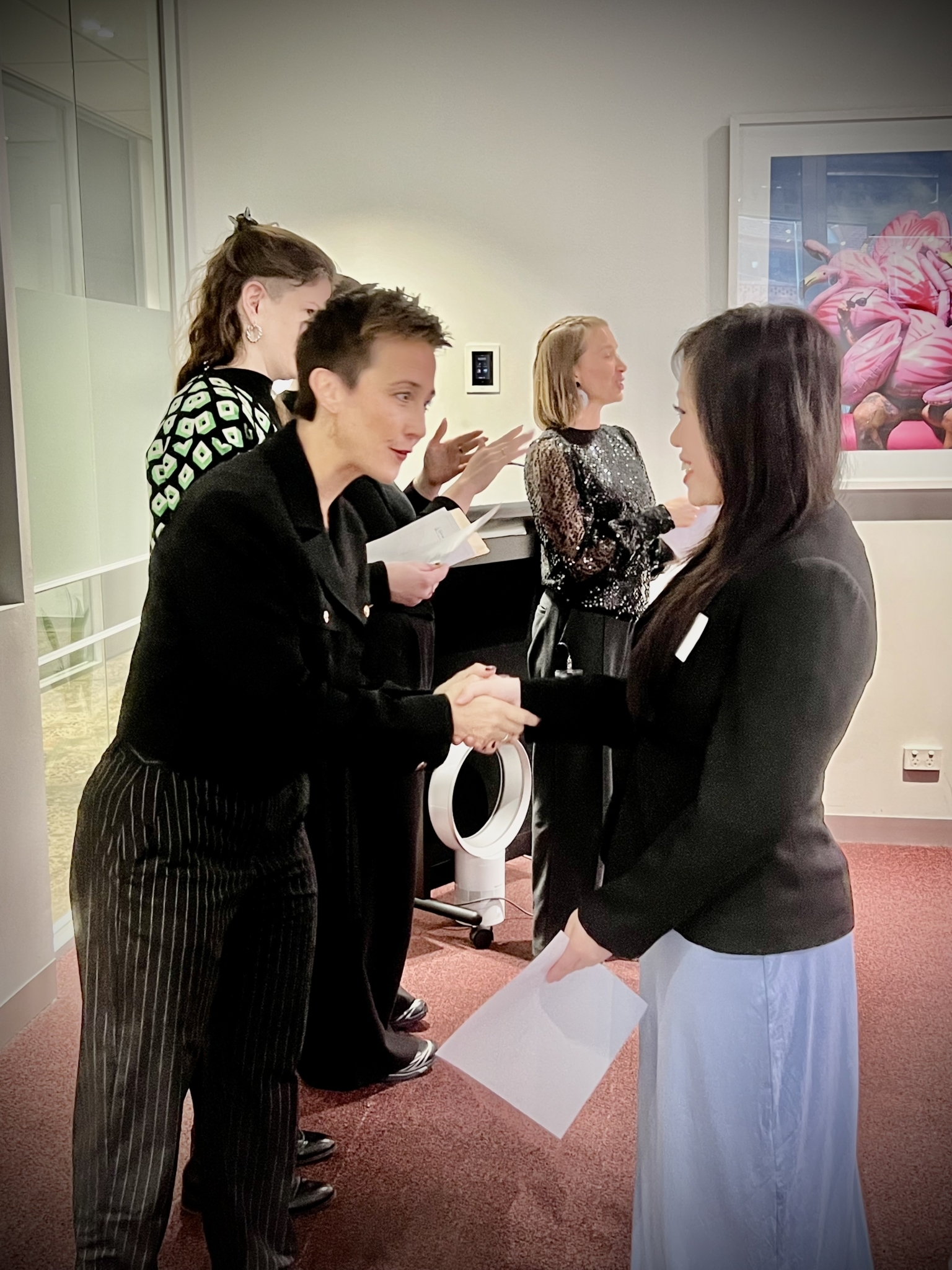
Williams said this was why leadership initiatives like the Joan Kirner Emerging Leaders program were essential.
“There are many examples of where hard-fought-for gains have been very easily taken away, but having more women around those decision-making tables means that we have a much better chance of being able to continue to progress our gains to our collective benefit as a community,” she said.
Joan Kirner Emerging Leaders is one of Australia’s preeminent leadership development programs, funded by the Victorian Government and named in honour of Joan Kirner, the state’s first female premier and a trailblazer in many respects for future female leaders.
“The graduates carry the torch that Joan lit during her remarkable career, by demonstrating what all of us here know to be true: that gender has nothing to do with ability or the capacity to lead,” she said.
The Joan Kirner Emerging Leaders program is fully funded, runs for six weeks, and consists of face-to-face and online learning, peer mentoring, and group work. The most recent group of graduates are leaders in the not-for-profit sector aged between 22 and 40 years old.
The program is part of the Victorian Government’s commitment to gender equality and is aligned with its efforts to lift the representation of women in leadership in workplaces, sport, media, the arts and community settings.
Graduate Aimee Lobban, a team leader at Fitted For Work, said the program had built her confidence. “It’s validation, to know that I’m on the right path,” she said. “I think it’s only going to make me a better leader because I can see lots of different aspects to it now that I didn’t see before.”
Lobban had savoured the sense of community she had developed with the other leaders during the program. “It’s something I’ve never really had before in terms of a network outside of the roles that I’ve done,” she said. “Being connected with all these wonderful people has just been amazing because it helps you to see different perspectives. The conversations we’ve had … It really has been such an empowering experience to share with all of these wonderful people.”
The Institute of Community Directors Australia (publisher of the Community Advocate) runs the program.
“This is a powerful leadership program with a focus on long-term wellbeing of leaders, connection with peers and development of self-awareness which can drive empathetic leadership,” said ICDA’s executive director, Adele Stowe-Lindner.
“The graduates carry the torch that Joan lit during her remarkable career, by demonstrating what all of us here know to be true: that gender has nothing to do with ability or the capacity to lead.”
“It has been an honour to watch this cohort of leaders connect on common experience and share ideas for tackling sticky leadership problems in all kinds of sectors around Victoria.
“As the first woman premier in Victoria, Joan Kirner’s persistence and confidence in the face of challenge inspires the program’s focus on investing in the pool of emerging leaders in Victoria.”
Williams said it was essential for the graduates to consider how they could have a real impact in a way that was true to their gender.
“Look at the examples, in many ways, that men have given us,” she said. “They play golf with each other, and all sorts of deals happen on the golf course, I’m told.
“But what is our equivalent? How do we build a leadership that is distinct, that reflects the way women do things? It doesn’t necessarily have to reflect the example that we’ve been shown by men. How do we actually create our own connection points and ways of lifting each other up and bringing each other along for the journey?
“It can be hard to invent new ways of doing things until you’ve had others show you that path, and I’m looking at a room full of women who are literally not only taking that journey yourself but you’re showing others and mapping out your own way of being and doing things.”
Williams said her experience in the state parliament was that the outcomes that came from having strong female representation there showed that it was much more than a box-ticking exercise or a matter of filling quotas. This representation had been “crucially and fundamentally important to the way decisions are made and ultimately the outcomes that are reached through those decisions,” she said. Women hold the majority of seats in the Victorian Parliament, and the majority of Cabinet positions.
Williams said it had been the women in parliament who had brought new perspectives, new ways of doing things, and a willingness to have nuanced conversations about difficult issues, which meant they had tackled them in a new way.
“I think that’s really important as we get more women into decision making environments, to be able to showcase what that looks like and that there is no one right way of doing things,” she said. “For me that's progress right there.”
Her final piece of advice for the graduates was “Say yes” when offered opportunities, without thinking of all the reasons to say no.
“Get rid of the kind of urge to say no, embrace the yes, just jump in,” she told the group. “If you’ve got a thought, put it on the table and be confident in doing that, because you’ve got just as much to offer, if not more so than the person sitting next to you, and you should feel confident in doing that.
“Doing something that scares you every day is also about realising that in that sense of discomfort and growth – and I’m a big believer in this – the more uncomfortable you are sometimes, it’s because you are on a growth trajectory and you’re building your way to something new and developing new skills and the process.
“You can’t be what you can’t see, and you will be an inspiration for the women leaders still to come.”
Posted on 07 Oct 2026
A major public campaign launched this morning is calling on the federal government to restore…

Posted on 07 Oct 2026
The Australian Literacy & Numeracy Foundation (ALNF) has announced a partnership with mining…

Posted on 07 Oct 2026
A conference in Darwin will this morning hear detailed, strategic plans for how Australia could…

Posted on 30 Sep 2026
Not-for-profit leaders have been warned to be wary of approaches from potential “funding partners”…
Posted on 30 Sep 2026
More than 200 fully funded Centre for Social Impact (CSI) scholarships will help equip for-purpose…

Posted on 30 Sep 2026
Personal stories are among the most powerful tools a charity can have to raise funds and awareness,…

Posted on 23 Sep 2026
A just-released major global survey of charities has found that demand for charity assistance has…
Posted on 23 Sep 2026
Fresh from welcoming delegates to last week’s Philanthropy Australia conference in Brisbane,…

Posted on 23 Sep 2026
A national strategy to develop Australia's regional cities is needed to break the housing…

Posted on 23 Sep 2026
Eight years after a report to Treasury first suggested the charities regulator should be more…

Posted on 17 Sep 2026
Australia’s biggest gathering of philanthropists, which drew more than 1200 delegates to Brisbane…

Posted on 16 Sep 2026
A new partnership between Paul Ramsay Foundation (PRF) and Atlassian Foundation aims to attract…