
Pauline Hanson and the frightening lesson of ‘Years and Years’
Posted on 07 Oct 2026
Our Community's founder and leader, Denis Moriarty, writes that when he watched an over-the-top…
Posted on 22 Apr 2025
By Greg Thom, journalist, Institute of Community Directors Australia

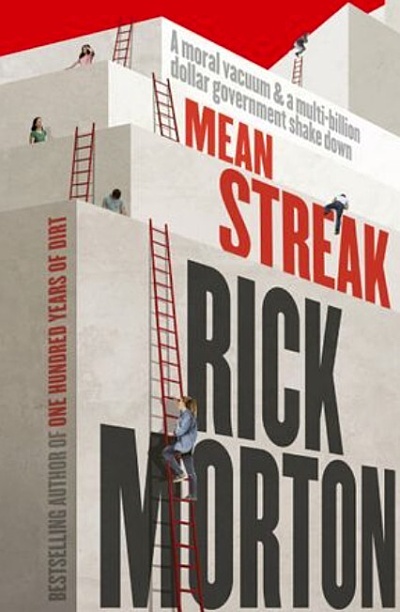
In the postscript to his searing account of the robodebt scandal, Mean Streak: A moral vacuum and a multi-billion dollar government shake down, award-winning journalist and author Rick Morton admits writing the book made him feel ill.
After finishing his 498-page forensic examination of how the public service and successive coalition governments illegally pursued close to half a million Australian welfare recipients for fake debts, I felt the same way.
Angry, disgusted, and perhaps naively, more than a bit bewildered at how my own government and public servants could illegally turn on the nation’s most vulnerable citizens in a such cold-hearted manner for four and half years.
Through saturation media coverage bookended by an explosive Royal Commission, the overall story of the robodebt scandal is now well known.
Hundreds of thousands of struggling Australians who had received a range of Commonwealth welfare payments at varying stages of their lives, were pursued, shamed and badgered into repaying debts the vast majority simply did not owe.
The debts were calculated on an erroneous basis using the dodgy method of income averaging, which had no basis in fact and is now accepted to be illegal.
Unlike the previous manual system of thorough record checking to determine the veracity of alleged welfare debts, robodebt automated the process and placed the burden of responsibility on welfare recipients to prove their state sponsored accusers wrong.
The difficulty of recovering old pay slips, the systemic challenges of dealing with an opaque government bureaucracy and the prevalence of deliberate stonewalling meant that most had no way of doing so.
Confronted with the bureaucracy's accusations and demands, such was the pressure and sense of powerlessness and fear experienced by already fragile members of society confronted with accusations they had received more than their fair share of taxpayers hard earned money that must now be repaid, a number tragically took their own lives.
Morton’s heroic achievement is not only chronicling in minute detail how this draconian system was created and enabled in the first place but also shining a light on the individuals who allowed the whole sorry mess to happen and protected it from scrutiny.
"Mean Streak stands as a testament to what can go wrong when those that are struggling to cope with these types of issues are viewed as numbers, not people."
Often, it’s not the lie but the cover-up that is worse.
In Morton’s compellingly readable telling of the robodebt debacle, both were monstrous.

Even when multiple individuals in the federal government and public service were presented with irrefutable evidence of the illegality of robodebt (not to mention the sheer unfairness of it) they persisted in churning out fake debts anyway.
While excoriating those responsible for robodebt and lifting the veil on the nature of power in the nation’s government and public service, Morton unfailingly returns to the negative impact the powerful had on society’s most vulnerable and how the system was so stacked against them.
He also highlights the individual heroes who tried to make a difference and stop the rot, from honest public servants who attempted to raise the alarm, to the grassroots volunteers behind the #notmydebt campaign and the crusading parents of deceased robodebt victims who stepped up to fight.
Morton’s cautionary tale should be required reading for anyone in the charity and not-for-profit sector who despairs at the enormous task of making a positive difference in the lives of disadvantaged citizens of the lucky country.
The total lack of empathy felt by those who championed robodebt, who were besotted with "reclaiming" billions of dollars from victims, contrasts starkly with efforts such as the Australian Council of Social Services campaign to increase Jobseeker payments, Mission Australia’s advocacy for more social housing and Anglicare’s push for rental relief.
Income and housing security were front and centre in the lives of many of the very people robodebt pursued, in extreme cases, to the grave.
Much has been said and written about the role of the cost-of-living crisis in this election campaign, with politicians of all persuasions promising bucket loads of money to alleviate everything from food insecurity to youth mental health.
Mean Streak stands as a testament to what can go wrong when those who are struggling to cope with these types of issues are viewed as numbers, not people.
Posted on 07 Oct 2026
Our Community's founder and leader, Denis Moriarty, writes that when he watched an over-the-top…

Posted on 07 Oct 2026
A major public campaign launched this morning is calling on the federal government to restore…

Posted on 07 Oct 2026
The Australian Literacy & Numeracy Foundation (ALNF) has announced a partnership with mining…

Posted on 07 Oct 2026
A conference in Darwin will this morning hear detailed, strategic plans for how Australia could…

Posted on 07 Oct 2026
Joseph Friedman is co-founder and publisher of About Time, Australia’s only newspaper for…

Posted on 30 Sep 2026
There's been a lot of talk about AI this week, and some of it has been frightening. So, is AI good…

Posted on 30 Sep 2026
After the biggest AFL game of the year, one player proudly wore the flag of his birth country and…

Posted on 30 Sep 2026
At 21 years old, Tate Donohoe is the founder of Ecodia, an AI-assisted software development company…

Posted on 30 Sep 2026
Not-for-profit leaders have been warned to be wary of approaches from potential “funding partners”…

Posted on 30 Sep 2026
More than 200 fully funded Centre for Social Impact (CSI) scholarships will help equip for-purpose…

Posted on 30 Sep 2026
Personal stories are among the most powerful tools a charity can have to raise funds and awareness,…

Posted on 23 Sep 2026
In his new book Our Place, policy expert Matt Lloyd-Cope argues that housing must be at the heart…