Save Izzy: campaign calls on government to restore funding for vital services directory
Posted on 07 Oct 2026
A major public campaign launched this morning is calling on the federal government to restore…
Posted on 17 Jun 2026
By Nick Place, journalist, Community Directors
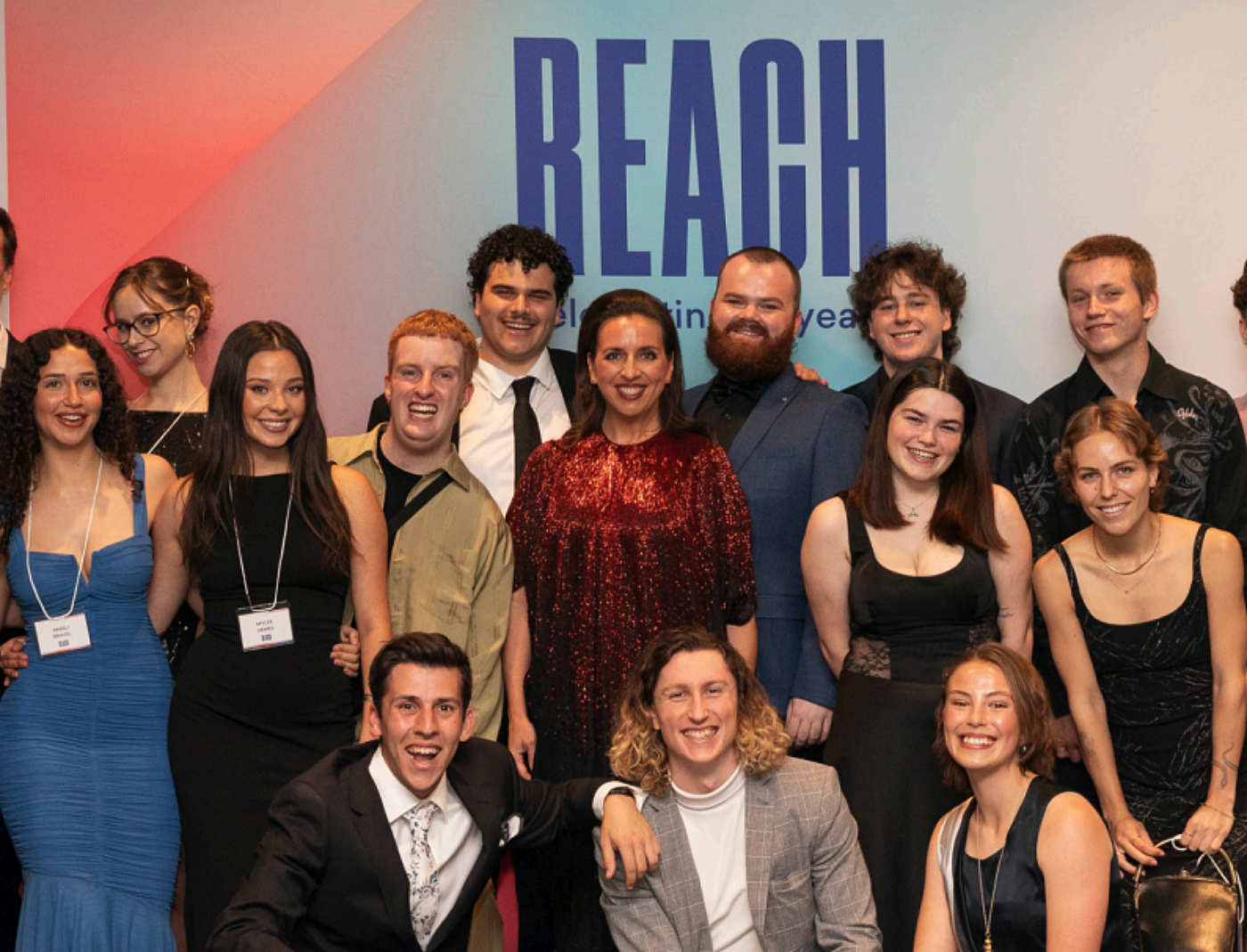
The merger of two leading youth mental health organisations offers a partnership model that could resonate with the wider charity sector.
Prevention-focused youth mental health leader Reach Foundation recently announced it will join the Youth Impact Foundation (YIF) stable. Reach will continue to operate under its own banner, as it has for 30 years, but it will be administratively and strategically incorporated within the YIF, with Reach CEO Alison Wright becoming YIF’s chief strategy and commercial officer.
She will officially take up the role on July 1, but the transition is already underway.
“Prevention charities have historically competed for funding despite sharing the same mission,” said YIF CEO Andy Skimore, announcing the merger. “Our model challenges that norm. By bringing organisations together, we reduce duplication, strengthen sustainability and amplify impact.

“Reach is an iconic brand in youth development, and together we are excited to be building a national platform that can genuinely reshape prevention in Australia,” he said. “This is the approach our governments and communities are calling for because it is focused on one thing: better outcomes for young people.”
Wright said the decision to have Reach absorbed by the YIF was strategic, as well as mission- and values-led.
“Reach has spent three decades building deep trust with young people and transforming lives,” she said. “This merger protects the legacy of Jim Stynes and Paul Currie while unlocking the scale and stability required to grow that impact nationally. At a time when youth mental health challenges are increasing, prevention cannot afford to be fragmented. Together, we can reach more young people, more consistently, and with greater impact.”
While the partnership is noteworthy in its own right, the blueprint has wider significance. The aim of the merger was to achieve greater combined impact for young people needing support, through the creation of a leading national voice in prevention-focused youth mental health and wellbeing, “with the scale, credibility and infrastructure to influence policy, attract investment and deliver meaningful outcomes for the next generation.”
The announcement was hazy about whether this was a merger or a takeover, something that Skidmore acknowledged.
“It is a bit of both,” he told the Community Advocate. “It’s kind of like Reach merging into our model, but it is truly a merger in the sense that Alison, their CEO, joins our exec team, and some of their team join our back-office team, but then they become a brand of the YIF at the same time.
“It definitely requires a laying down of ego, but one of the things I love about our model is that we go beyond performative collaboration or just back office,” he said. “Often when people hear about our model for the first time, they think we’re just the back office and then the charities still run themselves, but we’re actually fully integrated across service delivery and back office.”
Reach Foundation will continue as a distinct brand, working with young people and its own facilitation approach while enjoying strengthened support services, national partnerships, research capability and improved financial resilience by becoming part of the YIF’s network of brands.
“By bringing organisations together, we reduce duplication, strengthen sustainability and amplify impact.”
“One of the challenges in the youth sector, in the mental health sector especially, is facilitators coming and going, because of underemployment of facilitators in terms of only being able to afford to pay them casually or part-time, not be able to pay full-time, so then you lose staff,” Skidmore said. “Being able to give Reach staff a bigger platform of other programs they can facilitate means we can better employ them, they can have a succession plan and they can potentially see a future career pathway in the sector, rather than thinking, ‘Oh, when I get to 25, I need to tap out because there’s nowhere else for me to go so I’ll have to go find a job somewhere else.”

For its part, bringing Reach into its fold offers the YIF by far its largest charity partner, which will push its overall revenue to $9 million next year. That makes it one of the largest youth mental health organisations in Australia, with a strong financial base on which to offer longer term career pathways for youth workers, deliver school programs and enjoy greater advocacy clout. “It gives us a seat at the table with government and other things that neither of us [Reach and YIF] had on our own,” Skidmore said.
Skidmore started the YIF in 2022, after being struck by “the inefficiencies and duplication across the sector” while he was running a mental health charity, Burn Bright.
“We were all crying out for more money and nobody was kind of getting it and we were all struggling to get a bit of scale to make it sustainable,” he said. “You realised that good programs were not running anymore because they’d run out of leadership or people, or money, or both. So, we got into a room with 10 other youth mental health not-for-profits from across New South Wales and a philanthropist [the Edward Alexander Foundation, which went on to fund YIF’s start-up], and came up with the Youth Impact Foundation model.”
He said it was essential that even as foundations such as Reach joined the stable, they retained their individual “brand”.
“It has been critical to our model that when we integrate in an organisation, we keep their brand and their program delivery as it was when they were standalone,” he explained. “I think that really helps in terms of the ego side of things because it means that a charity founder or board can look at the longevity of what they’ve started and still see it existing into the future – rather than it rolling into something bigger but then what they started doesn’t necessarily exist anymore.
Skidmore also found the brand was essential to those using the service. Research revealed that young people didn’t really worry about who was running programs in their schools or communities, as long as they were wearing the logo of the specific charity, such as Reach. “They told us that if they knew the people were from that organisation, they knew they could trust the program delivery,” he said. “We realised quickly that the brand was critical to creating change.”
The model of individual brands within a stable is common in the corporate world: hotels and beer are examples of industries where a handful of global giants own most of the brands customers recognise. Skidmore realised this after founding the YIF, he said.
Asked whether the YIF model of absorbing organisations working in the same space for better impact could be adopted by other charity streams, Skidmore said he believed it could.
“One of our 2030 goals is to see the model replicated across other sectors, so to try and create an open source framework, I guess, where people can learn from what we’ve done and might be able to apply it into other sectors and we can support them to do that,” he said. “There are discussions and definitely people trying to replicate the model already to see if it could work in other sectors, which is awesome.”
“I think one of the secrets to our success has been we’ve been very clear on our what’s in and what’s out,” he said. “We know exactly what our lanes are that we’re playing in, and we know what our sector looks like.”
Posted on 07 Oct 2026
A major public campaign launched this morning is calling on the federal government to restore…

Posted on 07 Oct 2026
The Australian Literacy & Numeracy Foundation (ALNF) has announced a partnership with mining…

Posted on 07 Oct 2026
A conference in Darwin will this morning hear detailed, strategic plans for how Australia could…

Posted on 30 Sep 2026
Not-for-profit leaders have been warned to be wary of approaches from potential “funding partners”…
Posted on 30 Sep 2026
More than 200 fully funded Centre for Social Impact (CSI) scholarships will help equip for-purpose…

Posted on 30 Sep 2026
Personal stories are among the most powerful tools a charity can have to raise funds and awareness,…

Posted on 23 Sep 2026
A just-released major global survey of charities has found that demand for charity assistance has…
Posted on 23 Sep 2026
Fresh from welcoming delegates to last week’s Philanthropy Australia conference in Brisbane,…

Posted on 23 Sep 2026
A national strategy to develop Australia's regional cities is needed to break the housing…

Posted on 23 Sep 2026
Eight years after a report to Treasury first suggested the charities regulator should be more…

Posted on 17 Sep 2026
Australia’s biggest gathering of philanthropists, which drew more than 1200 delegates to Brisbane…

Posted on 16 Sep 2026
A new partnership between Paul Ramsay Foundation (PRF) and Atlassian Foundation aims to attract…