Thousands download ‘Roadmap 2030’ study of NFP governance
Posted on 25 Nov 2026
Community Directors’ wide-ranging investigation into governance challenges for the not-for-profit…
Posted on 19 Aug 2026
By Nick Place, journalist, Community Directors

Who knew the revolution would be so boring?
New Zealand not-for-profits, voluntary groups and charities are currently being offered an opportunity that sounds too good to be true: The Boring Fund Aotearoa offers $NZ500 in randomly drawn, untied funding with no reporting necessary.
The people behind The Boring Fund Aotearoa are Helen Anderson from Volunteer Wellington; Rochelle Stewart-Allen, an NGO coach; and Jackson Lacy, the co-chair of Youth in Philanthropy and a donor advisor for the Gift Trust. The website for their community-led grant fund features sheep and sheep-based gags, while promising to provide $NZ500 – no strings, no reporting, no catch – to successful organisations to fund “the boring bits”, such as web hosting, accountancy, admin time, “and other boring operational costs.”

The “random draw” method means charities are not judged against funding criteria or each other. If they’re drawn, they just get the money.
The organisers were inspired by (aka: stole the idea from) a UK consultant, Christina Poulton, who works with often very small charities to help them with management and fundraising. She created the original Boring Fund in November last year, as a quirky protest about “the state of the stupid funding system” where tiny organisations are required to jump through endless hoops and wade through mountains of forms to get financial support.
Poulton offered UK£200 grants, with no reporting required, to help small groups with “essential things like insurance, web hosting, admin time: the stuff that’s always so hard to find funding for”. Then she uploaded everything to LinkedIn, offering open-source details of how to run a Boring Fund process, which has since been replicated in the United States and now New Zealand.
“We’ve invited people to pre-register for a wait-list and 159 small charities have already signed up,” said Helen Anderson, one of the Kiwi fund’s co-founders. “We’ve had cultural groups, community centres, dress for success, youth councils, animal rescues, arts collectives, music groups, toy libraries, which I have a soft spot for. We’ve also had some really small organisations that I didn’t know about, which has been cool.”
The Boring Fund Aotearoa officially opens for applications on September 1 and will start drawing recipients and distributing money in October – assuming the current call for donations to make it happen succeeds in passing the required NZ$15,000 before the end of August.
“It’s kind of crowd-funding,” Anderson said. “We’re up to 38 donors but that won’t fund a third of it yet. Our goal was to have a good chunk of money, $15,000 in the pot, before we opened, because otherwise we’re just accidentally making the most competitive funding round ever, which is sort of against the entire ethos.
“The sheep puns are a tactic, but the tactic I like more is just saying what everyone’s too afraid to say about how annoying funding is.”
“We’re shifting up our tactics as we get closer to wanting to open. Like, we’re going to hold a comedy fundraiser – ‘the most boring comedy show ever’.”
For Anderson, who worked in funding for eight years, Poulton’s frustration with traditional funding methods struck a chord. “I think everyone’s so tight on the need to achieve their own giant strategy and their view on where the world needs to go,” she said. “My secret view is that we should all go back to a rich guy with a top hat walking down the street and hearing a great story and just giving money and not asking for anything in return. Let’s just go old-school philanthropist!”

This playful spirit fuels the Aotearoa version of The Boring Fund, which has been enthusiastically received. “People love it,” Anderson said. “The comments and the social media uptake have been pretty huge. People just really respond to the idea and the sheep puns.”
“I’m trying to move away from the sheep but the other people on the team are like, no, were keeping the sheep,” she said. “The sheep puns are a tactic, but the tactic I like more is just saying what everyone’s too afraid to say about how annoying funding is.
“The point of what we’re doing is to show that the boring essential operational stuff can be the most beautiful and important to fund and unlocks real impact. Making funding processes overly complicated from application to accountability doesn’t – it costs the community sector precious time. Also, funding shiny projects over what works is not what community needs. Let’s trust each other more.”
More information
Posted on 25 Nov 2026
Community Directors’ wide-ranging investigation into governance challenges for the not-for-profit…

Posted on 25 Nov 2026
Not-for-profits have become more adept, sophisticated and confident in their use of technology and…
Posted on 25 Nov 2026
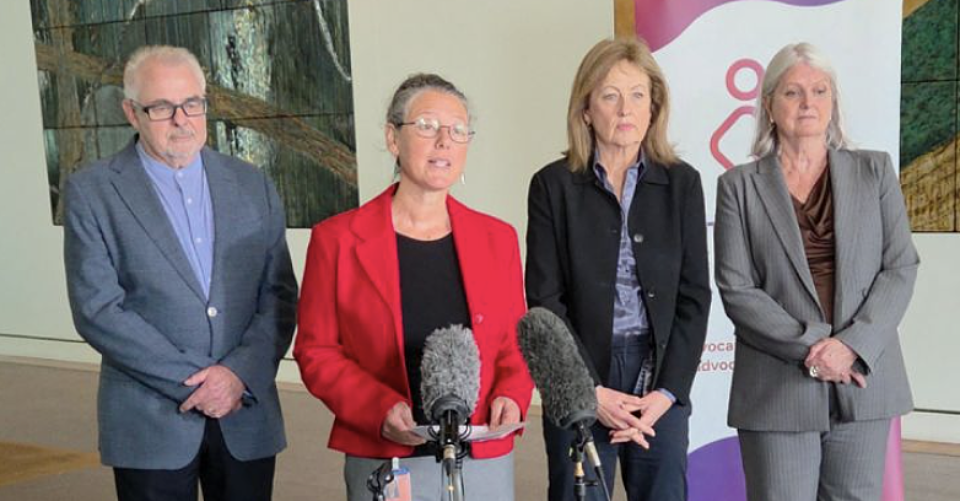
Almost 80 charities and peak bodies have accused the Albanese government of breaking a promise to…

Posted on 18 Nov 2026
Charity and not-for-profit workers across six countries, including Australia, are being asked to…

Posted on 18 Nov 2026
A commitment to creating conditions in which philanthropy and charities can thrive is behind…

Posted on 18 Nov 2026
What do Lifeline WA, 7-Eleven’s support office, Paramount Australia and New Zealand, the Port of…

Posted on 18 Nov 2026
A new and free-to-join Not-for-profit Cyber Uplift community forum created by the federal…

Posted on 11 Nov 2026
The persistent cost-of-living crisis is affecting Australians in many ways, but two charities have…
Posted on 11 Nov 2026
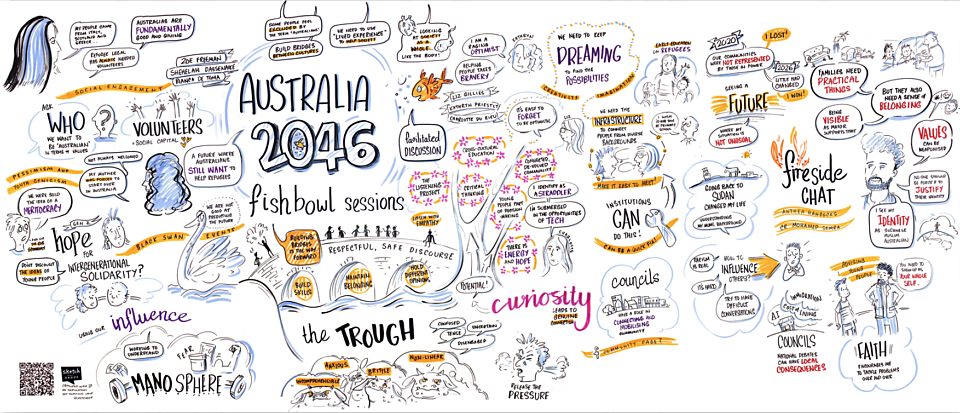
The question of what Australia might look like in 2046 – only 20 years away – can cause anxiety and…

Posted on 11 Nov 2026
The Paul Ramsay Foundation has announced $24 million in funding for programs aimed at helping…
Posted on 11 Nov 2026
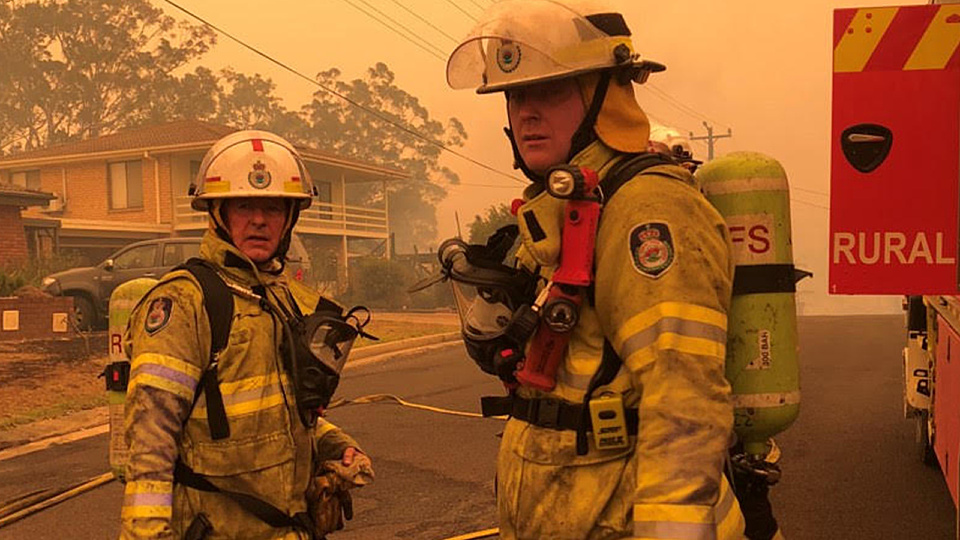
As Australia faces a record-breaking “super” El Niño weather system that has arrived ahead of…

Posted on 05 Nov 2026
Mapping Social Cohesion 2026, published today, has found that 48 per cent of Australian adults are…