
Beyond the Binary: Fundraising isn't just 'good vs bad money'
Posted on 02 Sep 2026
CATHERINE BROOKS on "Diversity, inclusion and community engagement" in Radical Moderate.
Posted on 10 Nov 2025
By Ann Sherry AO
ANN SHERRY AO on "Advocacy and social change" in Radical Moderate.
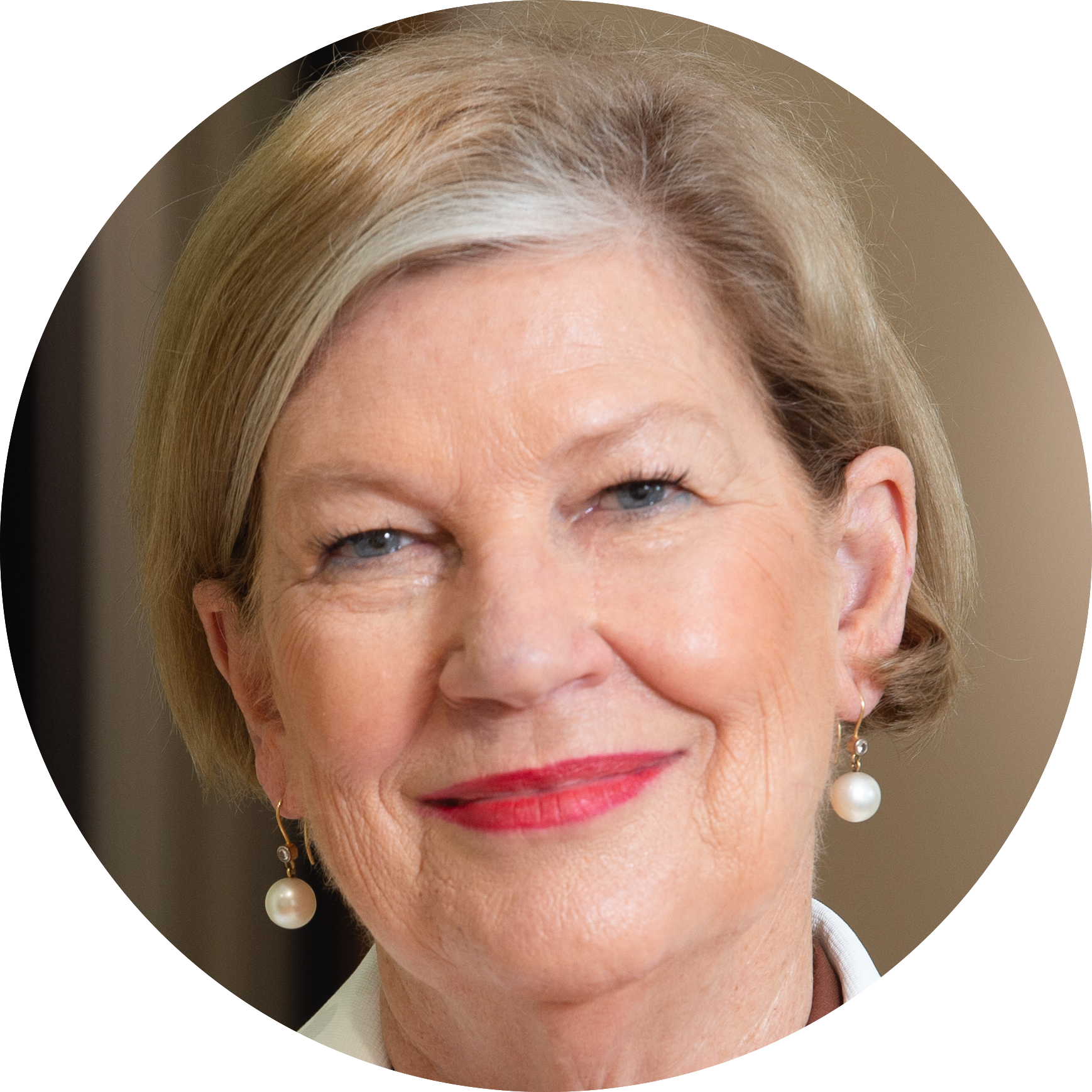
The role of a Radical Moderate is to drive change, through having the confidence and passion to dream big, recognise and be prepared to use their power, and to engage with opposing views, says ANN SHERRY AO, Chancellor, Queensland University of Technology (QUT).
What is a Radical Moderate? Someone who takes "power" to create change, to shape the world we hope for, or is it about the preparedness to use power?
Individuals in big corporate jobs, leading not-for-profits, or inhabiting any major leadership role, actually possess a great deal of power and influence, but only a handful of people use it fully. Think of the resources, the skills, the ability and the sway they potentially hold to drive change, to innovate and influence the world.
I have no doubt that others looking on see these leaders as collective holders of power and influence, and yet, I find their use of power and influence is often lacking or episodic. By failing to act, they don’t grab the opportunity that is presented by the power they hold.
So, the question for me is how can a Radical Moderate unlock this potential? How does he or she drive innovation? Drive debate? How do we move forward?
I believe a strong motivator can come from being always slightly dissatisfied with the status quo – a healthy state of being. I believe this is where the Radical Moderate sits – in that moment where dissatisfaction can be the driver for how you unearth ideas, even ones that people might have tried before but they haven’t worked, possibly just because the time wasn’t right when they were tried. Not accepting the current reality can lead to ideas that seem radical at the time, but can become the new normality over time. It’s that interesting junction between pushing hard into what is seen as radical ideas or thoughts, to eventually change the centre of gravity.
"Not accepting the current reality can lead to ideas that seem radical at the time, but can become the new normality over time."
An example of what I’m talking about happened three decades ago, when I was in a big corporate job at Westpac, with an influential national profile, and became part of an experiment, with a collective of corporate and community leaders, to truly move the needle on assisting Indigenous communities on Cape York. We knew government wasn’t about to try anything radical in that space, and Indigenous leader Noel Pearson had told us he believed what the communities needed were the executive-level smarts and skills of big corporates to try and solve systemic problems, and so we seconded top staff to the Cape.
It turned out many of the problems were not insurmountable. There were things like how do you set up a bakery in Hope Vale? How does a community get itself financially sustainable? Then more complex and ambitious work, such as dealing with mining companies, setting up fishing enterprises, strategizing ways that locals could make a proper income out of their increasingly popular artwork.
We shifted the dial, by using resources and power in ways nobody had attempted before. At the time it was seen as a really radical idea, to send skilled corporate people into communities but, of course, what we learned quickly was the value to the Indigenous organisations was the skill transfer, but the value to the corporate organisations was the extraordinary experience that seconded staff got – taking one’s soul to work – at a time when they might have otherwise felt that their jobs didn’t give them enough purpose. It was truly a win-win.
To me, this is where the Radical Moderate can be so powerful. It’s about using the power you possess to grab an opportunity to do something constructive and different, on a systemic problem, and then watch it develop and become normal over time.
I believe the lack of willingness or ability to exploit power by those leaders who have it is a major issue holding back Australia’s potential in many areas of business, not-for-profit work and the reduction and elimination of broad spectrum well understood endemic issues.

In that Cape York case, a group of corporate and community leaders used our power to try something new and ambitious. Thirty years later, as Jawun, it is still operating.
Having power, and using power well, isn’t necessarily about just doing what everybody else has always done. It’s about seeking the gaps, tuning into where you feel dissatisfaction. Asking where your organisation can try something that’s much more innovative, more radical, to potentially deliver a completely different sort of outcome. Part of that answer might be considering non-traditional, surprising partnerships that could shift your view of the world.
It exasperates me in today’s world when, instead of exploring such unlikely partnerships, I see people diving into partisan camps, slinging mud at one another across the corridor, taking sides and refusing to understand and engage. To me, when that happens, the world just seems … smaller.
This is not the way that leads to breakthroughs, that leads to system-change, that will solve the giant issues of our time. We need to think bigger; we need to have more ambition. I believe this is the vital role that a Radical Moderate can play: to ask the big questions and think beyond the smallness of so much of today’s work and debate.
The purpose of the Radical Moderate is to move beyond the binary ways of today’s discourse – to not get caught up in the disabling "You are wrong. I am right". Instead, the Radical Moderate has a different path – to find ways into issues that are solution-oriented.
As Chancellor of Queensland University of Technology (QUT), I feel strongly that universities have a role to play here. They must play a much bigger role than only teaching practical skills that directly translate to work, although that is clearly one important part of their existence.
But there is also the need to help students develop their world view. Universities are places where we all learn to think and learn to engage with the world. University students come out of a very structured secondary education system and need to adapt, to learn at their own pace, and find ways of getting information. They must find ways of distilling what they hear and learn to engage with completely different groups of people.
"The purpose of the Radical Moderate is to move beyond the binary ways of today’s discourse – to not get caught up in the disabling "You are wrong. I am right". Instead, the Radical Moderate has a different path – to find ways into issues that are solution-oriented."
In today’s world, the attempts to shut down voices that don’t conform with the norm, or the use of violence to shut down views that are opposed to yours, is making the world smaller, not bigger.
I think all of us with authority, whether it’s in the university sector, corporate sector, or not-for-profit sector, have a fundamental and important role to keep people discussing, debating and looking for opportunities, finding the cracks and the gaps where we can try things, even if they don’t work, as opposed to shutting everything down and getting everyone to agree with us.
So, I ask, where are our inner radicals? Where are we all, and why aren’t we all pushing harder? We need more ambition in so many fields. Why aren’t more groups working together to make greater collective change?
We need bigger thinking, rather than everybody in their isolated, small pockets of thought. It doesn’t matter that people have opposing views – surely, that should be a strength, not a divisive barrier. Good solutions come from a position where people might have very different views, but they’re committed to find a way forward.
Reinvigorating regional Australia, saving the Barrier Reef, taking action on climate change to support our Pacific Island neighbours. None of these are radical ideas, but coming together with bigger thinking, unlikely partnerships and a collective action to achieve these things. That’s radical. And it needs to happen. I think the time is right.
Ann Sherry AO is Chancellor of Queensland University of Technology (QUT) and one of Australia's leading business executives, with a career spanning government, banking, and tourism. She has held executive, board, and chair roles across major Australian entities. An active philanthropist, she is passionate about improving opportunities for women in STEM and sport, and supporting Indigenous Australians.
Posted on 02 Sep 2026
CATHERINE BROOKS on "Diversity, inclusion and community engagement" in Radical Moderate.

Posted on 11 Nov 2025
I’ve seen what happens when fear of conflict wins out over taking a principled stand.
Posted on 10 Nov 2025
JOEL DEANE on "The future of radical moderation" in Radical Moderate.

Posted on 10 Nov 2025
ROD MARSH on "The future of radical moderation" in Radical Moderate.

Posted on 10 Nov 2025
DR TRISH PRENTICE on "The future of radical moderation" in Radical Moderate.

Posted on 10 Nov 2025
DR SIMON LONGSTAFF AO on "The future of radical moderation" in Radical Moderate.

Posted on 10 Nov 2025
DAN LALOR on "The future of radical moderation" in Radical Moderate.

Posted on 10 Nov 2025
SIMON WALLER on "The future of radical moderation" in Radical Moderate.

Posted on 10 Nov 2025
KATE TORNEY OAM on "Navigating complexity & building resilience" in Radical Moderate.

Posted on 10 Nov 2025
KOS SAMARAS on "Navigating complexity & building resilience" in Radical Moderate.
Posted on 10 Nov 2025
BRETT DE HOEDT on "Advocacy and social change" in Radical Moderate.

Posted on 10 Nov 2025
JEN RILEY on "Navigating complexity & building resilience" in Radical Moderate.