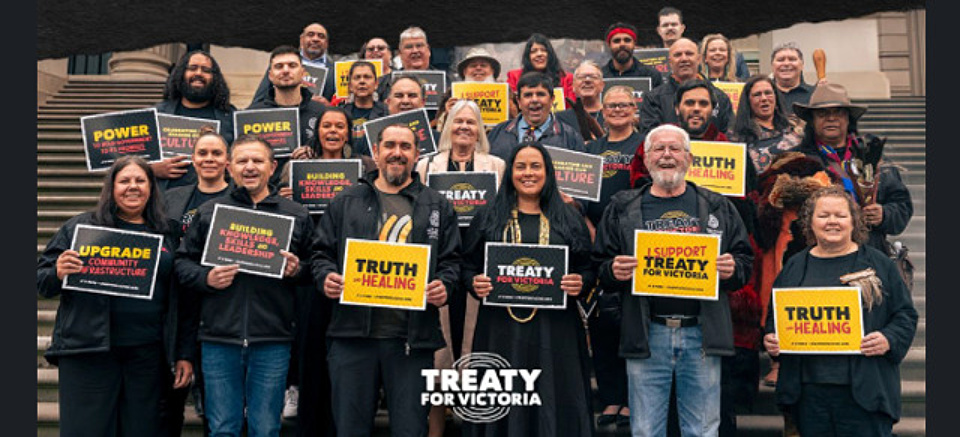
Victoria’s election sees one pothole worth 20 treaties
Posted on 25 Nov 2026
As Our Community's founder and leader, Denis Moriarty, looks towards this weekend's Victorian…
Posted on 25 Nov 2026
By Doug Taylor, chief executive officer, The Smith Family

Recently, I was at Canberra’s Parliament House for the launch of the Tech Reuse for Good Charter. It brings government, business and the community sector together around a practical idea: technology one organisation no longer wants can be given a second life in the hands of someone who needs it.
As I watched the charter being signed, my mind went back to 2005 and a warehouse in Mascot in Sydney.
A small group of us at WorkVentures, including the late founder Steve Lawrence, were trying to figure out how to refurbish end-of-life computers and get them to families on low incomes and not-for-profits. Steve used to talk about “strategic opportunism”. I’ve always liked that concept: have a goal, a clear plan and pragmatism, ready to seize opportunities when they arrive.
We had big ambitions. We imagined companies routinely donating their superseded technology so it could be put to good use. At the time, it seemed a long way off.
So, we got on with what we could. We built a social enterprise and developed distribution channels. We made the case to businesses one by one. The enterprise we developed went on to distribute many computers to low-income families and not-for-profits.
Now, just over 20 years later, I found myself watching something close to that early ambition gain national momentum and institutional backing.
Earlier this month, education ministers agreed to investigate restricting screen time and technology in the classroom. That’s an important discussion and it must include young people and families who don’t have ready access to technology at home.
For years, we’ve argued that digital inclusion isn't a luxury, with little traction. It took the pandemic for the public to really understand the issue. When children were suddenly learning from home, the digital divide was difficult to ignore.
Since 2023, over 12,000 devices have been donated to students participation in The Smith Family’s Learning for Life program. But today, 43% of those on that program still don't have a laptop or tablet they can connect to the internet at home. That makes it tough to do homework, research and build the skills they need for a digital world.
Nationally, an estimated 1.42 million young Australians lack access to a laptop or computer at home.
And even when there’s a laptop and reliable internet at home, a young person may not have ready access to it. They may be sharing the device with siblings who have their own schoolwork or parents who need it for work and everyday tasks.
“If access to the technologies that improve learning is determined by family income, the digital revolution risks widening educational inequality rather than reducing it.”
But here’s what makes this issue so compelling: this is a problem we can solve.
Over the next five years, around 10 million devices are expected to be replaced across our corporate and public sectors.
On one side are young people who need technology to participate fully in their education, and on the other, millions of devices that are no longer needed.
Can we build the systems, partnerships and commitment needed to connect the two? Absolutely. That's why the Tech Reuse for Good Charter is important. It encourages organisations to make device reuse part of their everyday planning.
But devices alone aren't the solution to digital exclusion.
Professor Leslie Loble and Dr Kelly Stephens, from the University of Technology Sydney, have argued for something more ambitious: a Digital Equity Learning Guarantee for students. Genuine digital inclusion isn't just putting a laptop on a desk. Young people need connectivity, skills and access to high-quality digital learning.
That matters even more as artificial intelligence becomes embedded in education and work.
If access to the technologies that improve learning is determined by family income, the digital revolution risks widening educational inequality rather than reducing it.
Our ambition is that every student we support is digitally included.
The Tech Reuse for Good Charter, led by the Business Council of Australia, WorkVentures and Good Things Australia, gives our country an opportunity to accelerate progress towards goals like this.
Seeing this work gain momentum is personally rewarding.
I think of Steve Lawrence and others who were working on these ideas long before circumstances were favourable.
None of us owns social change. We take the baton from those who came before us, contribute what we can and pass it on.
In that Mascot warehouse two decades ago, the idea that businesses might think differently about what they do with their millions of unwanted computers felt ambitious. Today, it’s starting to feel real.
Now, let’s seize the opportunity in front of us and run with that baton as far as we can.
Doug Taylor is CEO of national children's education charity The Smith Family.
Posted on 25 Nov 2026
As Our Community's founder and leader, Denis Moriarty, looks towards this weekend's Victorian…

Posted on 18 Nov 2026
“Memory produces hope in the same way that amnesia produces despair.” (Walter Brueggemann,…

Posted on 11 Nov 2026
On everything from gambling to climate, charities to disability reform, Australian federal and…

Posted on 04 Nov 2026
I watched an angry man on the TV news. “Australia is stuffed, going backwards,” he said. “No one is…

Posted on 04 Nov 2026
Working for a cause you believe in can be deeply rewarding, but it can also lead to burnout. Jackie…
Posted on 28 Oct 2026
Altering Australia’s path from anger and potential violence needs more than asking one another to…

Posted on 28 Oct 2026
Are compliance processes crowding out the boardroom conversations that really matter? The…

Posted on 21 Oct 2026
The wider not-for-profit sector doesn't pay much attention to owners corporations, but maybe it…
Posted on 14 Oct 2026
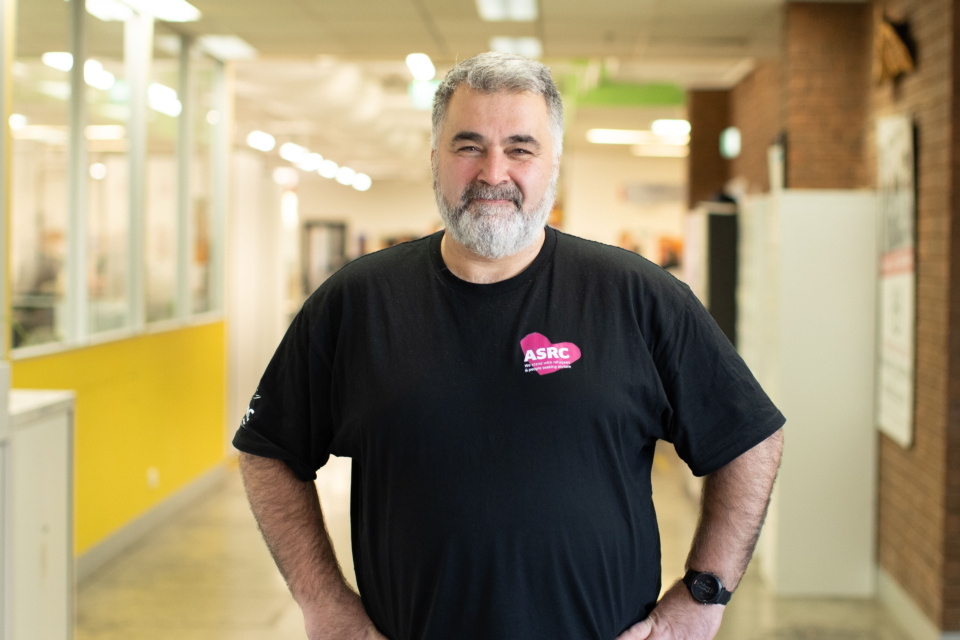
In the ongoing political debates about migration levels, Asylum Seeker Resource Centre founder Kon…

Posted on 14 Oct 2026
Over the weekend, federal Liberal leader Angus Taylor told the Conservative Political Action…

Posted on 07 Oct 2026
Our Community's founder and leader, Denis Moriarty, writes that when he watched an over-the-top…
Posted on 30 Sep 2026
There's been a lot of talk about AI this week, and some of it has been frightening. So, is AI good…