25 years after Tampa, the politics of fear are still setting the terms
Posted on 14 Oct 2026
In the ongoing political debates about migration levels, Asylum Seeker Resource Centre founder Kon…
Posted on 12 Nov 2025
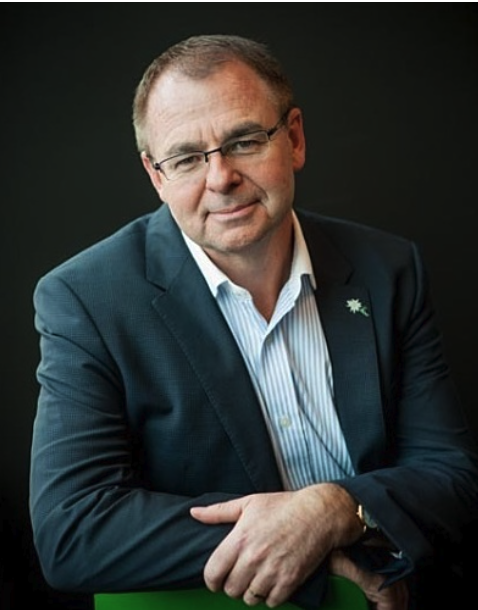
By David Crosbie, CEO, Community Council for Australia

Managing a charity or not-for-profit in Australia is often more complex than it may appear. On any given day, there’ll be hard decisions to be made, decisions that affect people’s lives. It’s always a fine balancing act, made more difficult by the uncertainty and instability of an ever-changing internal and external environment.
In the NFP world, the budget an organisation begins the year with can go in many directions – expected income may not continue or additional income may be realised – and this raises questions about what then are the key priorities.
If income for services is reduced, does the organisation have the option to cut elsewhere and maintain services? Could it spend less on the support and infrastructure that enable and feed into the effectiveness of their services? Would that be a good decision? Is there a line of credit the organisation can fall back on? Does it have reserves?
Should the organisation invest more in fundraising to try to build its income? Where does the money for that additional investment come from? How does an organisation diversify its income if it can’t invest in pursuing new opportunities?
Where does it get the money to meet rising costs like insurance and power bills and climate adaptation?
Even when the priorities are clear, there is often a broad range of decisions to be made about how best to apply resources in a given area. On staffing alone, there are many different approaches. Should the organisation pay more to attract staff with higher level skills and experience who can deliver quality programs and services, or should it reduce salaries and make more people part time to increase the number of available staff and offer more services to more people?
How important is having workable office space or reliable transport that doesn’t cost the organisation more through ongoing maintenance? Has the organisation covered off its work safety obligations, including steps to reduce psychological hazards in the workplace and ensuring work from home set-ups have been ergonomically assessed for health and safety?
Is the organisation’s information stored appropriately? Do its systems meet privacy requirements? Has the organisation established data systems that are able to inform the organisation about its work and effectiveness? How does it measure its outcomes and impact? How safe is it from a cyber-attack? What is the organisation’s AI policy?
These are just a few of the many issues CEOs and program managers face in the NFP sector. There is a much longer list of questions we could ask.
“(CEOs in our sector) can see the potential of technology and AI. They want their organisations to do better by drawing on emerging technologies, but if the only way they can do that is by reducing services to the community they serve, how does that work?”
This kind of decision making, grounded in uncertainty, but informed by mission and purpose, is what NFP CEOs and managers have to deal with. It matters. It’s the context, the reality in which many of us operate, the day-to-day environment we work in that many governments, funders, unions, advisors and others either don’t understand, or don’t accept. Sometimes, even people in our own organisations seem oblivious to the challenges we face.
I raise this complexity not to complain – like most of my peers I feel privileged to take on these challenges and make a difference in the world – but to explain a little about why we see what we see across our sector.

Over the past couple of months, I have been arguing with unions and government officials about the real costs of restricting the capacity of charities to employ staff on fixed term contracts that align with the available funding. While CCA won a concession – a temporary exemption for charities under $10 million – there was little acknowledgement of how the employment rules applying to repeat contracts would negatively impact many charities.
This week Infoxchange released the 10th edition of its Digital Technology in the Not-for-profit Sector Report. Many useful and informative findings emerged in this latest report, not only about where we are, but also where we were 10 years ago.
For me, the key finding is that the number one issue for leaders in our sector in relation to technology is trying to find the resources they require to fully realise the potential of technology to enhance their capacity and effectiveness in pursuing their mission.
And when we look at who is doing well in this area, it will come as little surprise to know it’s the organisations that have invested more in their digital capacity who are ahead in critical areas like cyber security, effective use of data and adoption of AI.
CEOs in our sector can see the potential of technology and AI. They want their organisations to do better by drawing on emerging technologies, but if the only way they can do that is by reducing services to the community they serve, how does that work?
What we are now facing is a charities and not-for-profit sector where those with the resources will be able to leverage technology to enhance their programs and services, while those without – typically smaller organisations – will be left to scramble along behind with whatever they can spare.
And many charity and not-for-profit managers will continue to lie awake at night wondering where the resources they need to take advantage of emerging technologies are going to come from.
Emerging technology offers both real benefits and real risk. If Australia is to become more innovative and productive, if we are to ensure our safety and maintain our values, investment in technology for the charities and NFP sector should be a very high priority.
David Crosbie has been CEO of the Community Council for Australia for the past decade and has spent more than a quarter of a century leading significant not-for-profit organisations, including the Mental Health Council of Australia, the Alcohol and Other Drugs Council of Australia, and Odyssey House Victoria.
Posted on 14 Oct 2026
In the ongoing political debates about migration levels, Asylum Seeker Resource Centre founder Kon…

Posted on 14 Oct 2026
Over the weekend, federal Liberal leader Angus Taylor told the Conservative Political Action…

Posted on 07 Oct 2026
Our Community's founder and leader, Denis Moriarty, writes that when he watched an over-the-top…

Posted on 30 Sep 2026
There's been a lot of talk about AI this week, and some of it has been frightening. So, is AI good…

Posted on 30 Sep 2026
After the biggest AFL game of the year, one player proudly wore the flag of his birth country and…

Posted on 23 Sep 2026
In his new book Our Place, policy expert Matt Lloyd-Cope argues that housing must be at the heart…

Posted on 23 Sep 2026
There are solutions to counter the rise of One Nation but they might not be residing in the mess…

Posted on 03 Sep 2026
Denis Moriarty has an issue with insurance companies varying premiums because of what they perceive…
Posted on 02 Sep 2026
Yesterday, at a meeting just outside Castlemaine in Victoria, 70 people came together to hear…

Posted on 26 Aug 2026
Our Community's founder and leader, Denis Moriarty, says he commissioned a new piece of street art…

Posted on 19 Aug 2026
Government funding is at the centre of Australia's charity and not-for-profit sector – our number…

Posted on 12 Aug 2026
Our Community's founder and leader, Denis Moriarty, says fostering a child was his worst nightmare,…