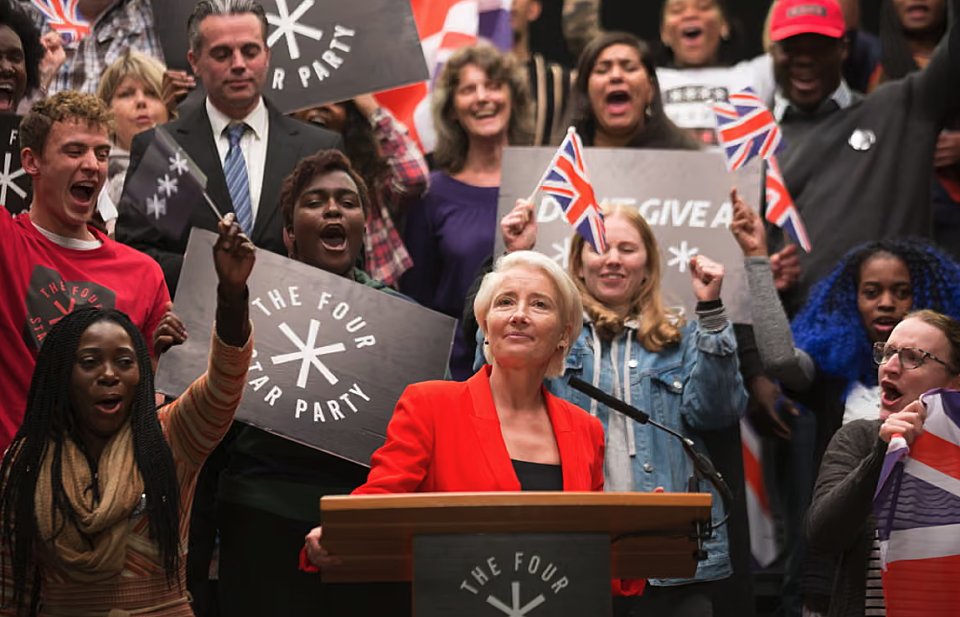
Pauline Hanson and the frightening lesson of ‘Years and Years’
Posted on 07 Oct 2026
Our Community's founder and leader, Denis Moriarty, writes that when he watched an over-the-top…
Posted on 26 Nov 2025
By David Crosbie, CEO, Community Council for Australia

Charities and not-for-profits can be outstanding advocates for their cause, their community, their purpose. I’m constantly reminded of the tremendous advocacy skills that exist within our sector across many challenging and complex areas of national and international policy. At the same time, I am often dismayed by the lack of advocacy from our sector on behalf of itself. This is not surprising. Self interest is not a big motivator in our sector.
One of the positive advocacy steps many more charities and not-for-profits might consider taking is making a submission as part of the 2026–27 pre-Budget submission process.
Submissions are now open – they close at the end of January 2026. To make a submission, go to https://consult.treasury.gov.au/2026-27-pre-budget-submissions.
It’s important to adopt a realistic approach to pre-Budget submissions, in terms of both your expectations and your effort.

It is highly unlikely that just because a charity or not-for-profit makes a pre-Budget submission calling for a new federal Budget measure (e.g. the introduction of a limited form of estate duties when people die), the Treasury and government will suddenly adopt that measure.
Having a government adopt new policies – especially policies that require new legislation or new expenditure – often takes sustained effort across multiple levels of advocacy involving detailed costings and modelling, drafting possible legislation, sustained public campaigns and extensive strategic political alliance building.
A pre-Budget submission can be part of the process of driving change and reform, but it’s unlikely to be enough on its own.
Being realistic about the amount of effort a charity or not-for-profit can and should put into preparing a pre-Budget submission means understanding that a small organisation with limited resources, for example, isn’t going to prepare a 20-page submission with detailed costings, policy modelling, and colourful graphics highlighting every aspect of every proposal.
Of course, some well-resourced organisations do prepare comprehensive pre-Budget submissions, but it’s also possible, and often appropriate, for a smaller organisation to simply send in a two-page letter. In fact, a well-focused letter explaining an issue of concern and outlining possible ways to address it can be just as powerful as a fancy booklet prepared by an expensive consultancy firm containing vested-interest policy asks backed up with detailed technical arguments.
So, given that a pre-Budget submission is unlikely to change much and will require some effort, why bother?
The answer lies in three critical benefits.
Making a pre-Budget submission requires an organisation to ask itself what matters, what it wants to change, how it wants it to change, and what it should prioritise in terms of how the federal government can better support its work.
At the Community Council for Australia (CCA), we find that the preparation of a pre-Budget submission provides a beneficial opportunity to check that our core policy platform is endorsed and supported by our members. All members see our pre-Budget submission and have a chance to have input before it is finalised. This is a valuable exercise in affirming our federal government policy focus.
“If the sector is to be valued and much-needed reforms are to be delivered, we all need to be more active and effective in our advocacy.”
The second benefit is that regardless of how tiny the impact, the fact that a charity or not-for-profit takes up the invitation from the federal Treasury to have some input into the most important policy document a federal government prepares is noteworthy. It reinforces an organisation’s role and credibility as an advocate for its purpose and its community.
The third benefit is about our sector as a whole. Imagine if 10 per cent of all charities made pre-Budget submissions. That would be over 6,000 submissions from charities working at the heart of communities, articulating in their own words the sector reform they need to better support their capacity to do what they do in making Australia a better place. The weight of many voices, from across communities, arguing for the value of their work and what charities need to be sustainable and effective in a very tangible way is a great way to act individually and collectively to lift the profile, contribution and needs of our sector.
Small business does this very well. In every local electorate around Australia and at virtually every public meeting a politician attends a small business owner will talk very directly about their value, their contribution and their needs. And it pays off – every Budget carries a section outlining how the government is supporting the important role small business plays in the economy and in communities.
Last year, a total of 789 pre-Budget submissions were received and published by the Treasury. Many of these submissions came from peak bodies, many from charities and not-for-profits, some from for-profits. If there were significantly more submissions this year for the 2026–27 federal Budget, it would add political weight to reform arguments being put forward by the sector, including in critical areas such as deductible gift recipient (DGR) reform and support for new technologies.
If your organisation is unsure what should be advocated for in a pre-Budget submission, I suggest looking again at the sector blueprint, checking peak body submissions relating to the area you work in, and reviewing the submission CCA made last year.
Our sector can’t afford to sit back and wait to be attended to. If the sector is to be valued and much-needed reforms are to be delivered, we all need to be more active and effective in our advocacy, not just for our causes and purpose, but for ourselves, the people we work with and work for. A pre-Budget submission is a low-cost way of at least putting our hands in the air, and that can only be a good thing. Who knows – we might even get noticed.
David Crosbie has been CEO of the Community Council for Australia for the past decade and has spent more than a quarter of a century leading significant not-for-profit organisations, including the Mental Health Council of Australia, the Alcohol and Other Drugs Council of Australia, and Odyssey House Victoria.
Posted on 07 Oct 2026
Our Community's founder and leader, Denis Moriarty, writes that when he watched an over-the-top…

Posted on 30 Sep 2026
There's been a lot of talk about AI this week, and some of it has been frightening. So, is AI good…

Posted on 30 Sep 2026
After the biggest AFL game of the year, one player proudly wore the flag of his birth country and…

Posted on 23 Sep 2026
In his new book Our Place, policy expert Matt Lloyd-Cope argues that housing must be at the heart…

Posted on 23 Sep 2026
There are solutions to counter the rise of One Nation but they might not be residing in the mess…

Posted on 03 Sep 2026
Denis Moriarty has an issue with insurance companies varying premiums because of what they perceive…
Posted on 02 Sep 2026
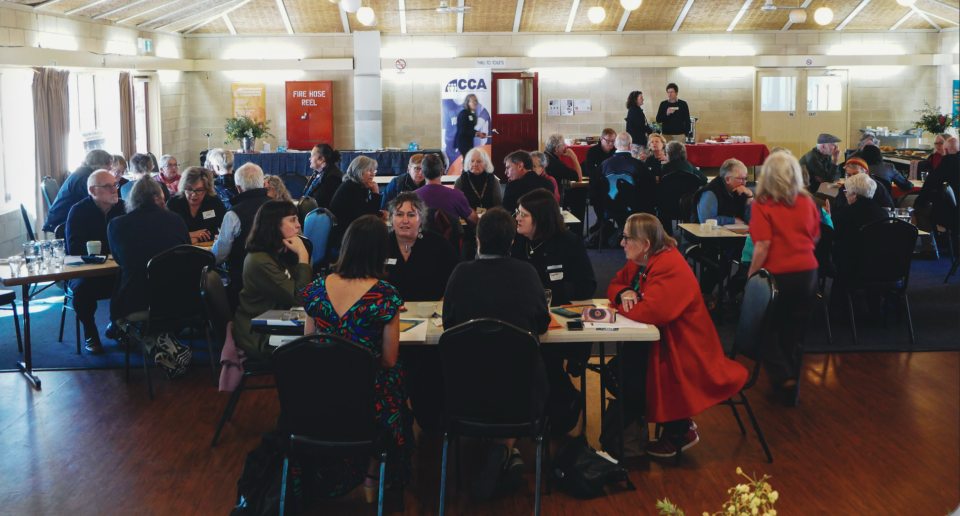
Yesterday, at a meeting just outside Castlemaine in Victoria, 70 people came together to hear…
Posted on 26 Aug 2026
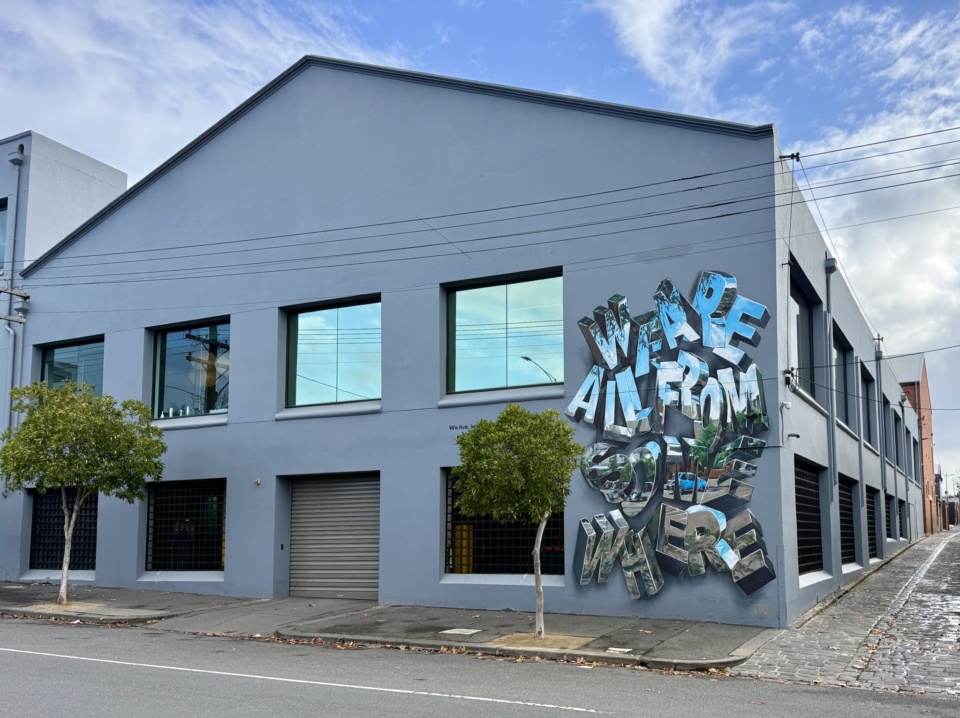
Our Community's founder and leader, Denis Moriarty, says he commissioned a new piece of street art…

Posted on 19 Aug 2026
Government funding is at the centre of Australia's charity and not-for-profit sector – our number…

Posted on 12 Aug 2026
Our Community's founder and leader, Denis Moriarty, says fostering a child was his worst nightmare,…

Posted on 05 Aug 2026
The charity and not-for-profit sector is vital to our economy and the wellbeing of communities…

Posted on 05 Aug 2026
As the Global Impact Summit kicks off in Sydney today, Equitable Philanthropy’s Catherine Brooks…