
Pauline Hanson and the frightening lesson of ‘Years and Years’
Posted on 07 Oct 2026
Our Community's founder and leader, Denis Moriarty, writes that when he watched an over-the-top…
Posted on 11 Mar 2025
By Greg Thom, journalist, Institute of Community Directors Australia

Pressure is mounting on the federal government to increase the level of financial help for disadvantaged Australians in the wake of a new report that recommends urgent moves to alleviate poverty.
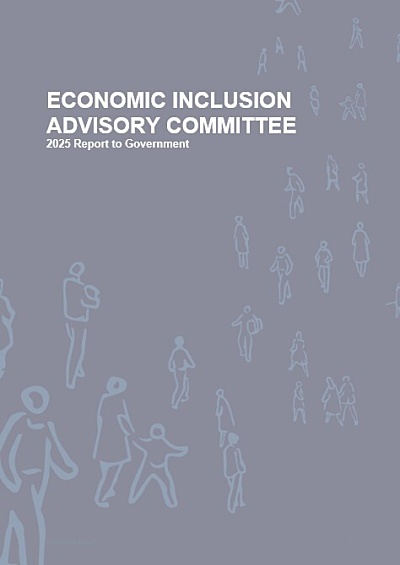
An annual report released this week by the independent Economic Inclusion Advisory Committee (EIAC) has for the third year in a row said increasing income support payments such as JobSeeker should be Canberra’s top priority.
The committee said JobSeeker should be increased by $20 to $74 per day, one of 10 recommendations designed to increase economic inclusion. The others ranged from better integration of child and maternal health, disability, and early learning services to legislating an official measure for poverty in Australia.
In the foreword to the report, the committee said its role was to provide non-binding advice before each federal Budget on how the government could increase economic inclusion and reduce disadvantage.
Its advice encompasses policy settings, systems and structures, as well as the “adequacy, effectiveness and sustainability of income support payments".
Committee members include social security and economics experts and leaders from the community sector, advocacy organisations, unions, business and philanthropy.
Mission Australia welcomed the report and was quick to add its voice to the call to increase income support payments to help those doing it tough.

Marion Bennett, Mission Australia's executive of practice, evidence and impact, said the organisation knew from first-hand experience the profound repercussions of insufficient financial help for struggling families.
"Our frontline workers know that $56 a day goes fast and not very far when there is rent, food, bills and healthcare costs to cover,” she said.
“It is heartbreaking to see so many people relying on charities like Mission Australia for the first time in their lives, because inadequate income support is pushing them into poverty, housing instability and even homelessness.”
Bennett urged Canberra to quickly adopt the committee’s recommendations, which also include raising Commonwealth Rent Assistance.
She said building more social and affordable homes and greater investment in homelessness prevention were also desperately needed.
“People in Australia are compassionate and caring, and the government’s actions should reflect these qualities,” she said.
“We hope third time is a charm for the government to heed the recommendation of the Economic Inclusion Advisory Committee to permanently and adequately increase the base rate of JobSeeker and Youth Allowance to help protect people and families from poverty and homelessness.”
Bennett said the cost-of-living crisis was having a devastating effect on people who were already doing it tough.
“Persistent poverty can be incredibly harmful – for children, the impacts can last a lifetime.”
Bennett said the committee had delivered a well-considered report with robust and sensible recommendations.
“We hope the government will embrace the important and necessary reforms that have been consistently recommended by numerous bodies.”
“How many more times do people need to explain the distress and harm caused by living in poverty in one of the wealthiest countries in the world?”
ACOSS CEO Cassandra Goldie said that as a member of the committee, she urged the federal government to deliver its top recommendation and substantially lift JobSeeker, Youth Allowance and related payments.
“The benefits are crystal clear. It would improve people’s mental and physical health, it would improve wellbeing, and it would reduce poverty in one of the wealthiest countries in the world,” she said.
“It would also support women experiencing domestic and family violence, helping them to leave an abusive partner.”
Goldie said the committee had heard harrowing testimony from people receiving income support that it was impossible to get by on such a low income.
“People broke down in front of the committee because of the severe stress they are under, not knowing if they can pay the next electricity bill and keep a roof over their heads,” she said.
“How many more times do people need to explain the distress and harm caused by living in poverty in one of the wealthiest countries in the world?”
Goldie said the answer was to lift JobSeeker, Youth Allowance and related payments to at least the pension rate of $82 a day, “so that everyone can get through difficult times".
The devastating impact of the cost-of-living-crisis on Australians reliant on income support was laid bare last October in research by the Australian Council of Social Service (ACOSS), which revealed that many have been forced to cut back on essentials such as medicine, healthy food and heating.
The survey found that three-quarters of people reliant on payments such as JobSeeker, Youth Allowance and the Parenting Payment had reduced their consumption of meat, fruit and vegetables because they don’t have enough cash.
The Raise the Rate Survey 2024 report also revealed that three out of four people receiving income support struggled to afford the medicine or medical care they needed.
The study was the latest in a long line of academic research commissioned by sector organisations ranging from the Brotherhood of St Laurence to Mission Australia and Anglicare highlighting the increasingly dire circumstances of Australians grappling with economic disadvantage.
Oxford expert calls for uniform approach to measuring poverty
Pushing back on persistent poverty
Struggling Australians on income support cut back on life essentials: report
Posted on 07 Oct 2026
Our Community's founder and leader, Denis Moriarty, writes that when he watched an over-the-top…

Posted on 07 Oct 2026
A major public campaign launched this morning is calling on the federal government to restore…
Posted on 07 Oct 2026
The Australian Literacy & Numeracy Foundation (ALNF) has announced a partnership with mining…

Posted on 07 Oct 2026
A conference in Darwin will this morning hear detailed, strategic plans for how Australia could…
Posted on 07 Oct 2026
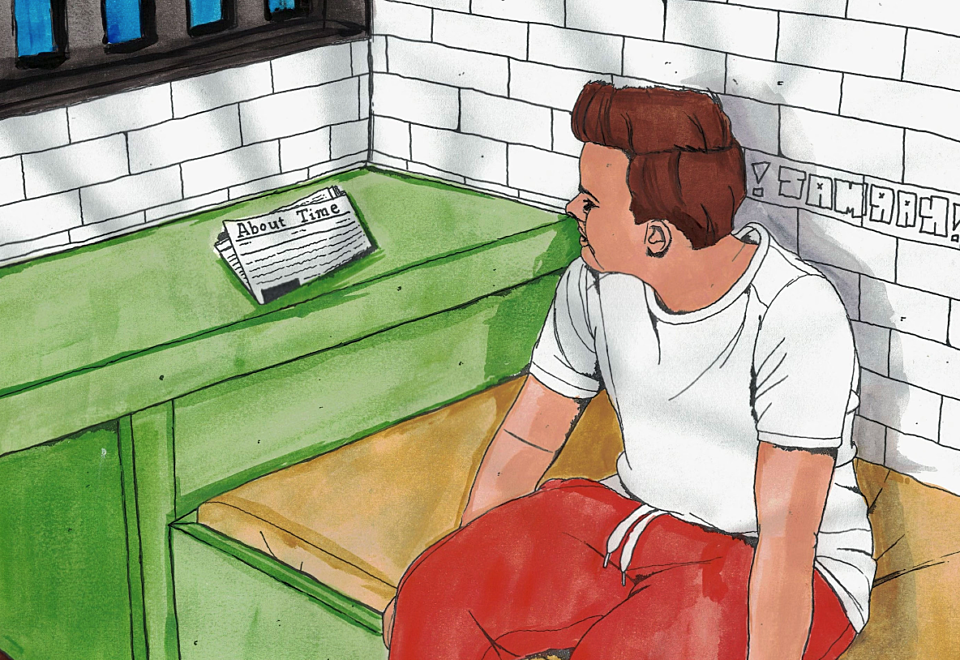
Joseph Friedman is co-founder and publisher of About Time, Australia’s only newspaper for…

Posted on 30 Sep 2026
There's been a lot of talk about AI this week, and some of it has been frightening. So, is AI good…

Posted on 30 Sep 2026
After the biggest AFL game of the year, one player proudly wore the flag of his birth country and…

Posted on 30 Sep 2026
At 21 years old, Tate Donohoe is the founder of Ecodia, an AI-assisted software development company…

Posted on 30 Sep 2026
Not-for-profit leaders have been warned to be wary of approaches from potential “funding partners”…
Posted on 30 Sep 2026
More than 200 fully funded Centre for Social Impact (CSI) scholarships will help equip for-purpose…

Posted on 30 Sep 2026
Personal stories are among the most powerful tools a charity can have to raise funds and awareness,…

Posted on 23 Sep 2026
In his new book Our Place, policy expert Matt Lloyd-Cope argues that housing must be at the heart…