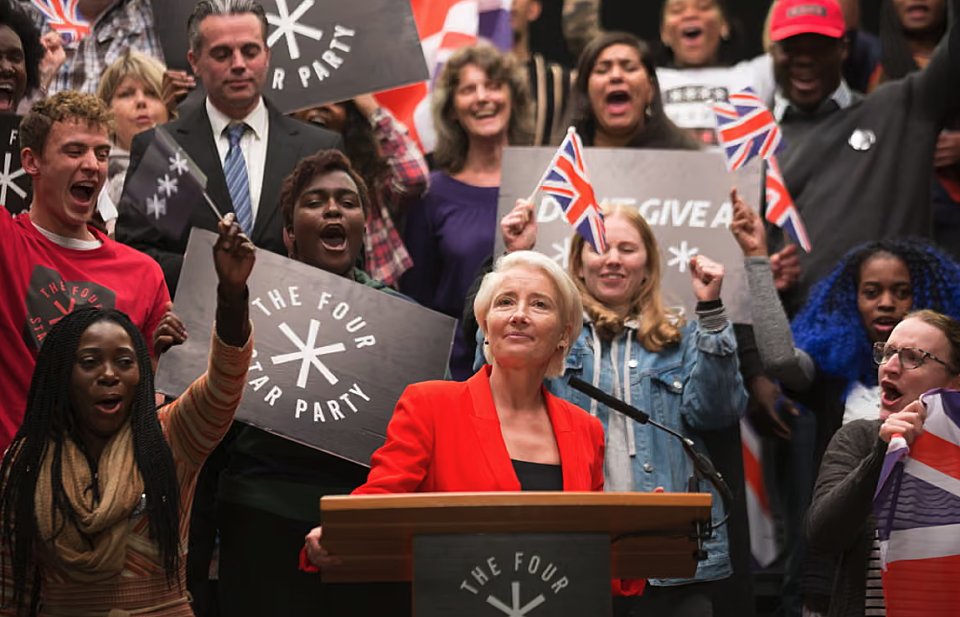
Pauline Hanson and the frightening lesson of ‘Years and Years’
Posted on 07 Oct 2026
Our Community's founder and leader, Denis Moriarty, writes that when he watched an over-the-top…
Posted on 08 Oct 2025
By Johanna Nalau, Associate Professor in Climate Adaptation, Griffith University
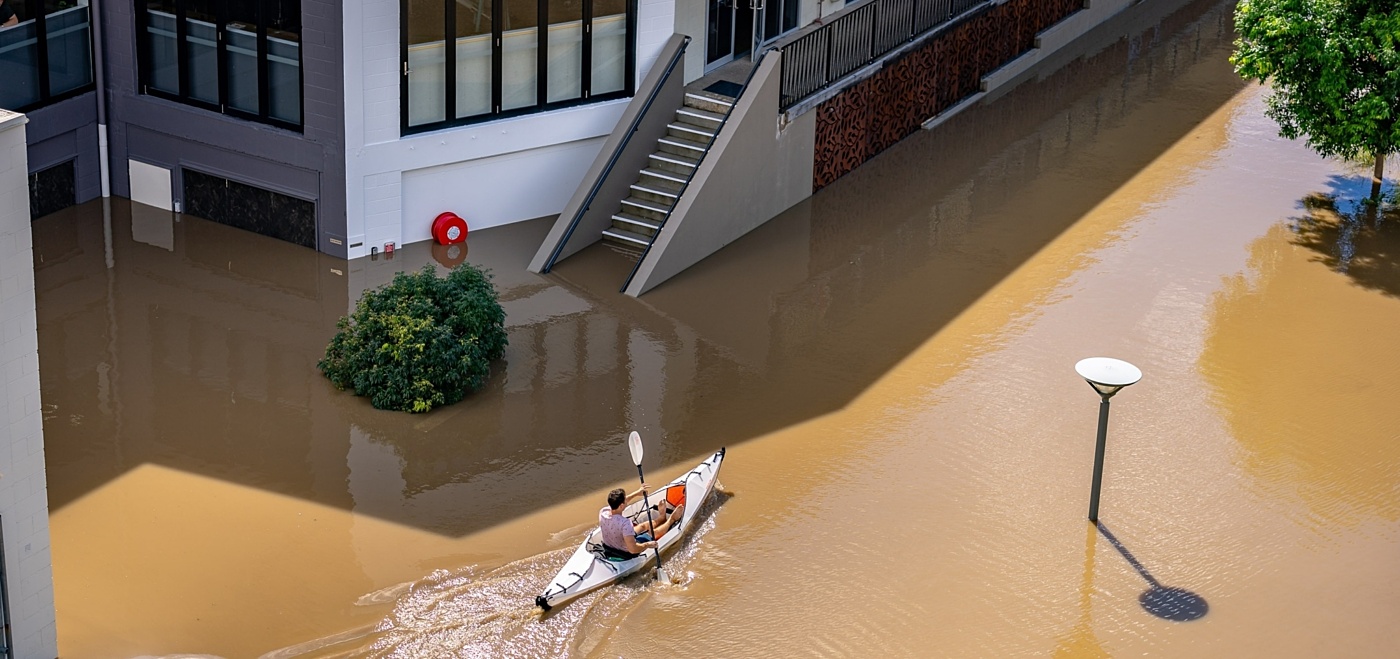
The cost of climate change's impact on Australian life is increasingly well documented. The question is how to adapt. The ability to be insured when disaster strikes is essential, yet as Associate Professor Johanna Nalau writes, eight out of ten homes facing severe to extreme flood risk do not have flood insurance. We need to rethink insurance and loans, she argues. This article was originally published in The Conversation.
Yesterday’s release of the Insurance Council of Australia’s report puts Australia on the spot: we rank second in the world in extreme weather-related losses. As the Insurance Council puts it, this is not the silver medal we want to win.
Why is this a problem? According to the Resilient Building Council of Australia, a collaboration of independent experts, close to 90 per cent of Australian homes are not actually fit for a changing climate.
Many renters, low income groups, and people living in high-risk areas are especially vulnerable and often unable to even get insurance. In the 2020s, Australia has spent around A$4.5 billion a year on extreme weather costs, while insurance affordability and access are plummeting in regions that need it the most.
The report found almost eight in ten of the homes that face severe to extreme flood risk do not have flood insurance.

Australia’s first National Climate Risk Assessment, released last month, predicted a staggering 444 per cent increase in heat-related deaths in Sydney as heatwaves become more severe under the most extreme scenario of 3°C degree warming by 2050. Other very dire numbers are outlined for climate risks across the country.
The insurance industry says we need to rethink how we can keep our communities safe and thriving in the face of escalating disasters. How do we make sure these safety nets actually work for people – especially when costs and losses are escalating?
The federal government’s 2025 National Adaptation Plan makes it clear we need to act now in reducing these risks.
The changing climate will bring new types of risks to new areas. This is problematic as insurance is often based on existing trends and known risks. The industry also relies on current categorisations, such as cyclone strengths and wind speeds, in estimating losses and damages.
There are alternative insurance options already in use. For example, parametric insurance provides an automatic payout by the insurer when a particular event takes place, such as a storm at a specified wind speed or storm surge at a particular water height.
This way, the insured businesses or households do not need to wait for months of damage investigations, assessments and filling in claims. This form of coverage is used in the Pacific, where many islands face increasing climate-related disasters.
However, some analysts caution this approach can leave people worse off, as it might not cover everything needed for long-term recovery.
Other strategies include inclusive insurance delivered through cooperatives. These are often set up in low-income communities in developing countries, such as the Philippines, where insurance may not be available. They provide a community-based safety net to recover from disasters or other risks.
“There is no one silver bullet for what we need to do. But we have an array of opportunities and options that can significantly strengthen how Australia adapts to climate change.”
We have a good understanding by now about the risks we are facing and what we need to do. Building more resilient new homes and retrofitting existing homes are among the first steps in protecting all Australians. Other strategies include:
Rethinking insurance: Some insurance companies, such as US commercial property insurer FM Global, have launched “climate resilience credits”, which support their clients to invest in climate adaptation options. If people can demonstrate they have taken direct actions to adapt their properties to climate risks – such as building flood levies, raising floor heights, or installing additional insulation against extreme heat – they pay less in premiums.
Reflect climate adaptation investments in property valuations: Currently, there are few legally required adaptation options for homes. Homeowners who invest in better drainage against excess rainfall or install additional insulation against extreme heat are not necessarily rewarded when it comes to higher property values or lower insurance costs. Having these investments reflected in higher property values could be an incentive for increased climate adaptation.
Climate adaptation and resilience loans: Some lenders, such as Westpac, already offer lower interest loans, such as a sustainable upgrades home loan that specifically support these types of upgrades, as well as energy efficiency. Bank Australia offers a clean energy home loan for building new greener homes. The insurer Suncorp offers lower premiums for households that have upgraded their cyclone resilience to prepare for storms.
There is also a need to rethink land use planning and whether we allow new developments to go on in high-risk areas both under current risks and future projections. This is not a new problem or solution, but one we need to take seriously now.
These options are not available for everyone. Not everyone is able to take additional loans or make investments. This is where we need a scaled-up national approach in how insurance and lending can support Australians, especially those most vulnerable to climate change.
While the policy recommendations from Insurance Council of Australia are clear on the role they see for the government, there are also key roles for the private sector, communities, and organisations in fast-tracking national climate adaptation.
There is no one silver bullet for what we need to do. But we have an array of opportunities and options that can significantly strengthen how Australia adapts to climate change. The trick will be knowing what to scale up, and how.
This article is republished from The Conversation under a Creative Commons license. Read the original article.
Disclaimer: Johanna Nalau has received funding from Australian Research Council. She is coordinating lead author for the Intergovernmental Panel on Climate Change 7th Assessment Report (Working Group II: Impacts, Adaptation and Vulnerability), and co-chair of the Science Committee at the World Adaptation Science Programme, UNEP.

Posted on 07 Oct 2026
Our Community's founder and leader, Denis Moriarty, writes that when he watched an over-the-top…

Posted on 30 Sep 2026
There's been a lot of talk about AI this week, and some of it has been frightening. So, is AI good…

Posted on 30 Sep 2026
After the biggest AFL game of the year, one player proudly wore the flag of his birth country and…

Posted on 23 Sep 2026
In his new book Our Place, policy expert Matt Lloyd-Cope argues that housing must be at the heart…

Posted on 23 Sep 2026
There are solutions to counter the rise of One Nation but they might not be residing in the mess…
Posted on 03 Sep 2026
Denis Moriarty has an issue with insurance companies varying premiums because of what they perceive…
Posted on 02 Sep 2026
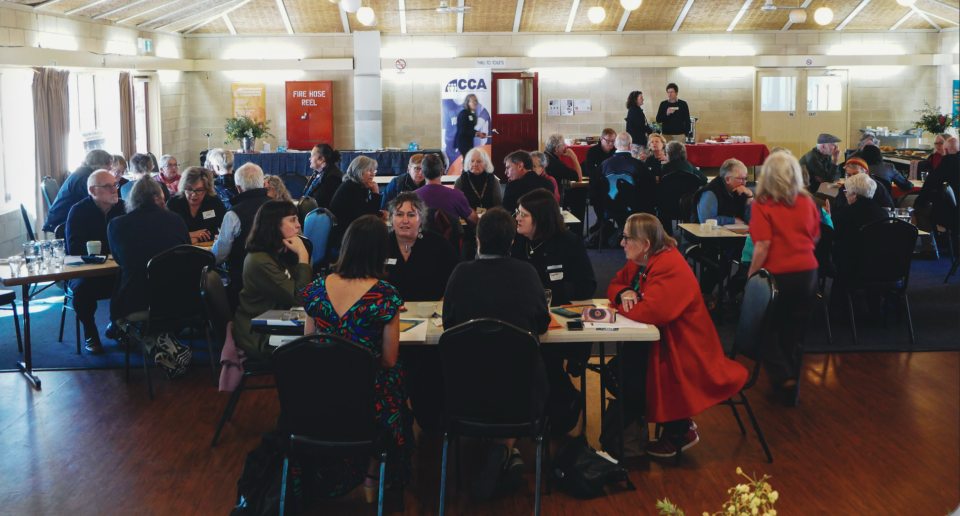
Yesterday, at a meeting just outside Castlemaine in Victoria, 70 people came together to hear…
Posted on 26 Aug 2026
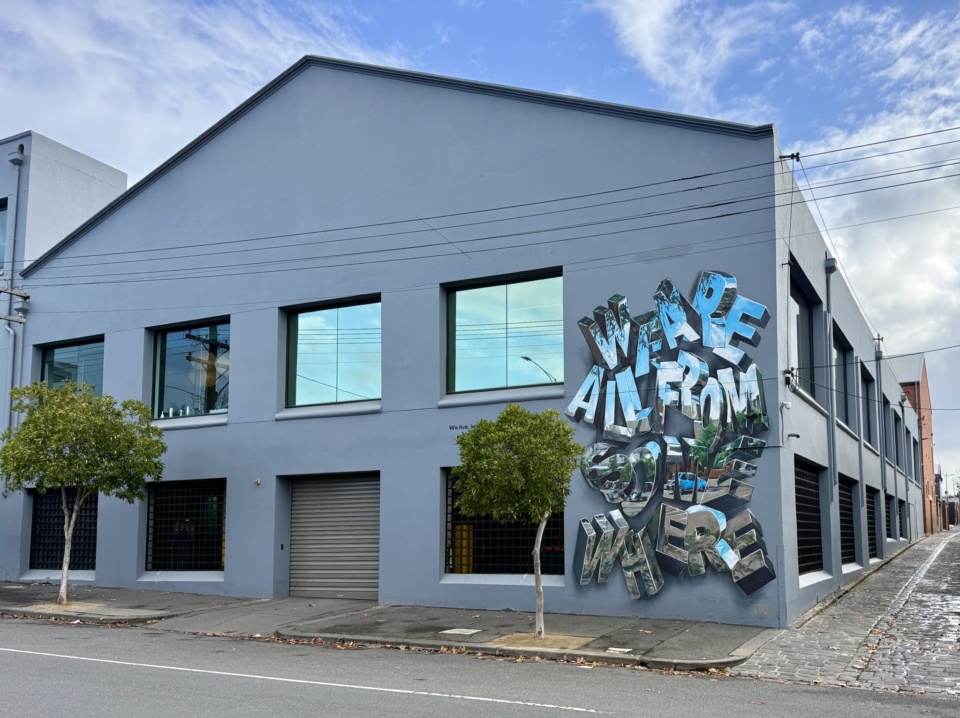
Our Community's founder and leader, Denis Moriarty, says he commissioned a new piece of street art…

Posted on 19 Aug 2026
Government funding is at the centre of Australia's charity and not-for-profit sector – our number…

Posted on 12 Aug 2026
Our Community's founder and leader, Denis Moriarty, says fostering a child was his worst nightmare,…

Posted on 05 Aug 2026
The charity and not-for-profit sector is vital to our economy and the wellbeing of communities…
Posted on 05 Aug 2026
As the Global Impact Summit kicks off in Sydney today, Equitable Philanthropy’s Catherine Brooks…