
Workers with disability facing higher levels of discrimination and harassment: report
Posted on 03 Dec 2025
Today is the International Day of People with Disability, but for many, there is little to…
Posted on 03 Nov 2025
By Nick Place, journalist, Community Directors

Nobody in the not-for-profit sector needs to be told it’s tough out there. In fact, only one in four NFPs feels financially sustainable, according to a new survey by the Australian Communities Foundation (ACF).
The ACF’s recently released NFP Resilience Report 2025 is the result of this national survey of 240 organisations, which found that 60 per cent of those surveyed reported they were relying primarily on short-term philanthropic funding to survive and do their work. Only 18 per cent of NFPs enjoyed consistent income, with 25 per cent reporting highly variable income, and 43 per cent saying they experienced significant income peaks and troughs through the year.
“We’re in a reasonably healthy financial position. However, this is largely because we endlessly apply for, and manage, short-term grants. The whole process is pretty exhausting,” was one response.
The good news was that despite this rollercoaster existence, 40 per cent of NFPs confirmed they held surplus funds in a bank account, while 20 per cent were using term deposits to try to grow whatever nest egg they had.

Organisations surveyed represented a range of sizes, sectors and locations. “Respondents were asked a variety of multiple-choice questions related to financial sustainability and prompted to reflect on key challenges and opportunities for their organisation,” the ACF said.
“So many of these organisations rely heavily on project-based income and face increasing competition for philanthropic dollars,” said ACF CEO Andrew Binns. “With 25 per cent of respondents also reporting highly variable income year to year, it’s clear we need better financial models to support them.”
The survey showed that 87 per cent of organisations wanted to learn more about how invested endowments could support long-term sustainability.
The ACF has been around for more than a quarter of a century (originally as the Melbourne Community Foundation) and represents more than 700 philanthropic entities – mostly families or individuals. It manages their accumulating funds, and advises, if necessary, on potential destinations for their donations, delivering grants to more than 1000 charities and NFPs per year.
This two-way communication means the ACF is highly attuned to both sides of the philanthropic fence, and it tries to help where it can; for example, by urging philanthropists to consider untied funding and multi-year giving, to help charities have better security and flexibility. But it also means the ACF sees the struggle of NFPs, and it identifies financial insecurity as the sector’s biggest challenge.
“Every year, we have to start our fundraising efforts from zero,” said one survey recipient. “We remain heavily reliant on one-off donations, in-kind support, and volunteer effort.”
Philanthropic funding and individual giving were the most commonly cited primary revenue streams (60 per cent), followed by government funding (42 per cent) and income from services or products (35 per cent), the report said. “However, few organisations reported a truly diversified income mix, leaving many vulnerable to shifts in donor behaviour or the broader economy.”
The report also made it clear that this challenge for smaller NFPs was compounded by the uneven distribution of revenue across the sector. “While a third of NFPs reported over $1 million in cash assets, another third reported less than $100,000,” it said. “This is consistent with the latest insights from the Australian Charities Report, which reveals that although extra-large charities (revenue greater than $100 million) make up just 0.5 per cent of the sector, they account for 56 per cent of its total revenue.”
“With 25 per cent of respondents also reporting highly variable income year to year, it’s clear we need better financial models to support them.”
Binns used the Resilience Report’s release to showcase one ACF product that the foundation believes can help: managed future funds, where money that NFPs have managed to put aside can work harder, allowing organisations to benefit.
Binns said more than 40 not-for-profit organisations were already using future funds, including Australian Multicultural Community Services (AMCS), the Victorian National Parks Association, Women’s Health Victoria, and BackTrack, and that their ethically invested portfolios had returned an average of 10 per cent per year over the past three years.
“This is an effective alternative to the typical four per cent returns of term deposits,” he said.
AMCS has had two future funds with the ACF, one dedicated to building a financial reserve for construction, and one for general use. The construction fund recently paid for a $7 million upgrade to Millennium House in Melbourne’s west, where AMCS has provided migrant care and support since 2017.
The centre officially reopened this time last year, with state-of-the art facilities and multipurpose spaces.
“Not-for-profit organisations are essentially for-purpose businesses,” said AMCS chief executive Maryanne Tadic. “We are often working with fixed or limited revenue sources, tight overhead margins, and complex compliance and regulatory requirements. Now more than ever, we need to plan astutely for our ongoing financial flexibility.”
Binns said it was a great example of what the Australian Communities Foundation was trying to help NFPs achieve with future funds.
“There has never been a greater need for non-profits to support Australians, and now is the time to strengthen the sector for the long haul. With the right financial tools and strategies, we can help organisations not just survive, but thrive. The future fund is one way we’re helping NFPs build lasting resilience and continue delivering impact for generations to come,” he said.
The full report can be found here.
Posted on 03 Dec 2025
Today is the International Day of People with Disability, but for many, there is little to…

Posted on 03 Dec 2025
The over-medicalisation of distress affects pretty much everyone in Australia, leading to needless…

Posted on 03 Dec 2025
Many not-for-profit (NFP) board members in Australia are burnt out, overwhelmed and considering…

Posted on 03 Dec 2025
Infoxchange has announced a partnership with the National Artificial Intelligence Centre to address…

Posted on 03 Dec 2025
Tonight, in Adelaide, the people least likely ever to be accused of doing what they do for…
Posted on 26 Nov 2025
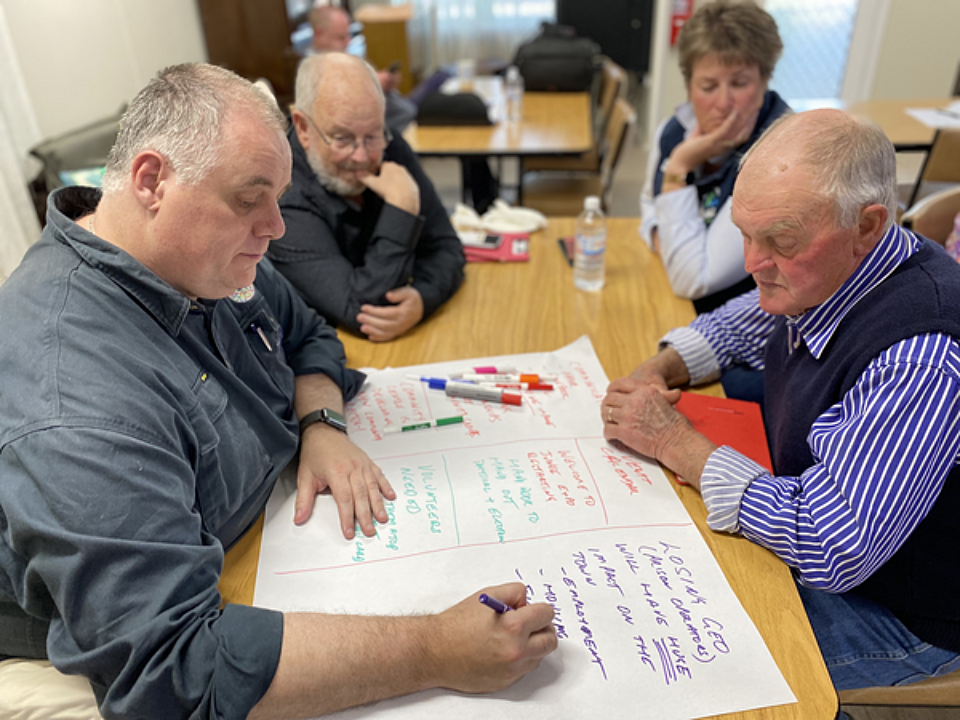
If you think it’s inefficient for every small organisation seeking funds in regional, rural or…

Posted on 26 Nov 2025
An emerging tax scheme that offers tax deductions by using barter credits to inflate DGR donations…

Posted on 26 Nov 2025
A landmark conference starting tomorrow in Sydney will bring together the dual sensory impairment…

Posted on 26 Nov 2025
Trade revenue among social enterprises grew by 10 per cent between 2019 and 2023, leading to…

Posted on 26 Nov 2025
A major new report says a cohesive, national, all-governments strategy is required to ensure better…

Posted on 19 Nov 2025
The not-for-profit (NFP) sector has been urged to press on with reforms outlined in a…

Posted on 19 Nov 2025
It pays to check your receipts. The Australian Charities and Not-for-profits Commission (ACNC) has…