
‘The mind boggles’: federal envoy blasts NT housing decision
Posted on 14 Oct 2026
The federal government’s special envoy for social housing and homelessness, Josh Burns MP, has…
Posted on 19 Nov 2025
By Matthew Schulz, journalist, Community Directors

The not-for-profit (NFP) sector has been urged to press on with reforms outlined in a not-for-profit sector blueprint, despite the federal government having adopted only aspects of the landmark study nearly a year after its release.
UPDATED: Thursday, November 20
Speaking in a video report due to air during the Not-for-profit Agenda news webinar tomorrow (Thursday, November 20), the lead author of the Not-for-profit Sector Development Blueprint said the road to reform wasn’t reliant on the government’s response.
The Blueprint was delivered to the federal government this time last year. Sector representatives set a March 31 deadline for a formal government response but have been left waiting.
Speaking on the sidelines of Amplify Alliance’s national not-for-profit summit in Melbourne last month, Professor Jo Barraket – director of the Melbourne Social Equity Institute – stressed the sector did not need to wait for government endorsement to act.
“The Blueprint initiatives are not confined to government-led reforms,” Barraket said. “They include a range of priorities that can be taken up by sector organisations themselves.”
“There’s great potential to move forward on many Blueprint initiatives regardless of the federal government’s formal stance.”
The landmark document, developed through an extensive sector-led process and guided by a 12-member expert group, outlines a 10-year reform “roadmap” for the not-for-profit sector.

The report made 18 recommendations across three pillars: the regulatory and operating environment; workforce and volunteer capability; and major economic changes in areas such as digital transformation and climate risk.
Notable recommendations include introducing a producer price index to track the cost of services, simplifying regulation, expanding access to deductible gift recipient (DGR) status, and preparing for digital transformation and climate change. It also calls for stronger engagement with Aboriginal and Torres Strait Islander self-determination and improving workforce diversity and volunteering models.
In a keynote speech at the Amplify Alliance summit (an extract of which will be included in the Agenda webinar), Social Services Minister Tanya Plibersek signalled that the government was still working through the document but did not elaborate.
“You gave us a Blueprint, and we are working through a whole range of recommendations and delivering on them,” she said.
Without addressing Blueprint recommendations, Plibersek did flag the introduction of trials of longer-term contracts for community service organisations working with the government, which is among measures sought by the sector for more sustainable funding.
The push for funding reforms was a top priority for the sector at the recent economic roundtable, in the Not-for-profit Sector Development Blueprint, and in submissions to the Community Sector Grants Engagement Framework.
“Community organisations have told us loud and clear – too much red tape and admin is holding them back from doing what they do best: supporting kids, families and communities,” Plibersek said at the event.

“There’s great potential to move forward on many Blueprint initiatives regardless of the federal government’s formal stance.”
Charities Minister Andrew Leigh has previously linked the the Blueprint's goals to the government’s plan to double philanthropy by 2030.
When contacted, Dr Leigh did not directly respond to requests for a timeline for a detailed response, but said that some changes were already underway.
“The Not-for-profit Sector Development Blueprint sets short-term, mid-term and long-term reforms for government, not-for-profits and funders to respond to.
“We know the sector is making progress in responding, as is the government. We’re progressing the recommended reform to ancillary funds, we’ve streamlined and expanded DGR eligibility, and we know there’s meaningful work progressing to uplift cyber and digital capacity in the sector.
“Our government is also proposing a new streamlined funding arrangement to get better results for families and cut red tape for community organisations that deliver key programs.”
One of the main recommendations in the Blueprint was a root-and-branch revamp of the country’s troubled deductible giving recipient (DGR) system, which could see the number of DGR-eligible entities increase from 25,000 to as many as 40,000.
While Leigh mentioned the changes to streamline the DGR system, a new Unlock DGR campaign is arguing that not enough is being done.
Barraket said that while government involvement in implementing the recommendations was important, much of the Blueprint’s agenda was within the sector’s own power to address, including through partnerships with philanthropy, business, and communities.
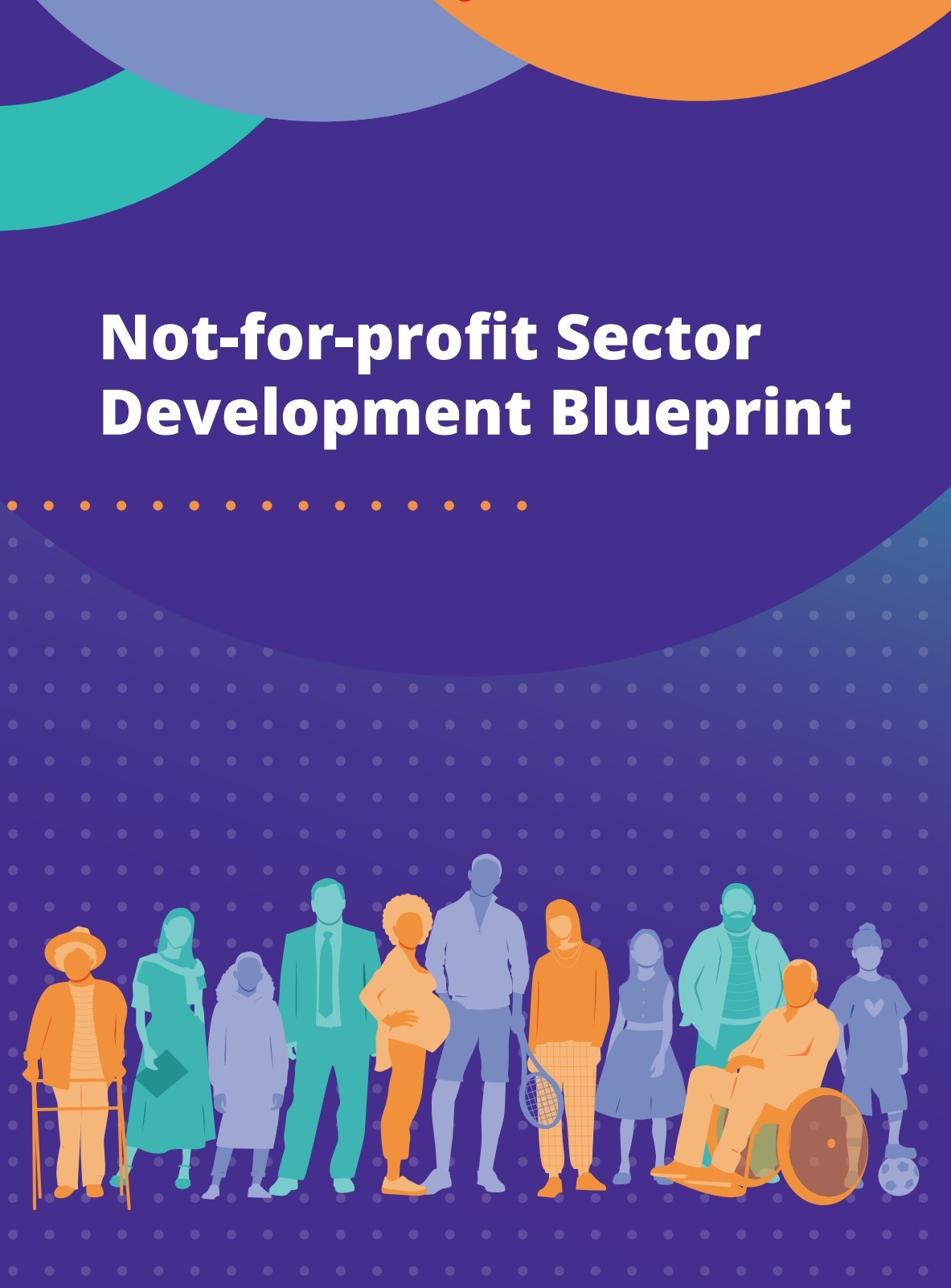
“The Blueprint is not a wish list, it’s a reform roadmap,” Barraket said. “It’s also not a government inquiry, but a sector-led process that was enabled by the federal government.”
She encouraged sector leaders to embrace the self-reflective aspects of the Blueprint, such as confronting the internal challenges of governance diversity and generational change in volunteering and giving.
“While I’m a strong supporter of the nonprofit sector, the Blueprint process prompted some important self-reflection,” she said. “Not all parts of the sector are keeping pace with shifts in community expectations and practices.”
Barraket confirmed that discussions were underway across multiple portfolios, including Treasury and Finance, and said that several ministers had indicated that components of the Blueprint were being incorporated into their current work plans.
“There’s growing awareness within government,” she said. “It hasn’t been discarded, it’s just not been formally announced as adopted.”
That view was echoed earlier this year after the mid-year economic roundtable. Philanthropy Australia’s executive director of policy and sector development, Krystian Seibert, said both Leigh and Plibersek were clear during consultations that they saw the Blueprint as a “guiding document for reform”.
Barraket said the Blueprint needed bi-partisan support to succeed.
“Part of the challenge is ensuring that it’s understood and known across all of Parliament. It needs to be a non-partisan commitment for it to succeed.”
In the meantime, sector-led activity is already gaining ground. Organisations such as Infoxchange are driving digital transformation efforts, and recent philanthropic discussions have focused on how funders can support the Blueprint’s implementation.
Barraket said priorities for NFP leaders in recent discussions – including at the Amplify Alliance summit – included financial sustainability, workforce capability, and more meaningful co-design of policies and programs with government.
“This is a unique moment to embrace the reforms. I hope that all major parties and crossbenchers in the federal Parliament support its implementation. But equally, I hope the sector takes ownership of what it can lead now.”
Register for the Not-for-profit Agenda
Don’t wait for government, get on with change: Minderoo innovation chief
Posted on 14 Oct 2026
The federal government’s special envoy for social housing and homelessness, Josh Burns MP, has…

Posted on 14 Oct 2026
The Reserve Bank’s move to ban card payment surcharges has led to complications for charities and…

Posted on 14 Oct 2026
A special guest with her finger on the pulse of one of the biggest issues facing Australia –…

Posted on 07 Oct 2026
A major public campaign launched this morning is calling on the federal government to restore…

Posted on 07 Oct 2026
The Australian Literacy & Numeracy Foundation (ALNF) has announced a partnership with mining…

Posted on 07 Oct 2026
A conference in Darwin will this morning hear detailed, strategic plans for how Australia could…

Posted on 30 Sep 2026
Not-for-profit leaders have been warned to be wary of approaches from potential “funding partners”…
Posted on 30 Sep 2026
More than 200 fully funded Centre for Social Impact (CSI) scholarships will help equip for-purpose…

Posted on 30 Sep 2026
Personal stories are among the most powerful tools a charity can have to raise funds and awareness,…

Posted on 23 Sep 2026
A just-released major global survey of charities has found that demand for charity assistance has…
Posted on 23 Sep 2026
Fresh from welcoming delegates to last week’s Philanthropy Australia conference in Brisbane,…

Posted on 23 Sep 2026
A national strategy to develop Australia's regional cities is needed to break the housing…