
Save Izzy: campaign calls on government to restore funding for vital services directory
Posted on 07 Oct 2026
A major public campaign launched this morning is calling on the federal government to restore…
Posted on 26 Nov 2025
By Nick Place, journalist, Community Directors
If you think it’s inefficient for every small organisation seeking funds in regional, rural or remote areas to be independently looking up the local data their grant application or acquittal needs, then the Foundation for Rural & Regional Renewal (FRRR) agrees. That’s why it’s released a new free data tool that aims to offer community groups easy access to all things data-related, from local population data to socio-economic indexes.
The FRRR said the data tool is designed to help improve services and help applicants to create stronger funding applications. Using the latest, most complete data enables organisations to demonstrate to funders the need for the organisation’s work, and the impact that funding could have.
“We commissioned the FRRR community data tool to make it super simple for groups to pull up key data about their community, just by entering their location in the online tool,” said FRRR’s head of granting, Jill Karena.

“It will tell them things about their community, like the population, gender split, remoteness classification, their SEIFA (social-economic index for area) rating, et cetera,” she said.
Until now, it has been difficult for some community groups to source their area’s SEIFA, Karena told the Community Advocate. For that reason, the FRRR hasn’t previously asked for it, or will source it inhouse for grant applications. Other funders, however, often require the information.
“It’s very useful data to show the community need,” Karena said. “The SEIFA shows the relative advantage or disadvantage of the area compared to other areas. It can be complicated to find your specific area on ABS’s website, but now the FRRR community data tool makes it easy to find the SEIFA number – you simply type the town or area you want to look up or you can find it on the map and click on it and the SEIFA score for that town will come up in the data table.
“What makes it very user friendly is the ability to click on the different suburb and locality (SAL) areas to quickly find their SEIFA score. For example, in New South Wales, North Lismore has a SEIFA of 14 but Lismore Heights – bordering North Lismore – has a SEIFA of 33. To get this information on the ABS website you would need to look up the information separately or go through a spreadsheet.”
Karena said it was beyond doubt that rural communities could tell stories of their resilience, their resourcefulness and overcoming challenges, but “not everyone can back up their story with accurate data,” which most funders demand.
“Being able to access this data and wealth of information, free of charge, will help community groups more effectively advocate for themselves and for their community’s needs.”
The tool draws on trusted public data sources that could be relied upon and were automatically updated, she said. It was developed by Seer Data and funded by the Australian government, and it has seven data points: total population, gender composition, % youth aged 15-24 years, indigenous population, remoteness category, and postcode(s).
“If groups want to dive deeper, there are links to some excellent resources that we also use to inform our grant programs, such as information about health and wellbeing, the workforce, income levels and economic growth,” Karena said. “There are even more insights that they can access through our partnership with Seer Data & Analytics.
“Being able to access this data and wealth of information, free of charge, will help community groups more effectively advocate for themselves and for their community’s needs,” she said.
Tim Whitaker, a Bega Valley local and founding member of his region’s Data Collective, road-tested the tool before its release, and he said having all the necessary data in one place had proven invaluable.
"Accessible, reliable local data is the foundation of genuine community resilience. The FRRR community data tool is the first step for community groups to prove the need for effective, place-based solutions. This approach is essential to our ‘Living Well in the Bega Valley’ initiative," Whitaker said.
Karena said she couldn’t be sure how many community groups would use the tool, but she expected the demand to be high. “It will probably be a lot across Australia as there are thousands of NFPs and incorporated associations that can use this data to tell the story about the need in their area,” she said.
https://frrr.org.au/funding/grantseeker-resources/#community-data-tool
Posted on 07 Oct 2026
A major public campaign launched this morning is calling on the federal government to restore…
Posted on 07 Oct 2026
The Australian Literacy & Numeracy Foundation (ALNF) has announced a partnership with mining…

Posted on 07 Oct 2026
A conference in Darwin will this morning hear detailed, strategic plans for how Australia could…

Posted on 30 Sep 2026
Not-for-profit leaders have been warned to be wary of approaches from potential “funding partners”…
Posted on 30 Sep 2026
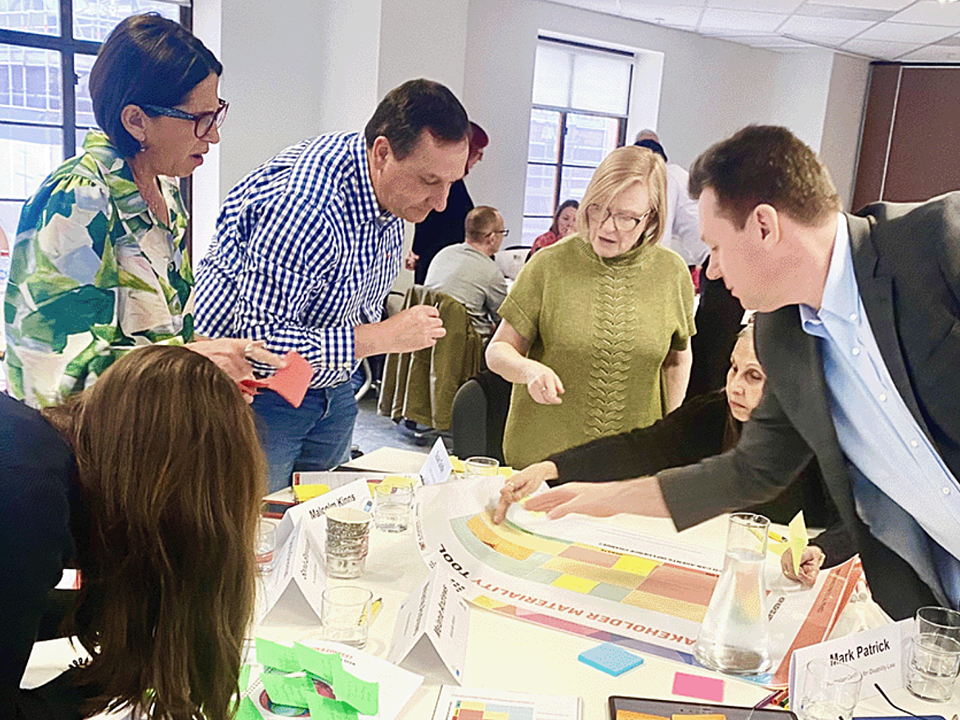
More than 200 fully funded Centre for Social Impact (CSI) scholarships will help equip for-purpose…

Posted on 30 Sep 2026
Personal stories are among the most powerful tools a charity can have to raise funds and awareness,…
Posted on 23 Sep 2026
A just-released major global survey of charities has found that demand for charity assistance has…
Posted on 23 Sep 2026
Fresh from welcoming delegates to last week’s Philanthropy Australia conference in Brisbane,…

Posted on 23 Sep 2026
A national strategy to develop Australia's regional cities is needed to break the housing…

Posted on 23 Sep 2026
Eight years after a report to Treasury first suggested the charities regulator should be more…

Posted on 17 Sep 2026
Australia’s biggest gathering of philanthropists, which drew more than 1200 delegates to Brisbane…
Posted on 16 Sep 2026
A new partnership between Paul Ramsay Foundation (PRF) and Atlassian Foundation aims to attract…