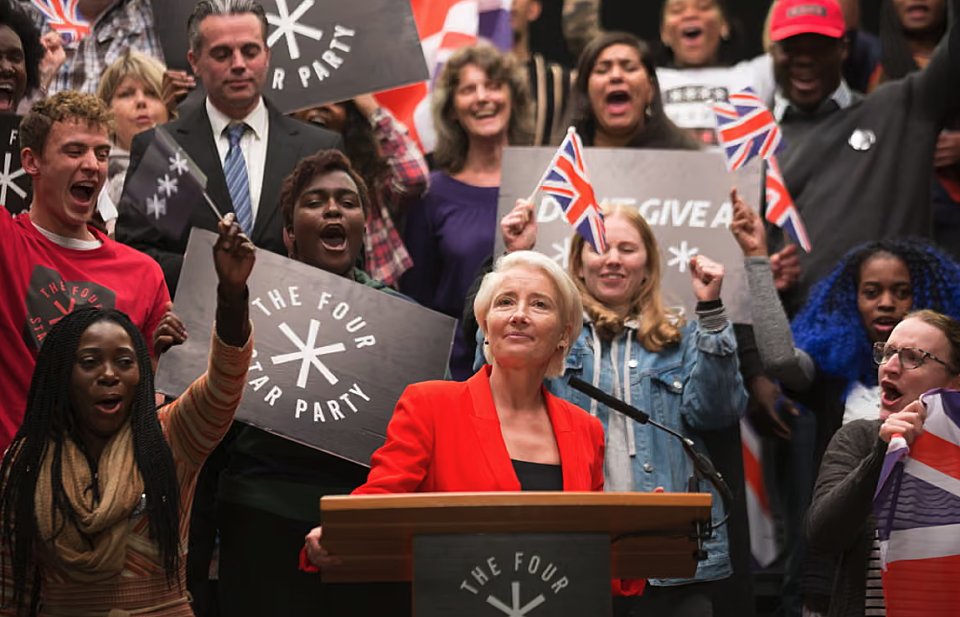
Pauline Hanson and the frightening lesson of ‘Years and Years’
Posted on 07 Oct 2026
Our Community's founder and leader, Denis Moriarty, writes that when he watched an over-the-top…
Posted on 04 Mar 2025
By David Crosbie

When it comes to building safe, resilient and caring communities, greed is far from good, says Community Council for Australia CEO David Crosbie.
I’m not sure when profit became a God, prosperity a measure of personal merit, and greed a virtue. We may have been heading that way for a while, but in recent times it seems this has become a dominant ideology. When all that matters is the deal, the well-being of humanity becomes irrelevant.
This personal greed approach has for some time been impacting the future and safety of our world, our environment, our health care, our education, our housing, our justice systems, and the fundamental work of charities. Now it underpins much of our public discourse.
The world seems to have forgotten the many lessons about the inter-connectedness of our communities and our world taught by covid and "unprecedented" climate disasters.
We watched on this week as powerful leaders in the free world sacrificed the international rule of law on the altar of business deals. The question we’re apparently all meant to be asking is “What’s in it for me?”
I’ve had the privilege of sitting through presentations from respected and knowledgeable economists talking about how Australia is becoming a less productive nation partly because our "non-market" industries have increased in size. Seriously.
The issue that connects these concerning developments is the way we value and measure what it is to be a successful human and a successful society.
Productivity is a good example of how our measures of success distort what matters. Economists refer to market employment and non-market employment. Most people in the charities sector work in the non-market economy, areas like health, education, social welfare and aged care.
Non-market employment in Australia is growing and now accounts for around one third of all employment in Australia. For economists, this is a problem, because it results in lower productivity.
To understand this perspective, let’s look at staffing in an aged care facility. If a nursing home looked after 200 permanent high-needs residents with a total equivalent full-time (EFT) staff of 25, the quality of care would be significantly lower than if there were 100 EFT staff.
From a productivity perspective, the 100 staff model is way less productive than the 25 staff model, even though most of us would recognise 25 staff is totally inadequate and would almost certainly mean higher levels of morbidity and mortality among residents.
From an economic perspective, the 100 staff model represents a productivity loss: 75 additional staff to produce what economists see as the same economic outcome. It also represents a loss of profit: you can make more money if you lower the standard of care.
It’s not just the way we measure our success or failure that’s distorted by narrow economic thinking, it’s the broader approach to what is valuable.
"We now face a challenge in Australia. We can’t allow the rich and powerful to convince us that all that matters is the deal."
Time and again we see excessive profit-driven behaviour from fossil fuel industries, gambling companies, alcohol producers, pharmaceutical companies, media and communications companies, and many of their highly paid advisory companies.
I know there are some good actors in these industries, and obviously not all business or profit-making is bad, but all too often making money is the imperative, the essential measure of success.
I could fill several books with examples of the egregious behaviour of some of these companies. Suffice to say that at times they have directly contributed to loss of life and wellbeing. And that’s just the cases we know about from what’s been publicly prosecuted in the courts or the media.
Confronting the loss of human values is a difficult task. As a values-driven and informed sector, what can we do to shift the public and political narrative in Australia so that more of our work is valued, despite it not offering increased profits or productivity?
CCA has now prioritised working to shift the narrative on what is important to our sector, the communities we serve, and our nation.
Drawing on the values work CCA did a decade ago in writing the first Australia We Want report, and with the support of the AMP Foundation, at CCA we are now investing more of our limited time and resources in rewriting The Australia We Want with the latest data.
The Australia We Want is grounded in 13 core values: just, fair, safe, inclusive, equal opportunity, authentic, creative, confident, courageous, optimistic, generous, kind and compassionate.
These values have been translated into measurable outcomes – indicators such as incarceration rates for the value "just", the way income is distributed in Australia for the value "fair", how safe women feel walking alone at night for "safe".
We now face a challenge in Australia. We can’t allow the rich and powerful to convince us that all that matters is the deal.
And there is no better time than during an election campaign to prosecute the case that embracing fundamental human values and investing in the full realisation of human potential is the key to strengthening our communities, our nation, and our world.
CCA looks forward to joining you on the campaign trail.
David Crosbie has been CEO of the Community Council for Australia for the past decade and has spent more than a quarter of a century leading significant not-for-profit organisations, including the Mental Health Council of Australia, the Alcohol and Other Drugs Council of Australia, and Odyssey House Victoria.
Posted on 07 Oct 2026
Our Community's founder and leader, Denis Moriarty, writes that when he watched an over-the-top…
Posted on 30 Sep 2026
There's been a lot of talk about AI this week, and some of it has been frightening. So, is AI good…

Posted on 30 Sep 2026
After the biggest AFL game of the year, one player proudly wore the flag of his birth country and…
Posted on 23 Sep 2026
In his new book Our Place, policy expert Matt Lloyd-Cope argues that housing must be at the heart…

Posted on 23 Sep 2026
There are solutions to counter the rise of One Nation but they might not be residing in the mess…

Posted on 03 Sep 2026
Denis Moriarty has an issue with insurance companies varying premiums because of what they perceive…
Posted on 02 Sep 2026
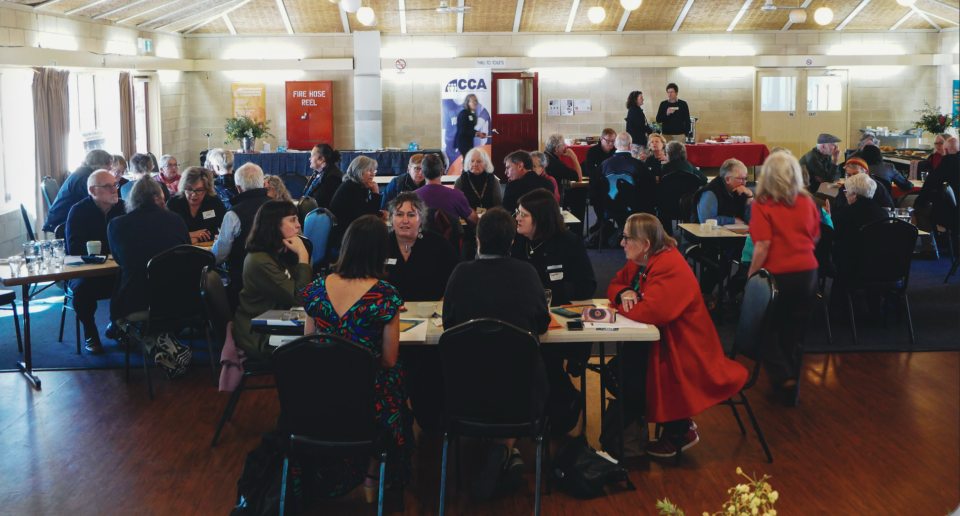
Yesterday, at a meeting just outside Castlemaine in Victoria, 70 people came together to hear…
Posted on 26 Aug 2026
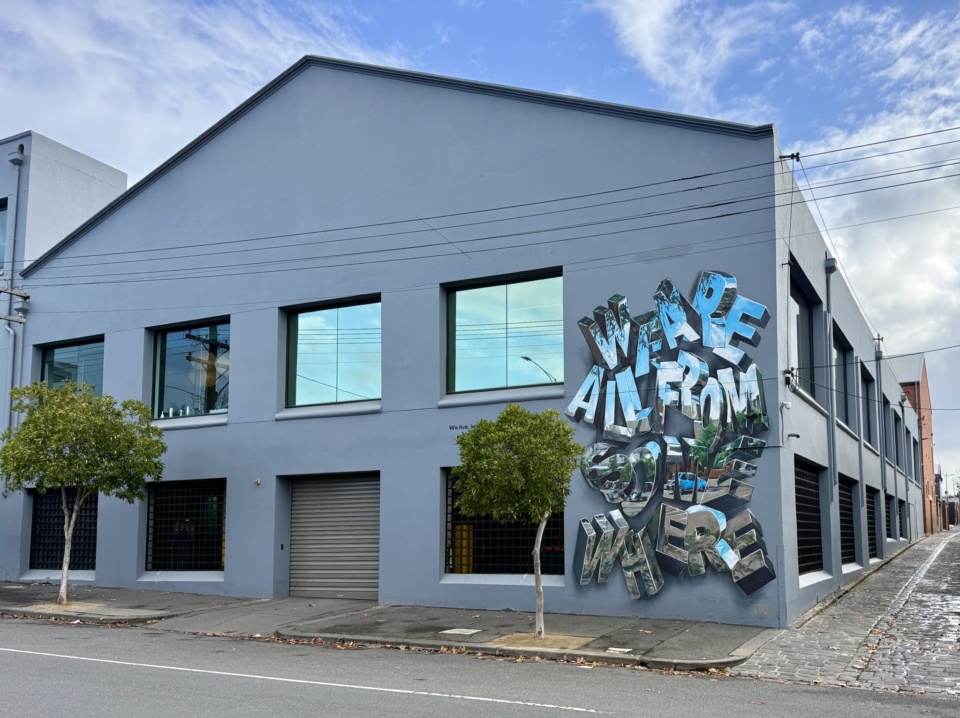
Our Community's founder and leader, Denis Moriarty, says he commissioned a new piece of street art…

Posted on 19 Aug 2026
Government funding is at the centre of Australia's charity and not-for-profit sector – our number…

Posted on 12 Aug 2026
Our Community's founder and leader, Denis Moriarty, says fostering a child was his worst nightmare,…

Posted on 05 Aug 2026
The charity and not-for-profit sector is vital to our economy and the wellbeing of communities…
Posted on 05 Aug 2026
As the Global Impact Summit kicks off in Sydney today, Equitable Philanthropy’s Catherine Brooks…