
Pauline Hanson and the frightening lesson of ‘Years and Years’
Posted on 07 Oct 2026
Our Community's founder and leader, Denis Moriarty, writes that when he watched an over-the-top…
Posted on 26 Aug 2025
By Nick Place, journalist, Institute of Community Directors Australia
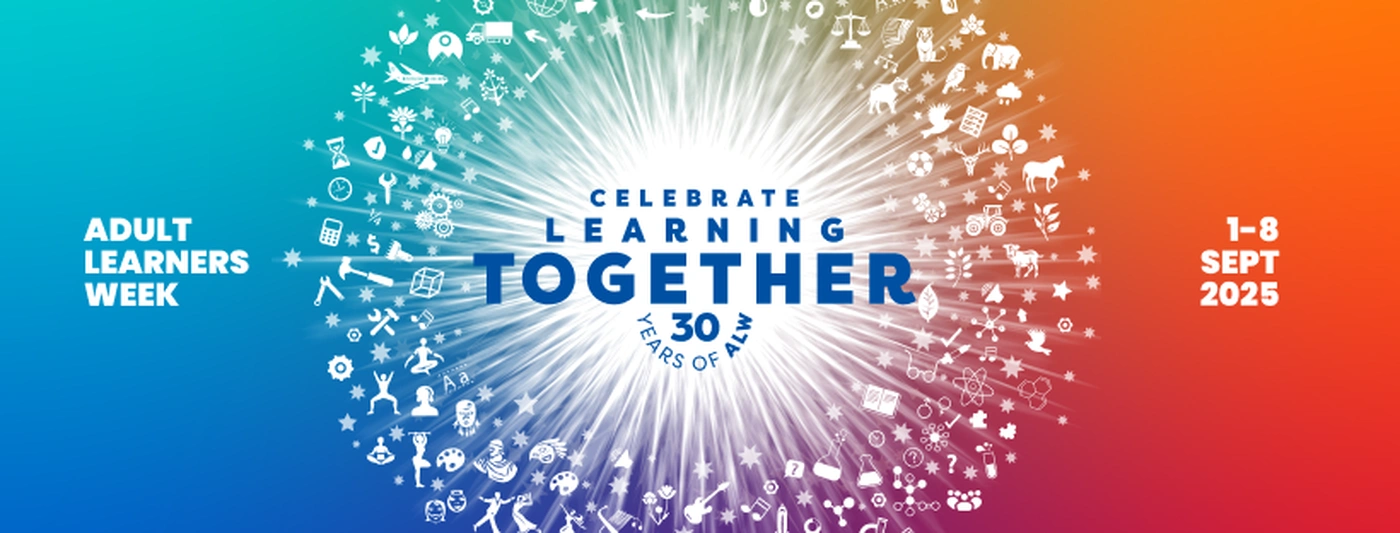
Education doesn’t start and finish at the school gate, with many adults having richer lives, and careers, thanks to ongoing learning. That’s the message of Adult Learners Week, which celebrates its 30th anniversary next week.
Running from September 1 to 8, hundreds of Adult Learners Week events will encourage Australians to explore new areas of interest and education. From hands-on experience of how fire-fighting equipment works at Tamworth to learning how to play chess in Darwin, Australians are invited to open their minds to fresh skills and new knowledge.
Jenny Macaffer, the CEO of Adult Learning Australia, said continuing informal or formal education beyond school could have an impact at several levels, with some people dramatically changing their lives by returning to education, and others exploring new worlds of social connections or to indulge curiosity.
Among the ambassadors for Adult Learners Week is 49-year-old Tasmanian Andy Bartlett, who, like so many young people, spent his school years fighting personal battles bigger than exam battles. It took him years to gain his equilibrium and make the decision to have another go at education. In 2023, Andy did not know how to use a laptop, but now, after support from Avidity Training and Development, he not only is computer-savvy but has completed a Certificate III in Individual Support (Disability) and is working in the sector. Andy was even named Vocational Student of the Year at the Tasmania Training Awards.

“Adult Learners Week is for everybody, but we do try to identify people who have overcome barriers and challenges,” Macaffer said. “People who had issues at school or were busy raising a family, or those who have found their workplace is changing and they need to learn new skills.”
Adult Learners Week is an initiative of UNESCO (the United Nations Educational, Scientific and Cultural Organisation) and was adopted in Australia exactly three decades ago. “It’s an opportunity for adults to learn new things or relearn things that they have left behind,” Macaffer said. “Our theme this year is ‘Celebrate Learning Together’ to emphasise that learning is really good for an adult’s mental health and social connections, but also, with the complexities in the world trying to divide us, learning brings people together. It’s so important. You can make lifelong friends by pursuing an activity together or strengthen a friendship or family bond by motivating somebody to go with you. It can be powerful for intergenerational relationships.”
“Our theme this year is ‘Celebrate Learning Together’ to emphasise that learning is really good for an adult’s mental health and social connections, but also, with the complexities in the world trying to divide us, learning brings people together. It’s so important.”
With so many events planned across Australia for next week’s celebrations, the Adult Learners Week website offers a database, searchable by location, interest or other criteria. Options include languages, cooking classes, Indigenous explanations of caring for country, even understanding the subtleties of how recycling works.

Macaffer emphasised that next week’s events were only a starting point. Any adult can continue their education, out of necessity or pleasure, at any time. She pointed to libraries as a brilliant source of information about local learning opportunities, as well as neighbourhood houses, galleries and TAFE facilities, among other public institutions. Online destinations such as Open Universities Australia and Coursera were also potential sites of information and inspiration, she said.
Macaffer said while adult learning leads some to finally resolve struggles with literacy or other shortcomings from broken schooling, others might focus on becoming more comfortable with technology. The dizzying capabilities of today’s devices, such as smartphones, have left many people behind, yet institutions and businesses, from government to banking to insurance companies, assume that their customers are totally comfortable with using apps and devices. “There’s an unexamined assumption that everybody has the same level of knowledge [of driving a smartphone] that you have. But many people have phones that are out of date, or don’t know how to do the things required on it,” she said.
To find out more about Adult Learners Week, click here, or to search events, click here.
Posted on 07 Oct 2026
Our Community's founder and leader, Denis Moriarty, writes that when he watched an over-the-top…
Posted on 07 Oct 2026
A major public campaign launched this morning is calling on the federal government to restore…

Posted on 07 Oct 2026
The Australian Literacy & Numeracy Foundation (ALNF) has announced a partnership with mining…

Posted on 07 Oct 2026
A conference in Darwin will this morning hear detailed, strategic plans for how Australia could…

Posted on 07 Oct 2026
Joseph Friedman is co-founder and publisher of About Time, Australia’s only newspaper for…
Posted on 30 Sep 2026
There's been a lot of talk about AI this week, and some of it has been frightening. So, is AI good…

Posted on 30 Sep 2026
After the biggest AFL game of the year, one player proudly wore the flag of his birth country and…

Posted on 30 Sep 2026
At 21 years old, Tate Donohoe is the founder of Ecodia, an AI-assisted software development company…

Posted on 30 Sep 2026
Not-for-profit leaders have been warned to be wary of approaches from potential “funding partners”…
Posted on 30 Sep 2026
More than 200 fully funded Centre for Social Impact (CSI) scholarships will help equip for-purpose…

Posted on 30 Sep 2026
Personal stories are among the most powerful tools a charity can have to raise funds and awareness,…

Posted on 23 Sep 2026
In his new book Our Place, policy expert Matt Lloyd-Cope argues that housing must be at the heart…