
Save Izzy: campaign calls on government to restore funding for vital services directory
Posted on 07 Oct 2026
A major public campaign launched this morning is calling on the federal government to restore…
Posted on 26 Aug 2026
By Nick Place, journalist, Community Directors
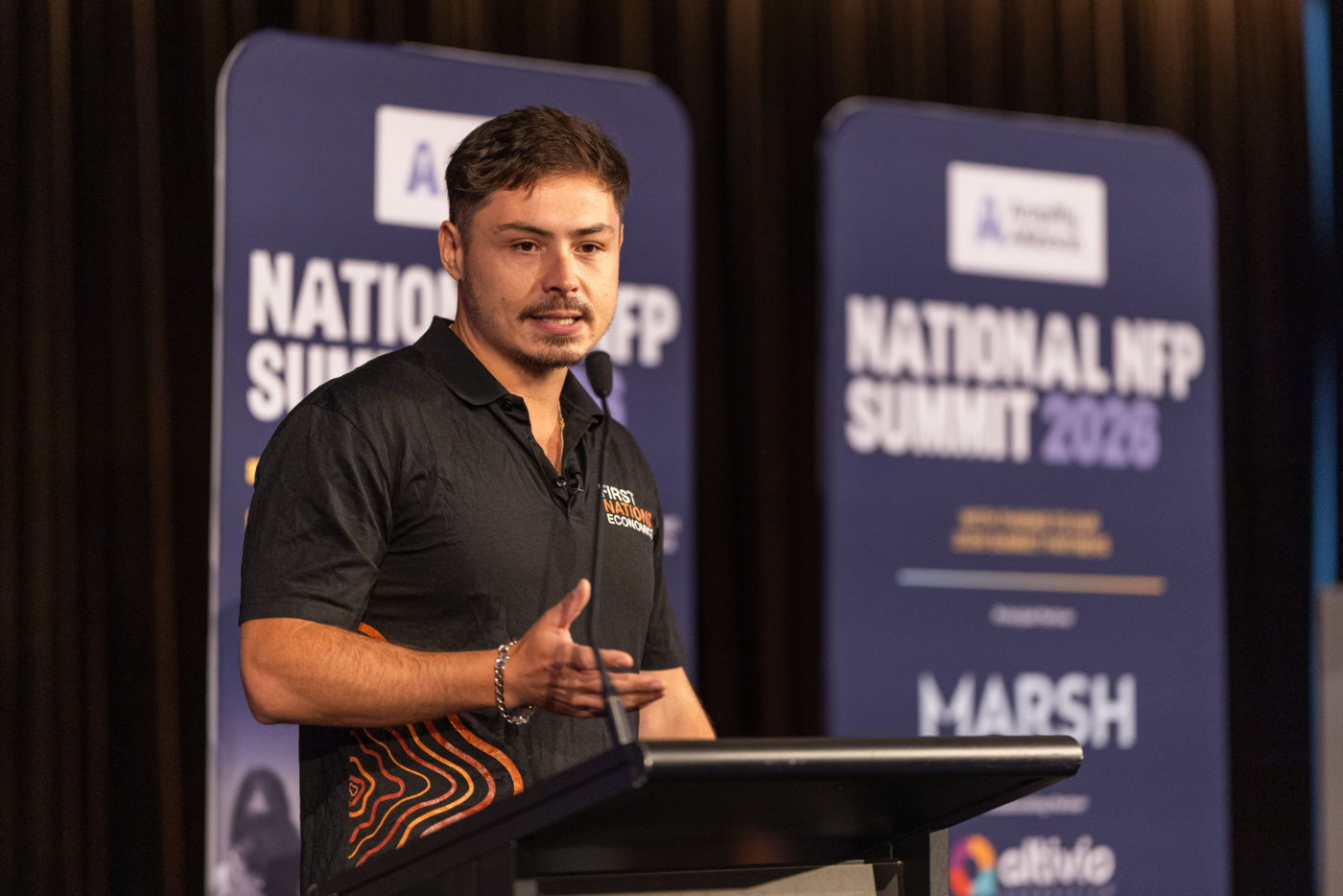
Delegates at the Amplify Alliance National NFP Summit in Canberra yesterday were asked to truly include Indigenous community representatives in deciding and implementing First Nations projects, without mob having to navigate endless layers of western administration, acquittals and demands.
The founder and managing director of First Nations Economics, Rick Macourt, spoke passionately about the need to reform funding of Indigenous programs to stop perpetuating inequity.
His core message to the summit was that any funding aimed at Aboriginal projects or communities needed to be an investment that would lead to tangible positive change for mob, and distribute power back to the community. “Shared decision making, instead of consultation,” he told the Amplify audience. “Investment, not grants. Funding needs to be investing in community, building assets and with accountability to mob. We need to have authority, before allocation. The strongest outcome of funding is not an acquittal, it's an asset that the community can see and use.”
A Gumbaynggirr man, a lawyer, an economics specialist and the associate dean of First Nations strategy and services at the University of Sydney, Macourt is well placed to speak about how the funding system fails Indigenous people and culture.
“I established this organisation [First Nations Economics] as an antithesis to the imported Western systems and government ways of doing business,” he told the Community Advocate before delivering his Amplify Summit address. “We work off a Westminster system. We have a government and government agencies that were built to meet the needs of the majority and were built in ways in which our Aboriginal communities were never intended to be included.
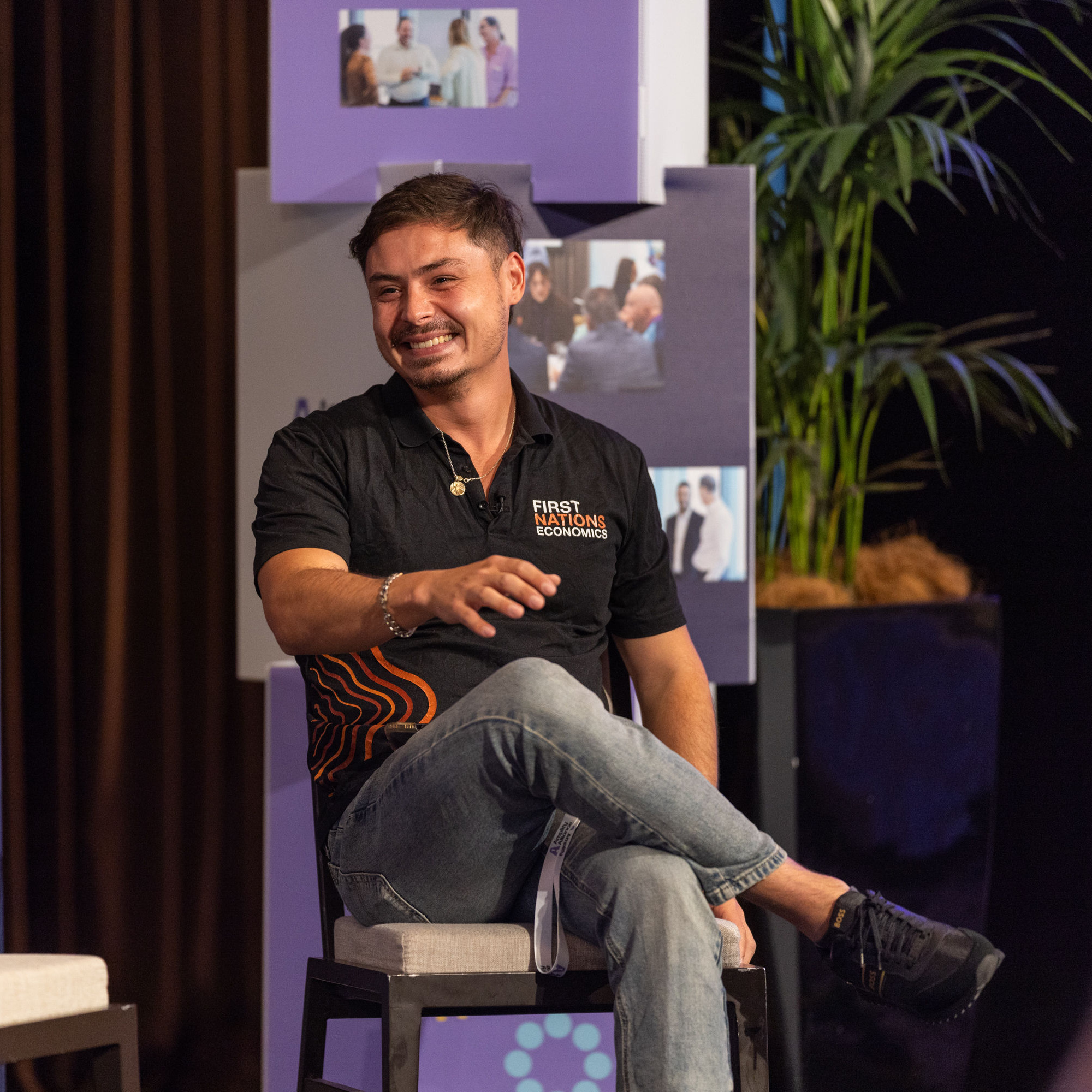
“The government does a lot of good work,” he said. “They fund a lot of amazing things but all while working within a system and institutions that are not accountable to Indigenous ways of doing business. First Nations Economics was created, therefore, as a model that better reflects the way our communities have done business for thousands of years.”
FNE’s board is all-Indigenous and most of its members are women. Macourt laughs that he is accountable to his aunties.
He cites the organisation’s Leah Armstrong Scholarship as an example of how to drive Indigenous business in a culturally appropriate way.
“The Leah Armstrong Scholarship is run by our scholarship section committee – all Aboriginal women – and it’s a $60,000 scholarship over three years,” he said. “It’s not academic merit-based, it’s access-based. It’s designed to fund people that otherwise probably wouldn’t get support to get through university. To be honest, from my motivation, it was inspired by my mum, who was the first in our entire family to get a Bachelor’s degree, as a cancer survivor, pregnant with her last child, 40 years old, right? It was designed for people that want to study and were let down by the system. Having this scholarship could mean getting your kids into childcare so you can actually focus on your studies. It could fund food on the table, meaning you don’t have to work a second or third job, so that you can instead get your studies done. It could mean whatever is going to support First Nations women to do their studies.
“We’re constantly having to fight uphill because we’re working within a system that was never built for a model like ours.”
“There are some guardrails they have to pass. “They don't have to get all A’s, but they have to pass, and if they’re going to defer, they’ve got to have a good reason. The whole point was that I’m not, as an Aboriginal man, I might be gay, but I’m not going to tell an Aboriginal woman what they need to get their studies done. They need to have autonomy to do that themselves.
“So that’s why it’s all women making decisions about women instead of having grants that are so narrow that they don’t receive enough candidates because they’re so limiting, and that don’t enable our students to thrive, or test their ability to be adults.
“Many scholarships say if you conform to this system that we created for you, then we’re willing to fund our version of success. Screw that. We wanted a scholarship for someone that is going to drop out of uni because she’s got two kids and is struggling and needs a bit of cash to make sure that she can keep the electricity on, if that means she can get her degree.”
FNE works as a pro-bono partner to help Indigenous-led community groups and organisations apply for grants and navigate funding demands. It also acts as a bridge between funding organisations and “young Aboriginal entrepreneurs who are out there in the battlefields, in their communities, seeing what needs to be done, trying their best to meet that need, but not being able to get a foot in the door,” he said.
Macourt’s address to the Amplify summit was a call for revolution within the system.
“We’re constantly having to fight uphill because we’re working within a system that was never built for a model like ours,” he said. “We need a national network of Aboriginal community organisations, voices represented by people who have ties to that community, who can make decisions directly with the federal government. We need to centralise funding instead of making it state based, and we need that to be Aboriginal-controlled and -led, even if it’s under or in partnership with the Minister for Aboriginal Affairs. Closing the Gap calls for that, but, you know, it never quite goes that far.”
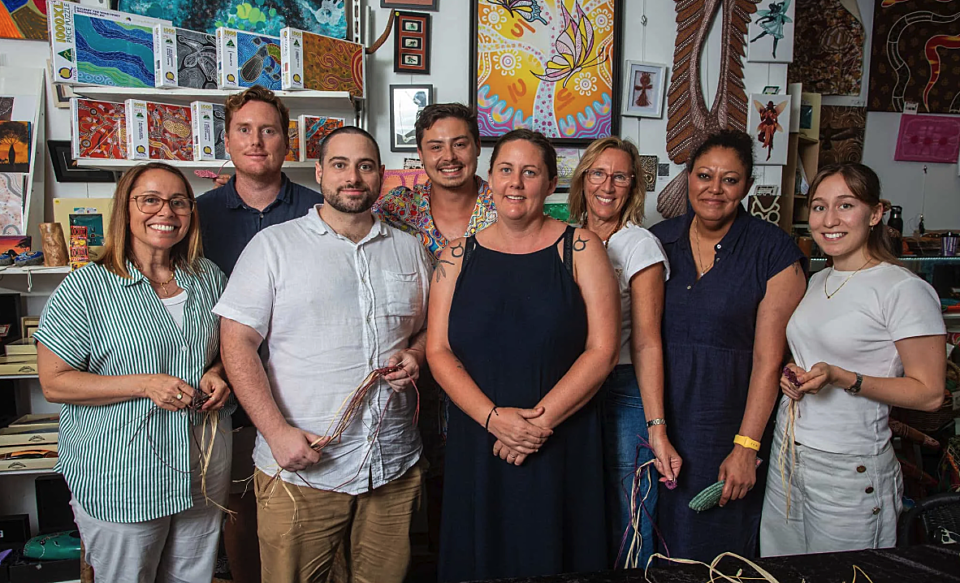
Macourt’s recent work to rebuild the budget system with the New South Wales government has shown a way forward that consists of Aboriginal and Torres Strait Islander community-controlled peak organisations working with government on reform and investment proposals.
“Instead of saying, ‘What fits the political agenda?’, the way that decisions were made during this process was from ideas generated by or from community,” Macourt explained. “What community evidence do we have? What is the evaluation plan? Instead of doing business the same way, let’s get a budget that works with government and community-controlled organisations to invest in the things that matter. You’re not going to necessarily see the outcomes of that in year one or two, but you’re going to see a shift in the way that government does business with community that is going to result in greater confidence, greater investment in infrastructure, greater self-determination through decision making and power sharing, and less reliance on election cycles.”
Ultimately, Macourt said, the message he wanted to impart to the Amplify summit audience in Canberra, on behalf of Aboriginal businesses, organisations and charities, was this: get out of our way!
“The fact is that we have examples of programs and systems that work,” he said. “Models like FNE show that we can do business with the big boys, but we can do it in a way that builds investment in our communities. We’re not saying no to money, but what we are saying is that the systems – government systems and even philanthropic systems – weigh so heavily on Indigenous people that often we don’t even bother.
“We need to rethink the way that we do business if we want a different outcome. It’s the system that’s in the way, and we can change that if we want to.”
Posted on 07 Oct 2026
A major public campaign launched this morning is calling on the federal government to restore…

Posted on 07 Oct 2026
The Australian Literacy & Numeracy Foundation (ALNF) has announced a partnership with mining…

Posted on 07 Oct 2026
A conference in Darwin will this morning hear detailed, strategic plans for how Australia could…

Posted on 30 Sep 2026
Not-for-profit leaders have been warned to be wary of approaches from potential “funding partners”…
Posted on 30 Sep 2026
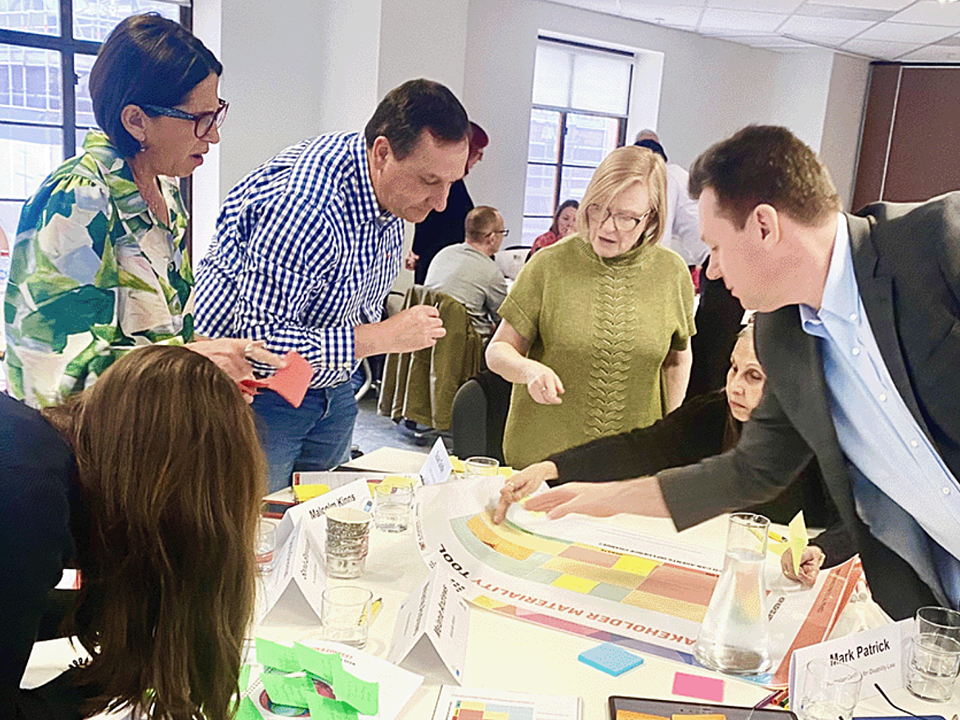
More than 200 fully funded Centre for Social Impact (CSI) scholarships will help equip for-purpose…

Posted on 30 Sep 2026
Personal stories are among the most powerful tools a charity can have to raise funds and awareness,…
Posted on 23 Sep 2026
A just-released major global survey of charities has found that demand for charity assistance has…
Posted on 23 Sep 2026
Fresh from welcoming delegates to last week’s Philanthropy Australia conference in Brisbane,…

Posted on 23 Sep 2026
A national strategy to develop Australia's regional cities is needed to break the housing…

Posted on 23 Sep 2026
Eight years after a report to Treasury first suggested the charities regulator should be more…

Posted on 17 Sep 2026
Australia’s biggest gathering of philanthropists, which drew more than 1200 delegates to Brisbane…

Posted on 16 Sep 2026
A new partnership between Paul Ramsay Foundation (PRF) and Atlassian Foundation aims to attract…