
Save Izzy: campaign calls on government to restore funding for vital services directory
Posted on 07 Oct 2026
A major public campaign launched this morning is calling on the federal government to restore…
Posted on 15 Oct 2025
By Nick Place, journalist, Community Directors
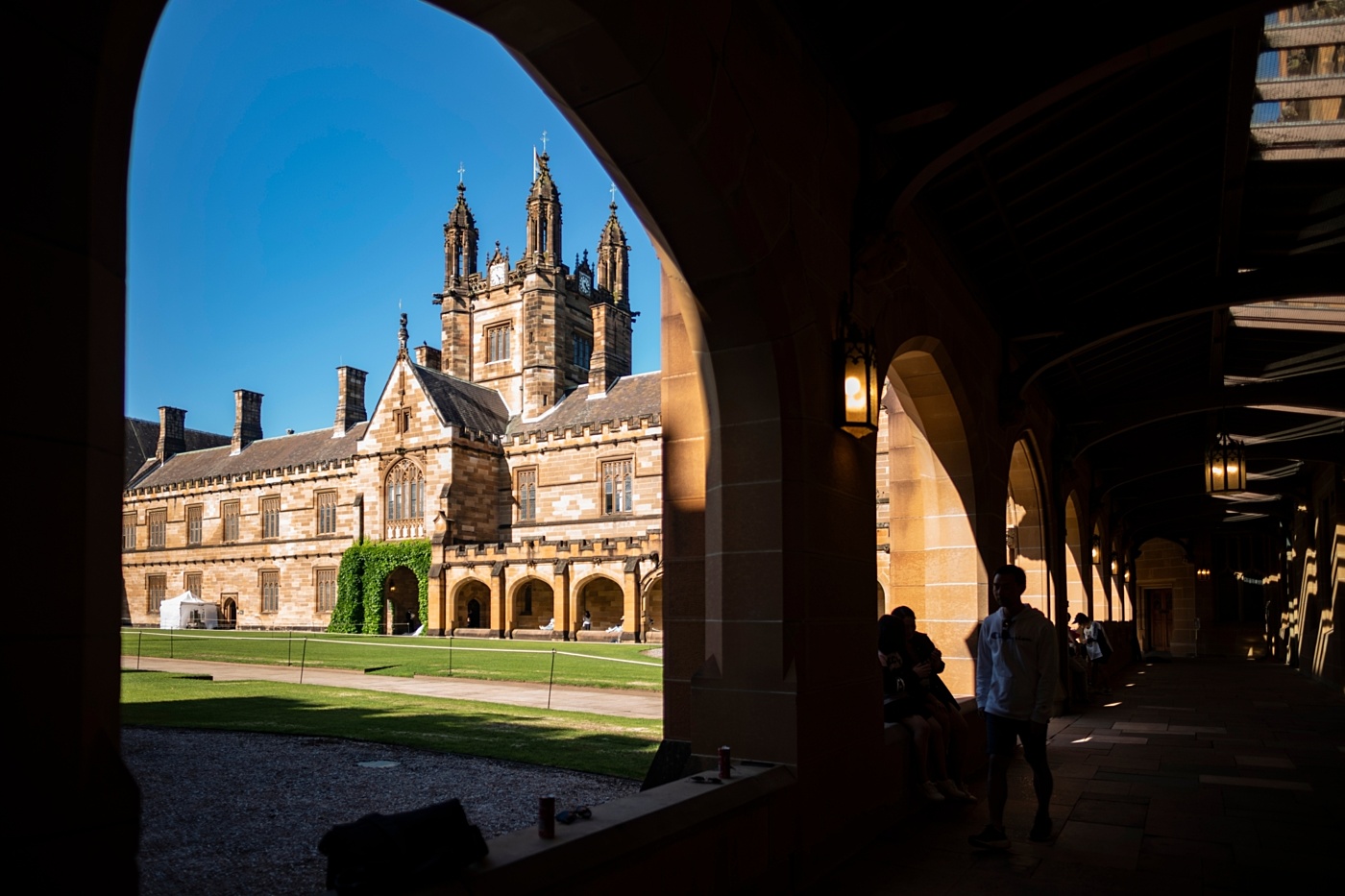
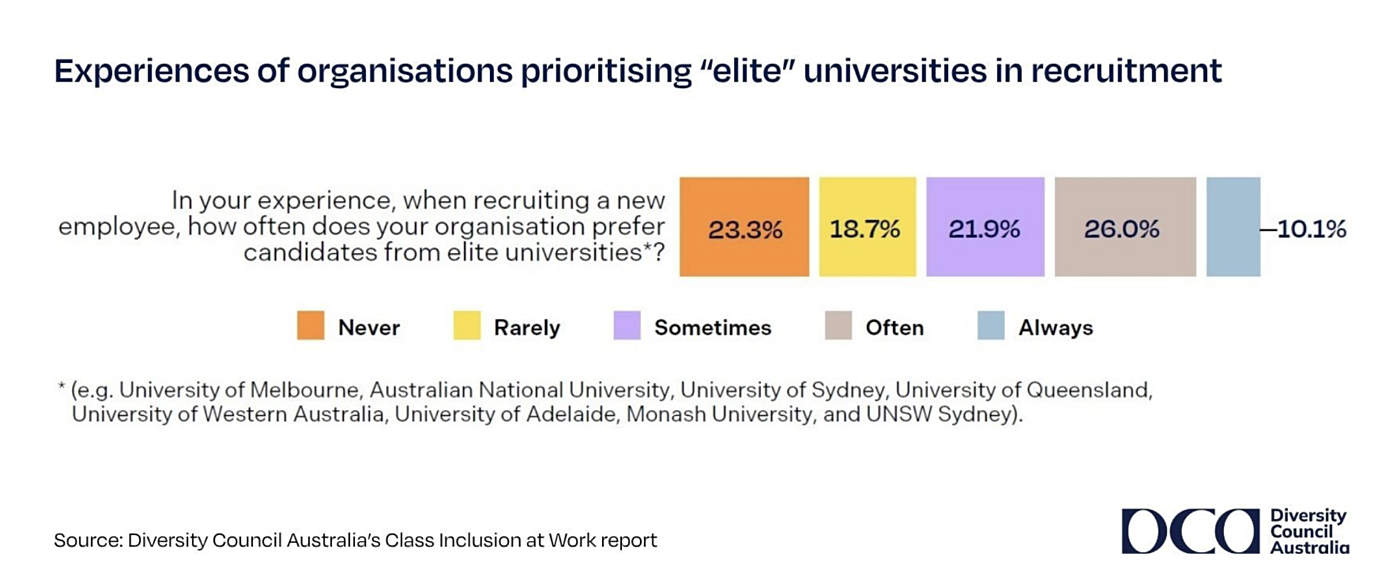
More than half (58 per cent) of human resources and diversity executives say their organisation leans towards job hires from “elite” universities, even using elite university attendance as a filtering mechanism during recruitment, according to Class Inclusion at Work, a report released today by Diversity Council Australia (DCA).
DCA says this bias occurs even though there is little evidence of a correlation between an employee’s alma mater and their work performance, according to a recent Harvard Business Review article (paywalled).
Two months ago, DCA, Australia’s leading not-for-profit independent peak body for diversity and includion, released preliminary findings from the report showing that a “class ceiling” saw workers from privileged social classes receiving better career development opportunities than those lower down the class system.
Today’s full report emphasises this class gap, revealing that 21 per cent of “class marginalised” workers reported they were significantly less likely to experience inclusion at work than their “class privileged” peers, of whom only 5 per cent reported the same.

Almost two-thirds (63 per cent) of survey respondents disagreed that “in Australia, anyone can get a job and do well in their career regardless of their class background,” and only 7 per cent agreed that Australia is a class-free society. Many of the workers surveyed said they had changed how they spoke, dressed or presented themselves, even not mentioning their school on their CV, to mask their background.
Regardless of their class, 79 per cent of those surveyed agreed that organisations should take action to address social class exclusion. More than three out of four class-marginalised workers reported that their social class had reduced their access to professional networks, mentors or sponsors.
The practice of filtering prospective employees by their university attendance worked against job seekers who were “class marginalised” because job seekers from middle-class or privileged backgrounds were more likely to have attended an elite university.
According to DCA, one survey participant said they were told they had attended “a country hick” university, while another was rejected from an interview process because the manager said they were “a bit rough for us.”
DCA CEO Catherine Hunter said the report challenged the myth that Australia is a class-free society.
“Your social class shouldn’t determine your career opportunities, yet our research shows class bias still impacts who gets ahead and who is left behind,” she said.
“At a time of rising cost-of-living pressures, skills shortages and economic uncertainty, organisations that allow class to influence hiring not only entrench disadvantage, they risk overlooking valuable talent that can boost productivity and drive recovery.”
“This new report gives employers an evidence-based framework to understand and address class inequality in the workplace.”
Class remains one of the most overlooked areas of workplace diversity and inclusion, DCA reported. While 60 per cent of organisations collect some form of class-related data about their workforce, even if only postcodes and education levels, 86 per cent of those who collect such data admitted class was not being used to inform diversity and inclusion action, it said.

“With economic inequality at a 20-year high, class continues to impact
people’s lives in profound ways, from access to employment, to pay, career progression and professional networks,” Hunter said.
“This new report gives employers an evidence-based framework to understand and address class inequality in the workplace. By focusing on practical actions across recruitment, development, progression and workplace culture, organisations can unlock talent that is too often overlooked and ensure everyone feels included at work.
“Our hope is that Class Inclusion at Work will spark new conversations about class in
Australia and, importantly, inspire workplaces to act so that people from all class
backgrounds can thrive and contribute to a more just and equitable nation.”
More information
More detail on the report is here.
Diversity Council Australia’s website is here.
Posted on 07 Oct 2026
A major public campaign launched this morning is calling on the federal government to restore…
Posted on 07 Oct 2026
The Australian Literacy & Numeracy Foundation (ALNF) has announced a partnership with mining…

Posted on 07 Oct 2026
A conference in Darwin will this morning hear detailed, strategic plans for how Australia could…

Posted on 30 Sep 2026
Not-for-profit leaders have been warned to be wary of approaches from potential “funding partners”…
Posted on 30 Sep 2026
More than 200 fully funded Centre for Social Impact (CSI) scholarships will help equip for-purpose…

Posted on 30 Sep 2026
Personal stories are among the most powerful tools a charity can have to raise funds and awareness,…

Posted on 23 Sep 2026
A just-released major global survey of charities has found that demand for charity assistance has…
Posted on 23 Sep 2026
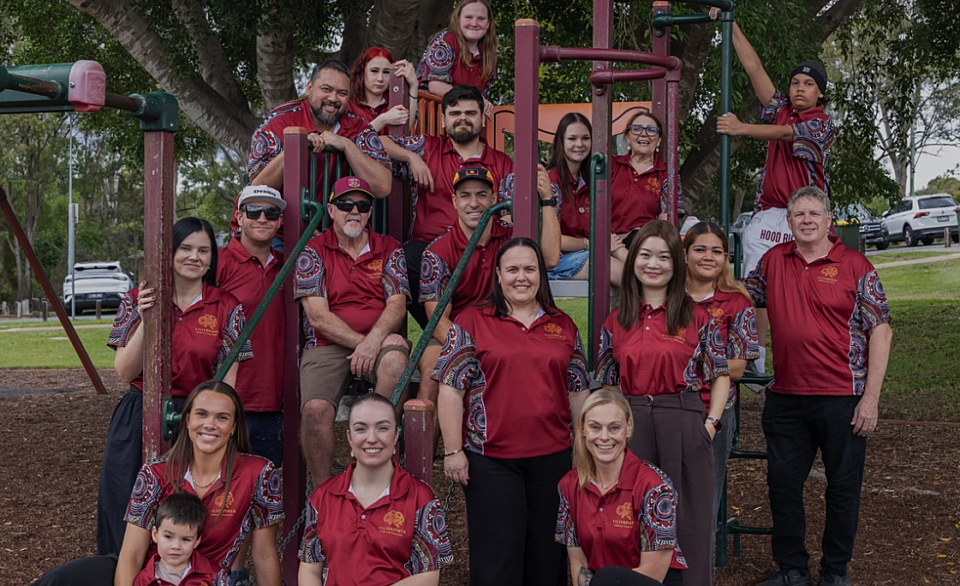
Fresh from welcoming delegates to last week’s Philanthropy Australia conference in Brisbane,…

Posted on 23 Sep 2026
A national strategy to develop Australia's regional cities is needed to break the housing…

Posted on 23 Sep 2026
Eight years after a report to Treasury first suggested the charities regulator should be more…
Posted on 17 Sep 2026
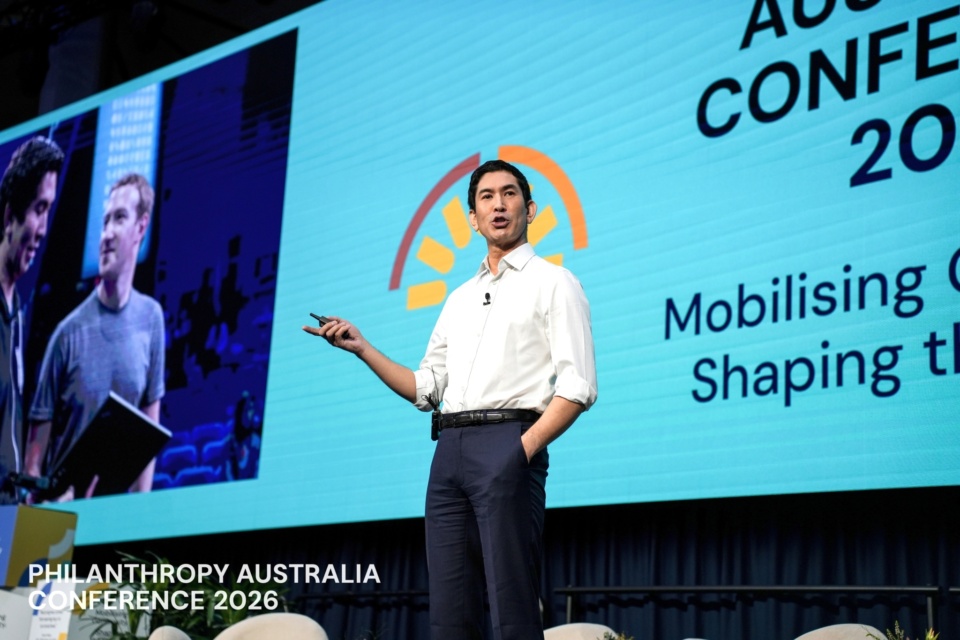
Australia’s biggest gathering of philanthropists, which drew more than 1200 delegates to Brisbane…

Posted on 16 Sep 2026
A new partnership between Paul Ramsay Foundation (PRF) and Atlassian Foundation aims to attract…