
Fence-sitting isn’t going to work if we want better owners corporations
Posted on 21 Oct 2026
The wider not-for-profit sector doesn't pay much attention to owners corporations, but maybe it…
Posted on 04 Jan 2024
By Greg Thom, journalist, Institute of Community Directors Australia

Harnessing the potential of new arrivals to Australia could be the answer to solving Australia’s technical skills shortage, according to a leading migrant and refugee advocacy group.
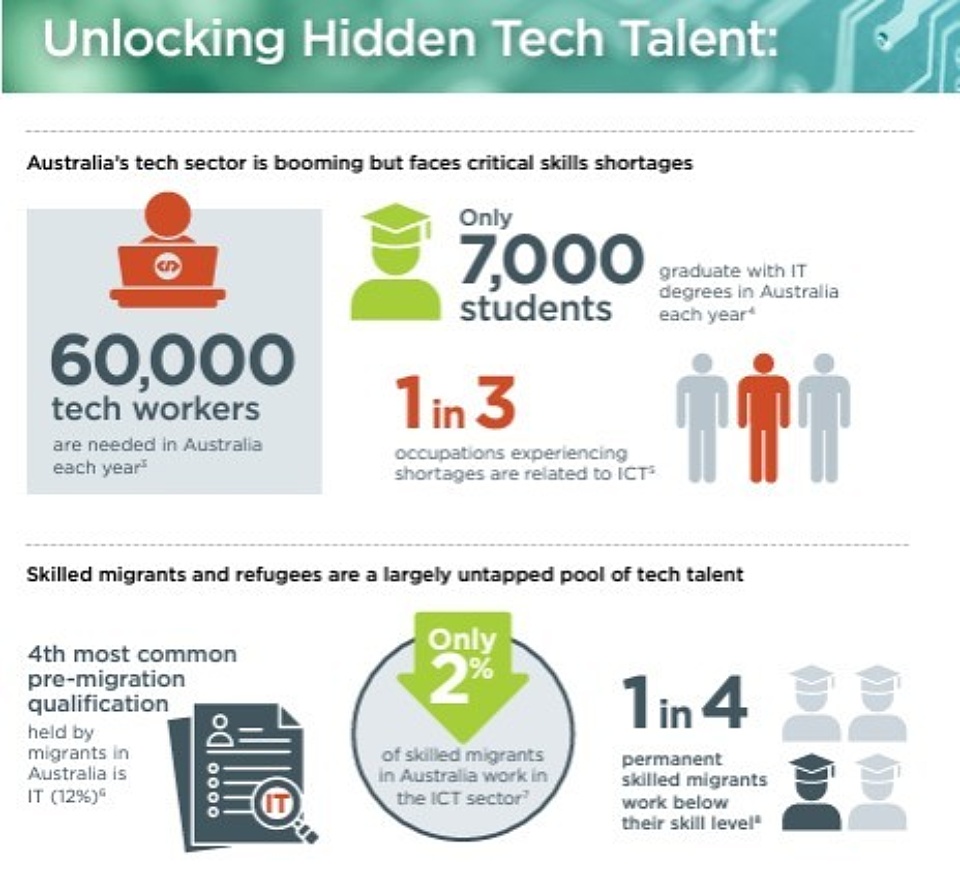
Settlement Services International (SSI) said the tech sector needs 60,000 skilled workers to meet growing demand, but only 7,000 IT professionals graduate in Australia each year.

SSI said despite this massive shortfall, SSI said the technical talents of skilled migrants and refugees are often ignored by employers.
An estimated 12% of migrants have IT skills and training when they arrive in Australia, making it the fourth most common pre-migration qualification.
About one in four skilled permanent migrants work below their skill level because they encounter significant barriers to finding work.
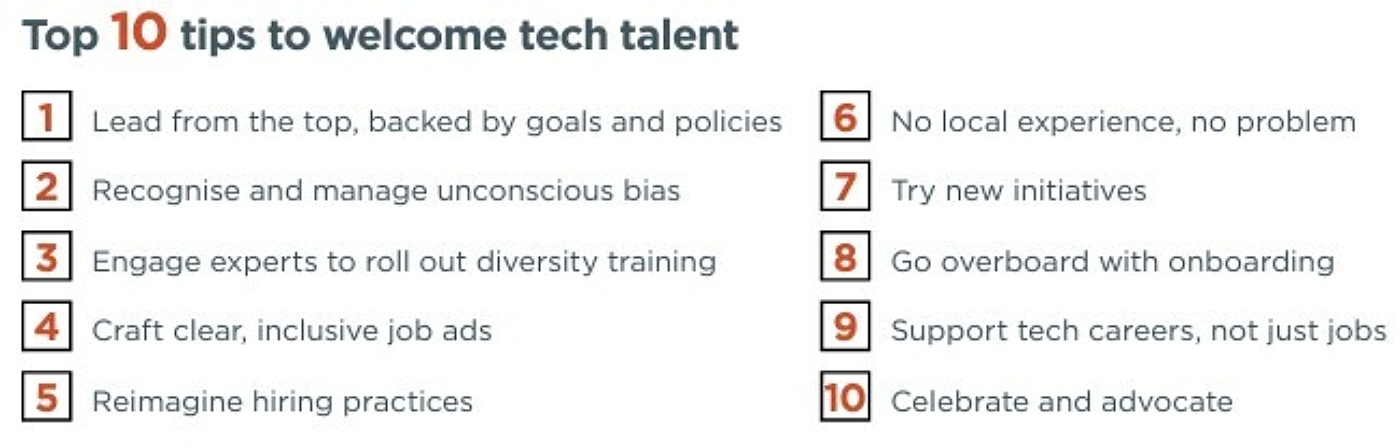
To try to overcome the problem, SSI and the Australian Computer Society have developed a guide to help employers recruit and train migrant and refugee talent.
The Billion Dollar Benefit: Welcoming Tech Talent contains practical advice such as questioning unconscious bias and using inclusive language in recruitment ads, to help employers make their workplaces more welcoming.
SSI CEO Violet Roumeliotis said the IT skills shortfall encouraged many employers to look overseas for skilled labour when there is already a highly trained and motivated workforce right on their doorstep.
“Talent is distributed equally, but opportunity is not,” said Ms Roumeliotis.
“Many migrants and refugees in Australia are highly skilled and bring a wealth of tech expertise, qualifications and experience from their countries of origin.

“They just need the opportunity to showcase those tech skills in workplaces.”
They include newly arrived Australians such as Syrian-born Abd Almassih Alsaad.
Despite having more than two decades in IT under his belt, as a computer programmer and business owner and working for large corporations and government, he has been unable to secure work that utilises his skills.
“I’ve found that many IT employers won’t acknowledge a degree from overseas, thinking it’s not strong enough, and often insist on a local degree from Australia,” said Mr Alsaad.
“I am even being rejected for volunteering unpaid roles in the industry.”
“In the tech sector, with our chronic shortage of skilled workers, we need to ensure we are making the most of the talents and experience of recent arrivals from overseas.”
Ms Roumeliotis said that while tech is the fourth most common pre-migration qualification held by migrants in Australia, only 2% of skilled migrants are currently working in the sector.
“This is a missed opportunity for everyone, and the Welcoming Tech Talent guide serves as a practical toolkit for businesses to embrace the full diversity of tech talent in Australia.”
Australian Computer Society chief growth officer Siobhan Casey said the report highlights the contribution migrants make to the Australian economy.
“In the tech sector, with our chronic shortage of skilled workers, we need to ensure we are making the most of the talents and experience of recent arrivals from overseas.”
She said though Australia is facing an IT skills crisis, it takes an average 3½ months for a domestic student to land their first role and up to 12 months for an international skilled migrant.
“Employers need to access the skilled talent sooner to ensure Australia’s economic prosperity.”
Posted on 21 Oct 2026
The wider not-for-profit sector doesn't pay much attention to owners corporations, but maybe it…

Posted on 21 Oct 2026
Backed by tangible successes and government support, community foundations are gaining momentum as…

Posted on 21 Oct 2026
A national campaign to restore federal funding for Ask Izzy has attracted such strong grassroots…

Posted on 21 Oct 2026
In the wake of an act of violence against federal independent MP Helen Haines, Charities Minister…

Posted on 21 Oct 2026
If your charity takes a stance that happens to align with a political party’s stance in a public…

Posted on 15 Oct 2026
Good cybersecurity must be the foundation of not-for-profits’ efforts to adopt artificial…

Posted on 15 Oct 2026
A few years ago, I sat on a small community board that was still held together by email threads and…

Posted on 15 Oct 2026
“Build a better mousetrap, and the world will beat a path to your door”, the old saw goes.…

Posted on 15 Oct 2026
The nation's digital inclusion advocate is pushing for more equity in the rollout of AI in light of…

Posted on 15 Oct 2026
Not-for-profit leaders should be conducting regular “fire drills” that replicate AI-powered…

Posted on 15 Oct 2026
Boards that leave cybersecurity to the one director with IT expertise are leaving their…

Posted on 15 Oct 2026
Community Directors has a warehouse-style office filled with artworks, and if I glance up towards…