
Save Izzy: campaign calls on government to restore funding for vital services directory
Posted on 07 Oct 2026
A major public campaign launched this morning is calling on the federal government to restore…
Posted on 17 Dec 2025
By Nick Place, journalist, Community Directors

For this final Community Advocate edition of the year, we reviewed a whole year’s worth of stories to see which ones were the most read.
The rise of AI, and the struggle of the charity and NFP sector to effectively and securely embrace it, was one of the top stories of 2025, along with the ATO’s insistence that a substantial chunk of not-for-profits self-review their tax-exempt status.
The majority of our greatest hits related to the Australian Charities and Not-for-profits Commission’s (ACNC’s) changes to tax laws that meant 155,000 non-charities with an ABN needed to lodge an annual self-review or risk losing their tax-exempt status.
Australian Taxation Office assistant commissioner Jennifer Moltisanti explained at the time that the self-review measure aimed to “enhance transparency and integrity in the tax, super and registry system by ensuring only eligible NFPs are accessing income tax exemptions”.
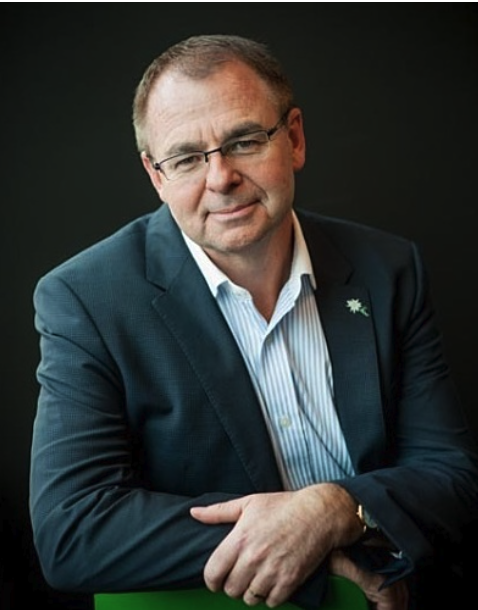
Our most popular article of the year reported calls for changes to the reporting framework back in January, yet NFPs were slow to join the party, with the ACNC repeatedly extending the deadline to avoid coming down hard on organisations that had not lodged the necessary paperwork. Community Council for Australia CEO and Community Advocate columnist David Crosbie was scathing of the new self-review system, saying it had not worked.
In July, months after the initial April 1 lodgement deadline, he wrote: “The ATO has tried over more than two years to make the NFP self-assessment policy work and it’s still trying, but the vast majority of targeted NFPs have not lodged returns. We can argue about why, but what we cannot argue about is that the measure has failed to achieve the desired policy outcome.”
In the end, the demand for organisations to prove their NFP status saw a record number of new charity registrations, while 77 charities were deregistered in October for being stubbornly non-responsive and non-compliant.
It all made for spicy discussions on the sidelines when the entire sector met in Canberra in October for a roundtable hosted by Charities Minister Andrew Leigh and Social Services Minister Tanya Plibersek, in the lead-up to the treasurer’s wider economic roundtable.
Another hot topic this year was the question of how much private ancillary funds, now renamed giving funds, should be required to donate each year. The question rattled around the sector in the middle of the year, with the government running a consultation process – and still pondering – on whether to stop the wealthy funds from drip-feeding donations, to ensure they were not ‘forever funds’.
“New technology has the potential to take some of the load off NFP chairs, board members and staff, which would be a welcome development”
While all this was going on, charity, NFP, for-purpose and social enterprise leaders were busy getting to know their robots. All year, articles related to courses, tutorials, scholarships and other learning opportunities for effectively and safely embedding artificial intelligence into sector work were popular, and in fact Community Directors journalist Matthew Schulz created one of the most viewed stories of the year when he collated 43 examples of NFPs and charities using AI to help their work in tangible ways.

Charities Minister Andrew Leigh has been a strong and vocal supporter of the potential of AI and technology to help the sector’s workflow and potential, but he has also flagged the need for strong governance, cyber security and human leadership in attempts to embed AI.
Infoxchange’s digital technologies report, released in November, made it clear that while 67 per cent of surveyed NFPs were using generative AI as part of their everyday business, only 14 per cent of organisations surveyed had an official AI policy or guidelines in place, with 50 per cent of the others saying they planning to get around to formulating a policy.
Less than a month later, Infoxchange partnered with the National Artificial Intelligence Centre to meet the identified challenge, offering free, practical and accessible resources, templates, advice and training for NFP staff, volunteers and executives.
New technology has the potential to take some of the load off NFP chairs, board members and staff, which would be a welcome development: the 2025 Australian Community Boards Wellbeing Report, released at the start of December, found that many in the sector were burnt out and felt overloaded by their NFP mission, particularly by its compliance demands, even though they were proud to be involved.
Away from the coalface, we discovered, thanks to an annual study released by the Australian Centre for Philanthropy and Nonprofit Studies (ACPNS) at Queensland University of Technology (QUT), that 4.25 million Australian taxpayers claimed deductions for charitable giving in the latest year for which figures were available, donating $9 billion for the period, 2022–23. The total included an astonishing single donation of $5 billion from Andrew and Nicola Forrest, which threw out the stats somewhat:it all came from the Perth postcode of 6011, which takes in the suburbs where the Forrests live, and was responsible for 89.99 per cent of the state’s giving. For the Australian postcode with the highest percentage of individual givers, you had to travel east and south, to Kingston, 7051, in Tasmania, where 44.44 per cent of the taxpayers claimed deductions for giving.

Other people gave their time, energy and expertise to the sector. In 2025, the sector heard a difficult but brilliant 15th annual Joan Kirner Social Justice Oration by media heavyweight Ray Martin, calling for genuine justice for Indigenous Australians, and the Community Advocate met many remarkable “people with purpose”. We chatted with Mick McLoughlin, who set a world record for the number of golf balls hit within 24 hours and raised money for Ronald McDonald House; as well as the Man Cave’s leader, Ben Vasilou; Jex Truran-Lakaev, the deafblind founder of a Newcastle support project; Camilla Freeman-Topper, the creative director and co-founder of Australian fashion brand Camilla and Marc and cofounder of the philanthropic movement “Ovaries. Talk about them”; and Dr Kathy Townsend, who works to understand and save oceans through observations of and interactions with manta rays.
We also took time to celebrate some significant birthdays and milestones in 2025.
The Community Advocate’s parent organisation, Our Community, turned 25, and the Vincent Fairfax Fellowship for ethical leadership notched 30 years of turning out ethical leaders. Philanthropy Australia also celebrated a half-century.
In our newsroom, I replaced the retiring founding editor of the Community Advocate, Greg Thom, who hung up his keyboard for long, long, long walks across the globe. Jealous? Us?
Thank you for your readership, engagement, feedback and opinions through 2025. We’re already excited to see what next year brings for the sector. Please feel free to email nickp@ourcommunity.com.au if you have any story ideas, suggestions or requests for Community Advocate coverage. If you have friends or colleagues who should be subscribed, please let them know we’re here.
In the meantime, have a wonderful holiday period and see you in the new year.
Posted on 07 Oct 2026
A major public campaign launched this morning is calling on the federal government to restore…

Posted on 07 Oct 2026
The Australian Literacy & Numeracy Foundation (ALNF) has announced a partnership with mining…

Posted on 07 Oct 2026
A conference in Darwin will this morning hear detailed, strategic plans for how Australia could…

Posted on 30 Sep 2026
Not-for-profit leaders have been warned to be wary of approaches from potential “funding partners”…
Posted on 30 Sep 2026
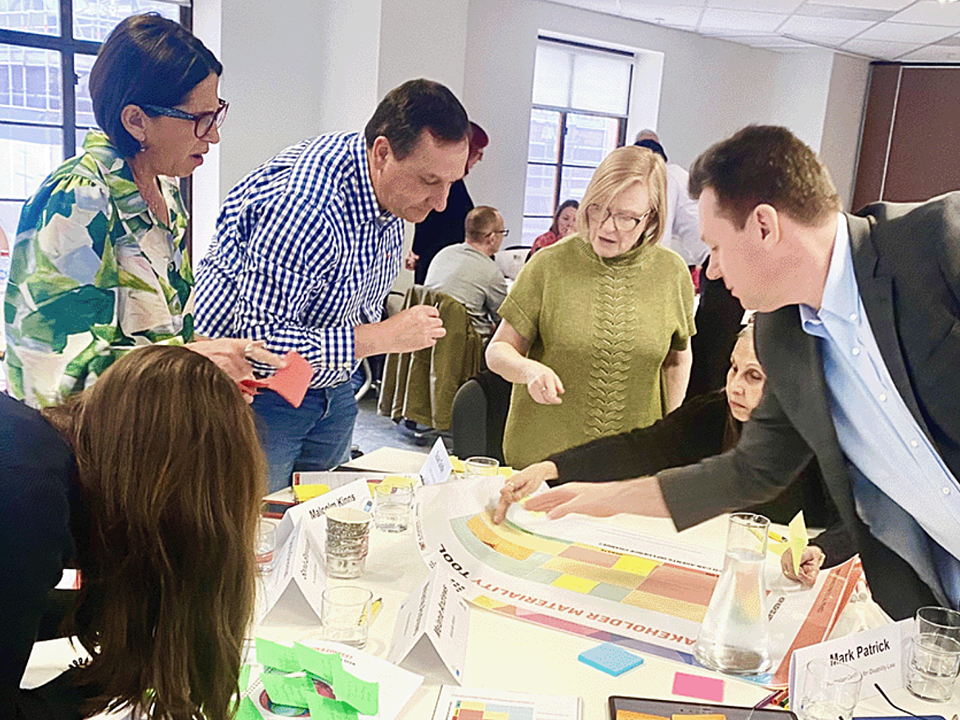
More than 200 fully funded Centre for Social Impact (CSI) scholarships will help equip for-purpose…

Posted on 30 Sep 2026
Personal stories are among the most powerful tools a charity can have to raise funds and awareness,…
Posted on 23 Sep 2026
A just-released major global survey of charities has found that demand for charity assistance has…
Posted on 23 Sep 2026
Fresh from welcoming delegates to last week’s Philanthropy Australia conference in Brisbane,…

Posted on 23 Sep 2026
A national strategy to develop Australia's regional cities is needed to break the housing…

Posted on 23 Sep 2026
Eight years after a report to Treasury first suggested the charities regulator should be more…

Posted on 17 Sep 2026
Australia’s biggest gathering of philanthropists, which drew more than 1200 delegates to Brisbane…

Posted on 16 Sep 2026
A new partnership between Paul Ramsay Foundation (PRF) and Atlassian Foundation aims to attract…