
From ‘No Irish need apply’ to the AFL Grand Final
Posted on 30 Sep 2026
After the biggest AFL game of the year, one player proudly wore the flag of his birth country and…
Posted on 21 Aug 2024
By Matthew Schulz, journalist, Institute of Community Directors Australia

As the not-for-profit sector’s “Fix Fundraising” campaign to untangle confusing rules extends into its seventh year, Charities Minister Andrew Leigh has written to laggard states urging them to act on their promise to repair a patchwork system costing charities millions of dollars.
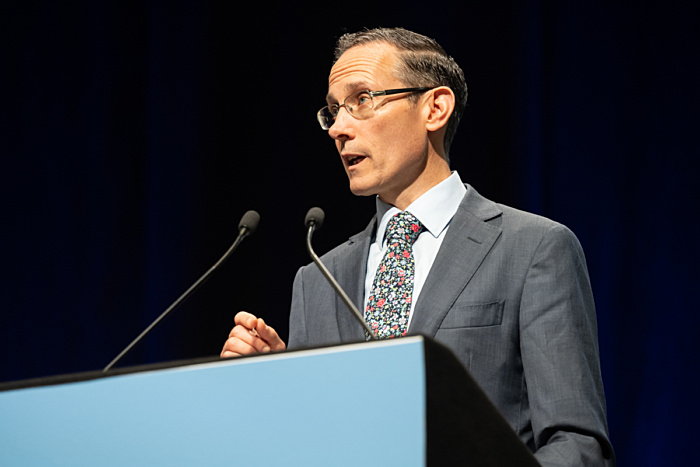
In a welcome address to public servants, sector leaders and regulators attending the Australian Charities and Not-for-profits Commission’s (ACNC’s) “regulators’ day”, Dr Leigh implied that the government was getting impatient with the glacial pace of reform.
Fix Fundraising advocate Geraldine Menere – who was listening to the speech – said the sector can’t wait much longer for reforms that are well overdue and sorely needed in a sector battling with high demand and a cost-of-living crisis.
Dr Leigh said he had written to regulators about the situation.
“I have written to those jurisdictions that are yet to legislate harmonised charitable fundraising laws to encourage them to do so as a matter of urgency”.
Existing laws and regulations mean that fundraisers must follow different rules and licensing systems in some states, which means a huge additional red tape burden.
Under the changes, states and territories are being asked to agree to a single set of fundraising principles, ensuring rules are harmonised across the country.
States and territories agreed to roll out implementation plans for reforms by July last year.
Only South Australia, Victoria and the Australian Capital Territory have implemented the principles in full.
In contrast, NSW failed to send a representative to the regulators’ day, and organisers planned to chase them for a written update. The Queensland regulator hinted its looming election could delay implementation further, while Western Australia is also expected to be affected by elections. After a promising start and introducing the legislation to its parliament, Tasmania has allowed reform in that state to stall following its recent election. The Northern Territory does not regulate fundraising.
“We’ve consistently made this a priority in our charity reform policies because we understand that operating budgets are tight and that wasted money means fewer services, less innovation, less training and less planning.”
The federal government’s impatience is partly driven by its stated goal of doubling giving in Australia by 2030.
With fundraising regulations having frustrated organisations for decades, Dr Leigh supported the “Fix Fundraising” campaign following its official launch in 2017. By 2019, Labor had added reforms to its election platform.
Speaking at length about the importance of the reforms to the government’s agenda and to the sector, Dr Leigh told the hundreds of government officers present that one estimate suggested the delay was costing Australian charities $1 million every month in additional compliance costs.
“We’ve consistently made this a priority in our charity reform policies because we understand that operating budgets are tight and that wasted money means fewer services, less innovation, less training and less planning.”
The issue was highlighted in the recent Productivity Commission inquiry into philanthropy, and in the Royal Commission into National Natural Disaster Arrangements following the 2019–2020 bushfires in which “the organic outpouring of generosity from Australian donors collided with a fundraising regulatory environment that was inconsistent from state to state, often not fit for purpose, and poorly understood by the public”.
Dr Leigh said he would scrutinise implementation plans that have been supplied “with enthusiasm”. He stressed that the change “costs nothing and it puts money back directly into the pockets of resource-strapped charities”.
“If Australia is to reach the goal of doubling giving by 2030, we need to create a regulatory environment that supports donors to give freely – without doubts, second guessing or remorse.”
Read Dr Leigh’s speech in full | Justice Connect's Geraldine Menere outlines the current state of play
Posted on 30 Sep 2026
After the biggest AFL game of the year, one player proudly wore the flag of his birth country and…

Posted on 30 Sep 2026
There's been a lot of talk about AI this week, and some of it has been frightening. So, is AI good…

Posted on 30 Sep 2026
Personal stories are among the most powerful tools a charity can have to raise funds and awareness,…

Posted on 30 Sep 2026
More than 200 fully funded Centre for Social Impact (CSI) scholarships will help equip for-purpose…

Posted on 30 Sep 2026
Not-for-profit leaders have been warned to be wary of approaches from potential “funding partners”…

Posted on 30 Sep 2026
At 21 years old, Tate Donohoe is the founder of Ecodia, an AI-assisted software development company…

Posted on 23 Sep 2026
There are solutions to counter the rise of One Nation but they might not be residing in the mess…

Posted on 23 Sep 2026
In his new book Our Place, policy expert Matt Lloyd-Cope argues that housing must be at the heart…

Posted on 23 Sep 2026
Eight years after a report to Treasury first suggested the charities regulator should be more…
Posted on 23 Sep 2026
A national strategy to develop Australia's regional cities is needed to break the housing…

Posted on 23 Sep 2026
Fresh from welcoming delegates to last week’s Philanthropy Australia conference in Brisbane,…

Posted on 23 Sep 2026
A just-released major global survey of charities has found that demand for charity assistance has…