
NFP tech experts urge orgs to scale up cybersafety
Posted on 15 Oct 2026
Good cybersecurity must be the foundation of not-for-profits’ efforts to adopt artificial…
Posted on 10 Jun 2026
By Matthew Schulz, journalist, Community Directors

A survey of directors across hundreds of boards in Australia and New Zealand and beyond has found 79 per cent are using AI weekly – but the AI governance of only one in five has a named owner, and just 17 per cent have discussed directors' liability in an AI context.
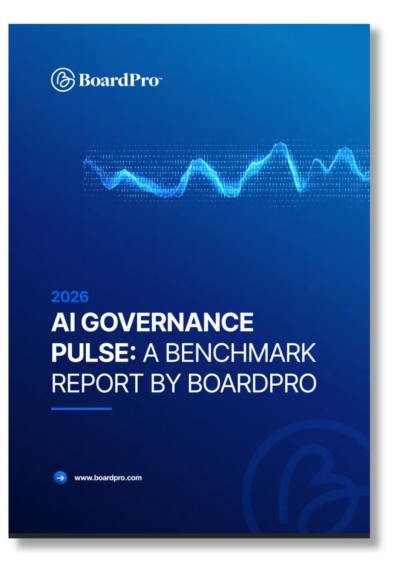
According to the BoardPro study, three-quarters of boards had no picture of AI use in their organisations, and 41 per cent had no formal policy governing individual use.
The findings also showed that 21 per cent of senior leaders did not know what staff were using AI for, while just eight per cent of organisations had reviewed their insurance for directors and officers in an AI context.
At the board level, just 2% of respondents had a formal governance framework with clear accountability and regular reporting.
Directors showed they were aware of the issues, but not the solutions. "The board is AI-aware, but not AI-enabled," said one. "Management is leading the board on AI," said another. A third: "We don't know what we don't know."
"The risks directors are being told to worry about are the futuristic ones," said BoardPro product marketing manager David Renwick in a recent blog post.

"The risks they are actually carrying are simpler, more present-tense, and more legally consequential."
He said consumer-grade AI tools commonly used for transcription and minute-taking typically reserved the right to use inputs to train their models or share data with third parties. Material pasted into these tools effectively left the organisation's control.
A recent US court ruling found that documents produced using AI tools may not be protected by legal privilege, Renwick said, and it suggested boards should treat transcripts produced with consumer tools as potentially discoverable.
He said that staff use of unsanctioned tools to draft board papers could leave boards making decisions using AI-influenced material without an audit trail or a record of what the AI had generated or been asked.
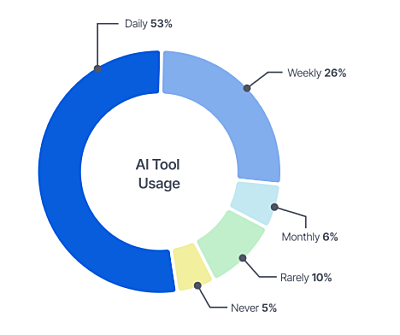
He said the 19 per cent of organisations that had nominated an AI governance “owner” were better placed, simply because they had made someone responsible for asking questions about AI use.
Other potential failure points included using AI to replace directors’ judgments, and leaving AI governance issues to whoever was most comfortable with the technology.
The better path was to use AI to sharpen director preparation, finding the gap in a board paper and highlighting questions that management did not expect, while keeping judgments in the hands of directors, Renwick said.
"Our Pulse data confirmed what we'd long suspected. Governance professionals are some of the most active AI users in the workforce, but they're doing board work in consumer tools, with no scaffolding or safety net around them."
"A board that has decided AI is appropriate for board pack pre-reading but not for forming positions on strategic decisions has done more useful governance work than a board that has spent six months exploring AI," he said.
“Our Pulse data confirmed what we'd long suspected. Governance professionals are some of the most active AI users in the workforce, but they're doing board work in consumer tools, with no scaffolding or safety net around them. That's an AI governance problem, not an AI adoption problem.”
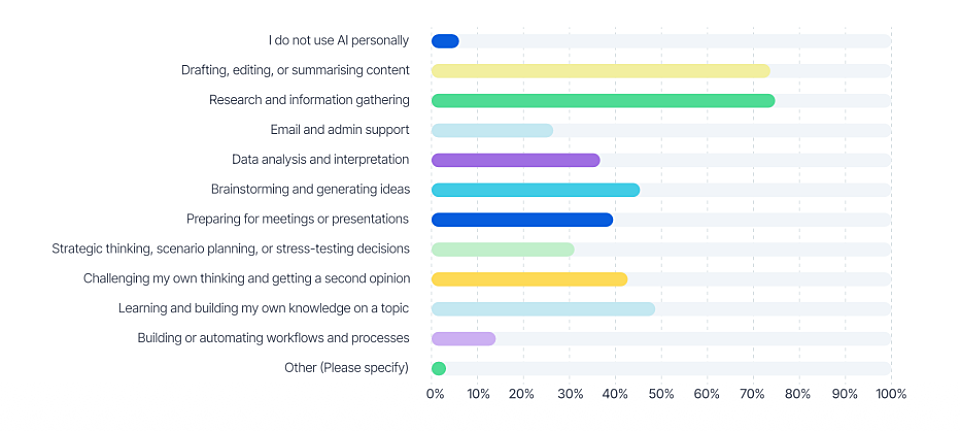
He said directors were not going to stop using AI, but policies and procedures were needed.
“The question is whether boards keep ceding that ground to ChatGPT and Gemini, where prompts and board-sensitive content sit outside the board's control, or whether they bring AI inside the system of record where governance actually happens.”
He said BoardPro had developed its own solution. “AI Assistant is our answer: AI grounded in the board's own record, surfaced inside the workflow directors already use, and giving boards a defensible position on how AI shows up in their governance work.”
The BoardPro study reinforces the findings of the most recent annual Digital Technology in the Not-for-profit Sector Report from Infoxchange, which found that while two thirds of Australian NFPs were using AI – largely to generate content – only 14 per cent of organisations had an official AI policy or guidelines. Of those that didn’t, 50 per cent intended to formulate a policy.
BoardPro is a Community Directors partner.
Download BoardPro’s AI governance report
Read David Renwick’s original blog post here
Community Directors: AI tools and resources, including policies, help sheets and more
Posted on 15 Oct 2026
Good cybersecurity must be the foundation of not-for-profits’ efforts to adopt artificial…
Posted on 15 Oct 2026
A few years ago, I sat on a small community board that was still held together by email threads and…

Posted on 15 Oct 2026
“Build a better mousetrap, and the world will beat a path to your door”, the old saw goes.…

Posted on 15 Oct 2026
The nation's digital inclusion advocate is pushing for more equity in the rollout of AI in light of…

Posted on 15 Oct 2026
Not-for-profit leaders should be conducting regular “fire drills” that replicate AI-powered…

Posted on 15 Oct 2026
Boards that leave cybersecurity to the one director with IT expertise are leaving their…

Posted on 15 Oct 2026
Community Directors has a warehouse-style office filled with artworks, and if I glance up towards…

Posted on 15 Oct 2026
As the manager of a palliative care service, Stephanie Kirkman Meikle has learnt that the prospect…

Posted on 14 Oct 2026
A special guest with her finger on the pulse of one of the biggest issues facing Australia –…
Posted on 17 Sep 2026
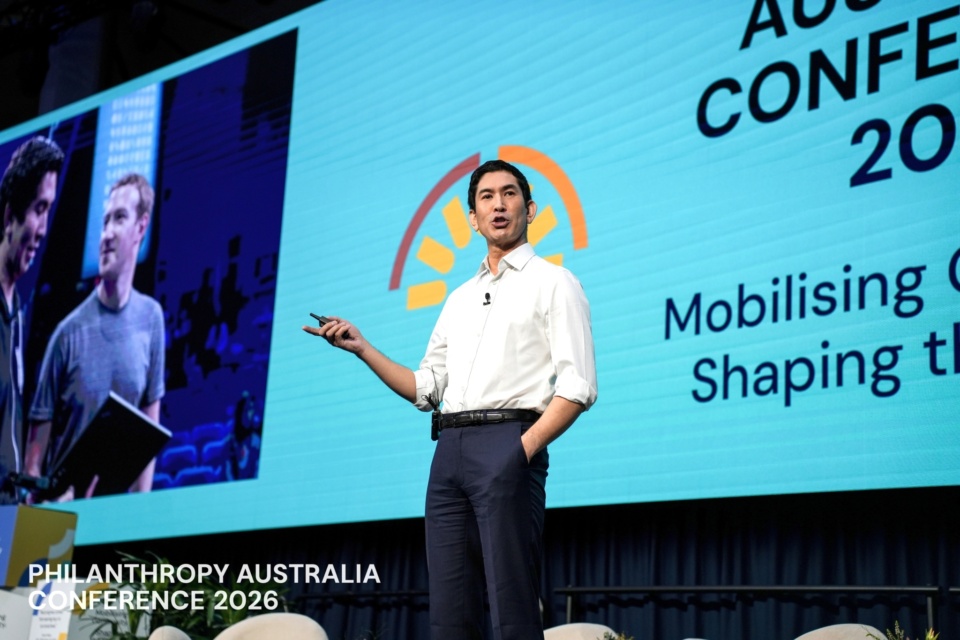
Australia’s biggest gathering of philanthropists, which drew more than 1200 delegates to Brisbane…

Posted on 17 Sep 2026
Experts in Australian philanthropy say there are stark differences between philanthropic money and…

Posted on 17 Sep 2026
One of Australia’s foremost fundraising observers says Australian not-for-profits must get the…