
Save Izzy: campaign calls on government to restore funding for vital services directory
Posted on 07 Oct 2026
A major public campaign launched this morning is calling on the federal government to restore…
Posted on 31 Mar 2026
By Nick Place, journalist, Community Directors
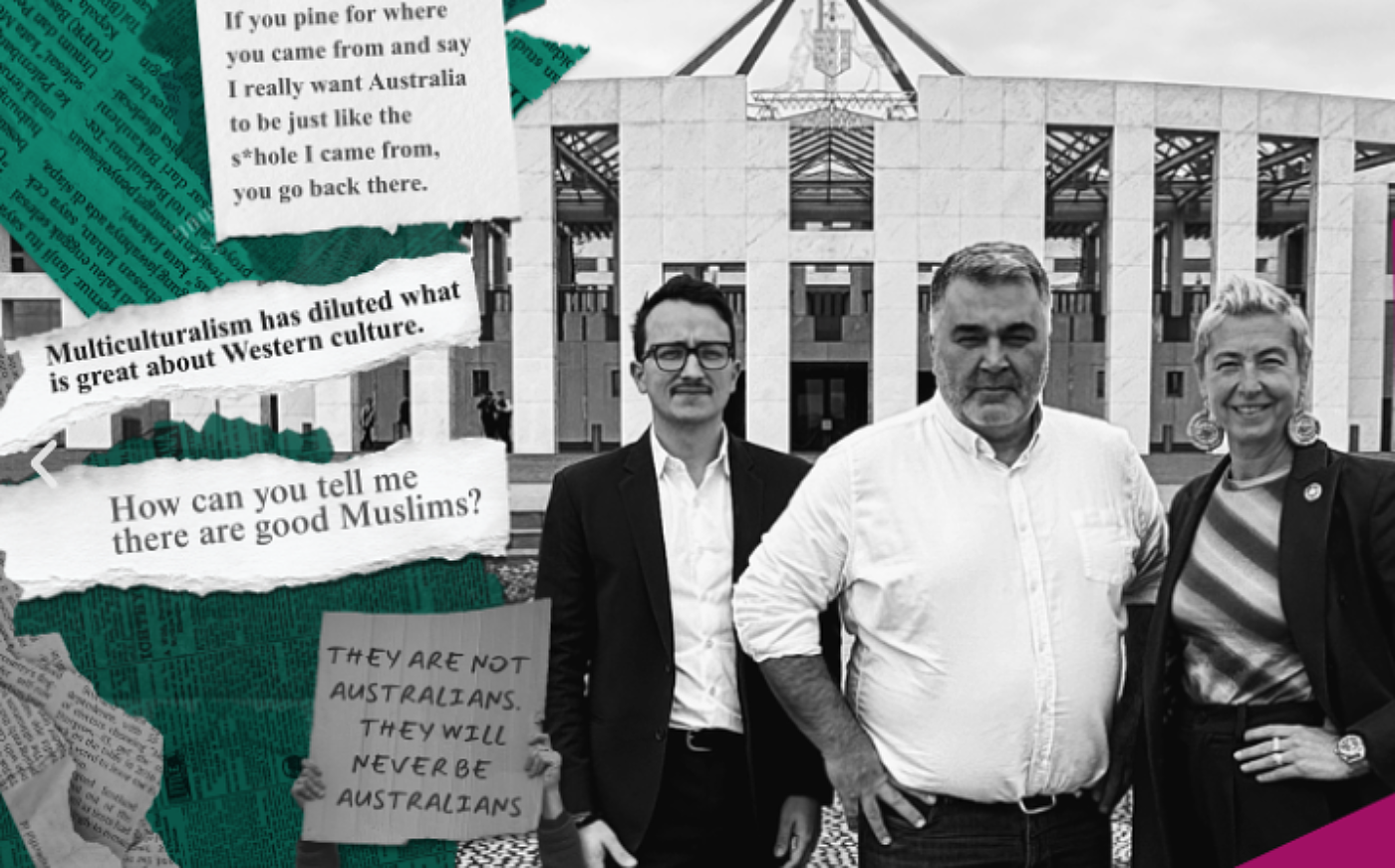
A new project intends to explore the reasons behind the rise in white nationalism, racism and division in Australia, and to build compelling narratives to help push back against it.
Together Against Racism is an ambitious project sparked by the founder of the Asylum Seeker Resource Centre (ASRC), Kon Karapanagiotidis, who decided he’d had enough of doomscrolling helplessly while far-right proponents pushed anti-migration messages, One Nation rose in polling and migrants copped the blame for all manner of society’s problems.
It’s not only migrants being targeted by disinformation, either. In just the last week, articles in the Conversation have talked of both the campaign of well-funded disinformation in the Australian media, designed to obstruct climate action, and President Donald Trump’s ongoing intent to dismantle critical media in the USA.
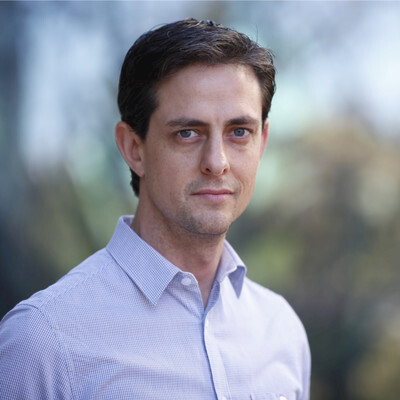
“I need to be vulnerable with you,” Karapanagiotidis said in a social video announcing a fundraising campaign to spark Together Against Racism. “I’m feeling exhausted and overwhelmed, too, by the political hate and division and fear-mongering and racism. I can’t stomach it anymore. Like you, I’m sitting there doomscrolling, going: how do we get out of this mess? Our political leaders aren’t going to stand up for us. They’re not gonna stand up for multicultural communities, for migrants, for refugees, or even First Nations people. So it relies on us. But I want you to know we have a plan and we have a way through.”
Saying critical times needed urgent action, he explained that the campaign would fund research to help change the national conversation and narrative.
“This appeal is for you if you don’t know how to cut through to a bigoted racist relative,” he said. “This appeal is for you if you’re sitting there despairing at the latest track that One Nation is putting out. This appeal is for you if you wish you knew how to speak to your local federal member of parliament or talk about this issue in your workplace.”
The ASRC has partnered with Common Cause Australia and 89 Degrees East to conduct the Together Against Racism research. The campaign plans to release updates on its progress throughout 2026 and then introduce full message guidance by the beginning of next year.
“In the next six weeks, we’ll have some understanding of the discourse,” said Common Cause Australia’s Mark Chenery. “One of the things that we’ll understand through that, which I think is really important, is what are the issues that migrants are being scapegoated for when we trawl through tens of thousands of words of discourse from the media, from politicians, from opponents as well as advocates?”
The research will include focus groups consisting of Australians whose views are not fixed, and it will segment groups promoting anti-migrant narratives.
Chenery said the partners had been discussing the project’s concept for some time, but recent events had highlighted the need to act.
“The rise of One Nation is obviously that kind of clarion call, and what’s just happened in South Australia in terms of election results makes it really obvious that this is not something that we can ignore,” he said. “We have always known that scapegoating is a thing that the right loves to do. It loves to misdirect anger, genuine anger people have, and genuine frustration that people have about how life is getting harder for them.
“And that's not just anger misdirected towards people seeking asylum, it’s also anger misdirected towards the trans community, it’s people of colour, it's any marginalised group that can be blamed for how life is tough,” he said.
“Action is the antidote to hopelessness, right? It is really important to feel like there is something useful and productive to do.”
“I am super keen to work on this project because we are going to look at it quite holistically. We could do a research project that figures out how do we talk to Australians about migration or multiculturalism, and address that as an issue in its own right, but we are going broader because the reality is that migrants are being blamed for issues that they have nothing to do with. So, one of the things that we’re going to be exploring here is how do we talk about those issues? Asking is it helpful for us to try and ‘sell’ multiculturalism? Is it helpful for us to point out the misdirection that’s happening, the way in which billionaires are funding politicians in order to sort of misdirect anger away from the real causes of the housing crisis, for example, and towards migrants? Or is it useful for us to simply not talk about migrants at all, and just talk about the real causes of the problems that are facing people?”
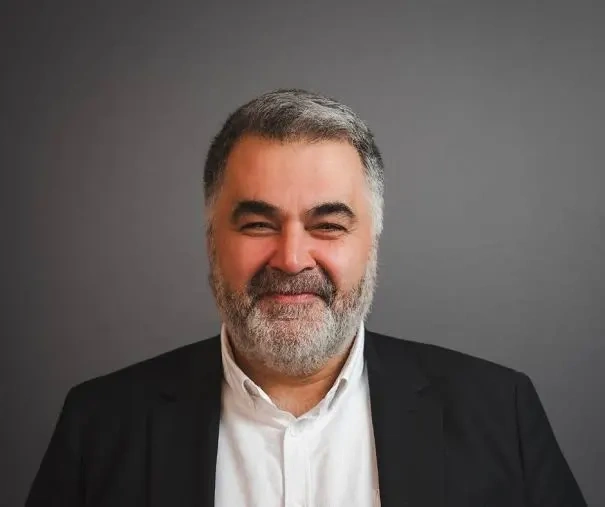
Common Cause Australia is a mission-driven organisation, focused on values-driven community engagement and how to make persuasive arguments about social justice, health and the environment. Chenery started his career in advertising and journalism, so he has a sharp sense of what messages work, which he has applied in tough political settings. After the last federal election, he didn’t buy into the narrative that Australia was a safe island in the global sea of rising far-right political players.
“Far-right parties are on the ascendancy at that global level,” he said, “and we [Australia] are now back on trend with the rest of the world after an election last year that maybe gave us some false hope. It didn’t give it to me, but it gave to a lot of people this false hope, hope that somehow it wasn’t happening here. At Common Cause Australia, we are always doing research, always looking at how people are thinking about different issues, and for me, it is obvious that people are finding life harder and harder and harder, and that is something that is changing. Life didn’t used to be as hard as it is now for a lot of people, and I think that is setting the scene for someone to explain why it’s happening. I think that's the difference here. There’s fertile ground for Pauline Hanson to scapegoat migrants or whoever she wants.”
Chenery said he has been struck recently by how many people were wondering what could be done to counter the arguments put forward by the far-right and associated media. The enthusiastic response to Karapanagiotidis’ call for donations had also been surprisingly strong for the somewhat unusual request for research funding, he said.
Chenery believes housing is the flashpoint issue causing dissatisfaction, ahead of crime, terrorism and other issues raised by the far-right. Data shows that people see the lack of affordable housing as an election issue, and one that the major parties can’t or won’t solve, which pushes voters to the fringe parties.
“What the far-right is doing really well is they’re pointing out a villain,” he said. “They are pointing out who is to blame for housing, and they are putting it, squarely, on the shoulders of migrants. What the left have been less good at doing, including people who work on housing issues in the progressive sector, is pointing out who actually is to blame.
“We talk about the housing crisis as if it’s this natural phenomenon or weather event that we’ve got to somehow make our way through and find solutions to. The way human beings think is cause and effect, and we are always looking for who is to blame, who could have made a different or better choice here. If we don't supply that to people, the far-right is doing it, and it sounds like a believable story.”
Chenery said he hoped the work of Together Against Racism would give fresh energy and agency to those looking to push back against the far-right.
“Action is the antidote to hopelessness, right? It is really important to feel like there is something useful and productive to do,” he said. “I think we all kind of feel it and that’s why I’m super excited to be working on this. I’m in that state, like everyone else, thinking I don’t like the direction that things are headed in.
“But from my perspective, I do see hope. I don’t think it's inevitable that we can successfully push back on the far-right, but it is a possibility. It requires us to maybe be less polite, less of trying to be the adults in the room with all the facts and figures at hand, showing people the balanced picture. It is much more about understanding what is a clear story that can explain this to people.”
Together Against Racism donations page
Posted on 07 Oct 2026
A major public campaign launched this morning is calling on the federal government to restore…

Posted on 07 Oct 2026
The Australian Literacy & Numeracy Foundation (ALNF) has announced a partnership with mining…
Posted on 07 Oct 2026
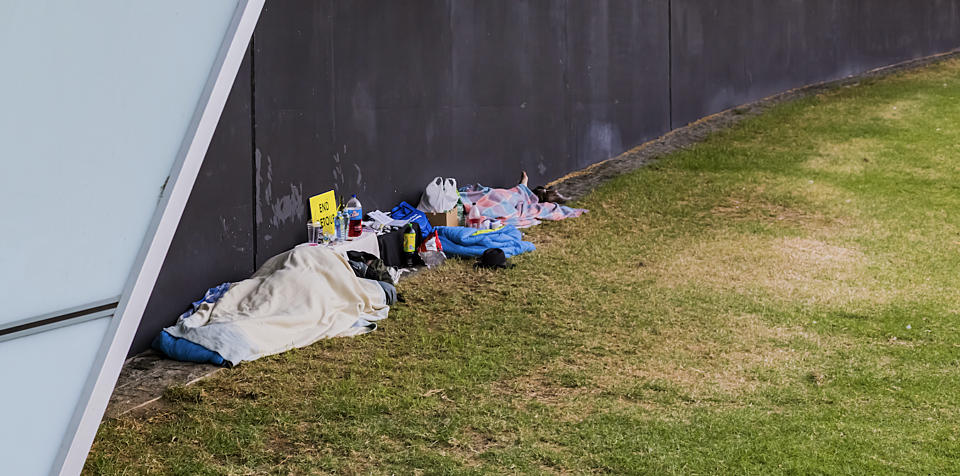
A conference in Darwin will this morning hear detailed, strategic plans for how Australia could…

Posted on 30 Sep 2026
Not-for-profit leaders have been warned to be wary of approaches from potential “funding partners”…
Posted on 30 Sep 2026
More than 200 fully funded Centre for Social Impact (CSI) scholarships will help equip for-purpose…

Posted on 30 Sep 2026
Personal stories are among the most powerful tools a charity can have to raise funds and awareness,…
Posted on 23 Sep 2026
A just-released major global survey of charities has found that demand for charity assistance has…
Posted on 23 Sep 2026
Fresh from welcoming delegates to last week’s Philanthropy Australia conference in Brisbane,…

Posted on 23 Sep 2026
A national strategy to develop Australia's regional cities is needed to break the housing…

Posted on 23 Sep 2026
Eight years after a report to Treasury first suggested the charities regulator should be more…

Posted on 17 Sep 2026
Australia’s biggest gathering of philanthropists, which drew more than 1200 delegates to Brisbane…
Posted on 16 Sep 2026
A new partnership between Paul Ramsay Foundation (PRF) and Atlassian Foundation aims to attract…