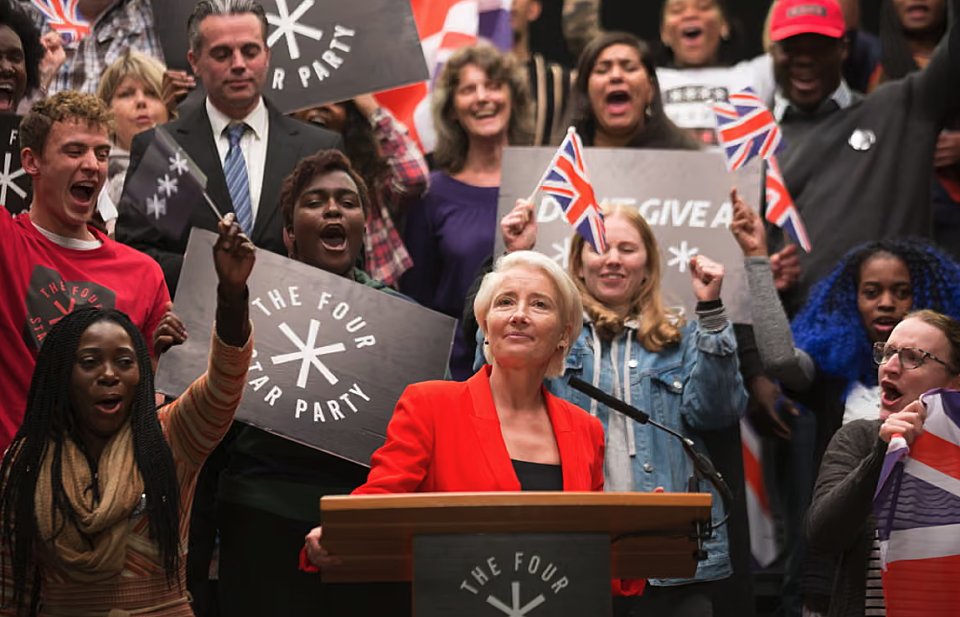
Pauline Hanson and the frightening lesson of ‘Years and Years’
Posted on 07 Oct 2026
Our Community's founder and leader, Denis Moriarty, writes that when he watched an over-the-top…
Posted on 05 Aug 2025
By Nick Place, journalist, Institute of Community Directors Australia

As Australia marks Loneliness Awareness Week, the University of Sydney’s Brain and Mind Centre has released new modelling that shows reducing rates of loneliness, by fostering connections between isolated people and their communities, could have a significant impact on national rates of mental illness.
The research, “Dynamic bayesian network analysis of the social determinants of mental health”, published in the journal PNAS Nexus, found that combating loneliness, along with achieving stronger financial security within the Australian population, could prevent one in three mental health conditions.
In releasing the report, lead author Dr Adam Skinner, a research fellow at the Brain and Mind Centre, said, “Our modelling emphasises the substantial contribution of people’s social and economic environments to their mental health. Policies designed to increase subjective financial wellbeing and promote social participation and local community engagement are likely to be critical for reducing the vast personal and societal costs of mental illness.”
Federal government data shows that mental ill-health costs the economy up to $220 billion per year.
Of course, beyond the financial cost is the human toll. The World Health Organization (WHO) released a global report at the end of June that found one in six people is affected by loneliness globally, and the toll is high. The WHO said loneliness is linked to an estimated 100 deaths per hour, worldwide – more than 871,000 deaths per year.
Strong social connections were essential for better health and a longer life, the WHO report said.

Social media and technology appear to connect us more than ever before, but not necessarily in a meaningful way, and not uniformly across the world. The WHO data shows that in lower- and middle-income countries, 17–21 per cent of people aged 13–29 years old reported feeling lonely, with the highest rates among teenagers. In low-income countries, about 14 per cent of people said they felt lonely, twice the rate of high-income countries.
“Loneliness and social isolation increase the risk of stroke, heart disease, diabetes, cognitive decline, and premature death. It also affects mental health, with people who are lonely twice as likely to get depressed. Loneliness can also lead to anxiety, and thoughts of self-harm or suicide,” the WHO report said.
“The impacts extend to learning and employment. Teenagers who felt lonely were 22 per cent more likely to get lower grades or qualifications. Adults who are lonely may find it harder to find or maintain employment and may earn less over time.
“At a community level, loneliness undermines social cohesion and costs billions in lost productivity and health care. Communities with strong social bonds tend to be safer, healthier and more resilient, including in response to disasters.”
In Australia, two in five young Australians report feeling lonely at any given time, and one in seven young Australians are “persistently lonely”, according to the report A Call for Connection, released to coincide with Loneliness Awareness Week.
Loneliness Awareness Week, which started on Monday and ends on Sunday, is an initiative of the national body Ending Loneliness Together, dedicated to shining a light on what needs to be done, at all levels of society, to assist lonely Australians.
In Australia, two in five young Australians report feeling lonely at any given time, and one in seven young Australians are “persistently lonely”.
Ending Loneliness Together’s CEO and scientific chair, Associate Professor Michelle Lim, said, “Loneliness doesn’t persist by itself. It is shaped and fuelled by broader cultural, digital, economic, and social forces. From the pressures of online comparison to the fragmentation of home, school and community life, young people are often left without the structures of meaningful healthy support they need to thrive.”
The Brain and Mind Centre’s co-director, Professor Ian Hickie, agreed that Australia needed to stop regarding mental health as something to be treated, and instead focus on root causes, such as financial insecurity or loneliness.

“More services and better treatments alone won’t end the mental health crisis,” he said.
“This work [‘Dynamic Bayesian network analysis of the social determinants of mental health’] confirms that genuine economic and social reforms, including a serious Job Guarantee and deeper investment in local community life, are central to cutting the rising tide of distress.”
Loneliness Awareness Week homepage
“Dynamic Bayesian network analysis of the social determinants of mental health”, in PNAS Nexus
Report: From Loneliness to Social Connection: Charting a path to healthier societies, published by the World Health Organization (WHO) Commission on Social Connection
News release regarding the WHO report
Posted on 07 Oct 2026
Our Community's founder and leader, Denis Moriarty, writes that when he watched an over-the-top…

Posted on 07 Oct 2026
A major public campaign launched this morning is calling on the federal government to restore…

Posted on 07 Oct 2026
The Australian Literacy & Numeracy Foundation (ALNF) has announced a partnership with mining…
Posted on 07 Oct 2026
A conference in Darwin will this morning hear detailed, strategic plans for how Australia could…
Posted on 07 Oct 2026
Joseph Friedman is co-founder and publisher of About Time, Australia’s only newspaper for…

Posted on 30 Sep 2026
There's been a lot of talk about AI this week, and some of it has been frightening. So, is AI good…

Posted on 30 Sep 2026
After the biggest AFL game of the year, one player proudly wore the flag of his birth country and…

Posted on 30 Sep 2026
At 21 years old, Tate Donohoe is the founder of Ecodia, an AI-assisted software development company…

Posted on 30 Sep 2026
Not-for-profit leaders have been warned to be wary of approaches from potential “funding partners”…
Posted on 30 Sep 2026
More than 200 fully funded Centre for Social Impact (CSI) scholarships will help equip for-purpose…

Posted on 30 Sep 2026
Personal stories are among the most powerful tools a charity can have to raise funds and awareness,…

Posted on 23 Sep 2026
In his new book Our Place, policy expert Matt Lloyd-Cope argues that housing must be at the heart…