
Save Izzy: campaign calls on government to restore funding for vital services directory
Posted on 07 Oct 2026
A major public campaign launched this morning is calling on the federal government to restore…
Posted on 21 Oct 2025
By Nick Place, journalist, Community Directors

A leading Australian food security not-for-profit and the CSIRO have partnered to plant AI in the real world by attempting to use AI algorithms to solve the problem of human hunger and improve young people’s mental health.
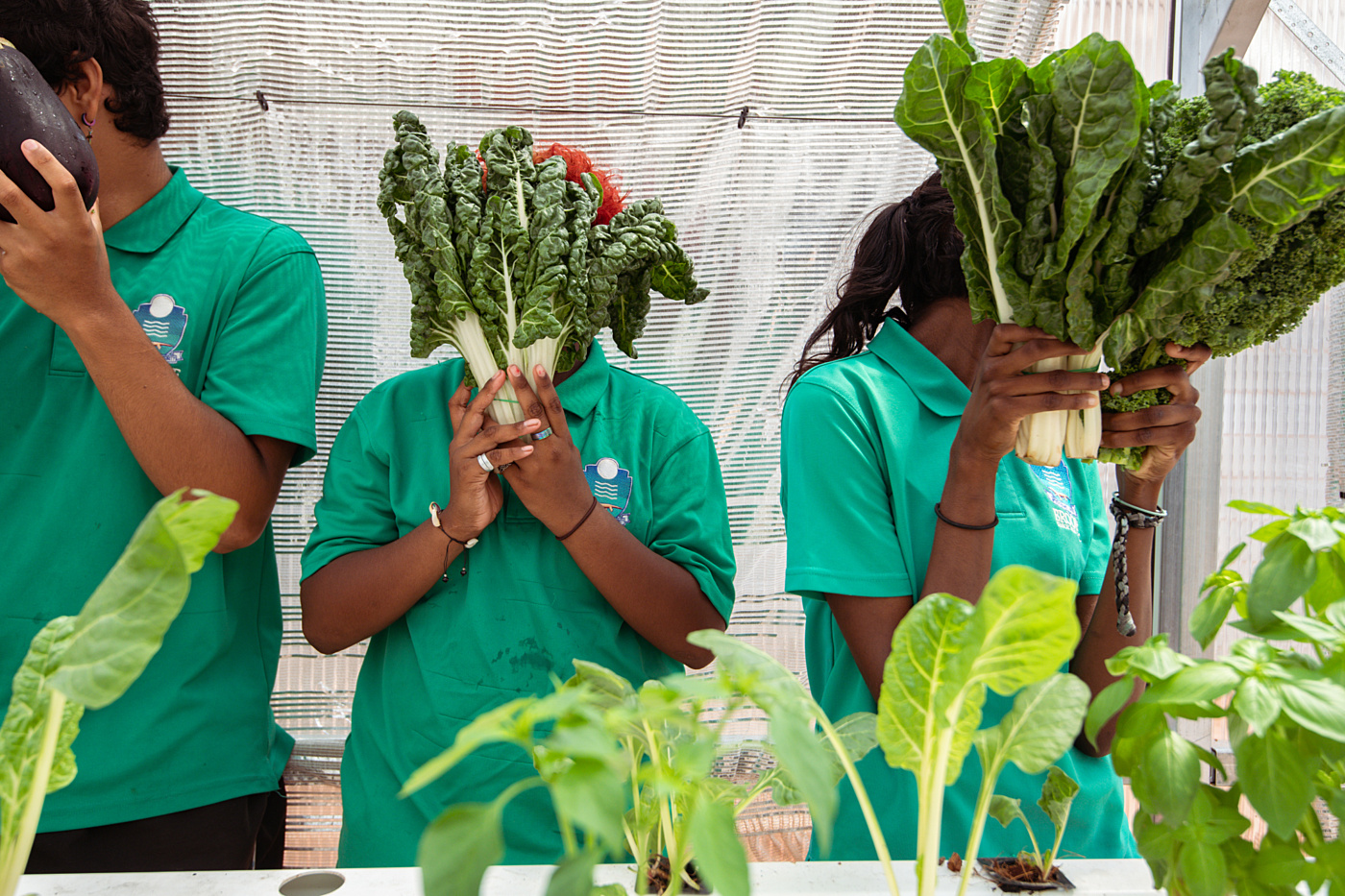
Food Ladder works to combat food insecurity through school-based greenhouse programs, working with students to grow fruit and vegetables and reap the mental and physical health benefits.
Now it has teamed with the national science agency, CSIRO, and the University of Southern Queensland (UniSQ) to let AI drive the work, seeking to optimise food crop growth by calibrating water, energy and fertiliser use with an algorithm. Students’ heart rate variability, movement and stress levels will be monitored by wearable devices as they work in the greenhouses.
The four-year research project is being funded through a CSIRO Industry PhD program. The science agency says the Food Ladder project is one of the first Australian examples of “quantum machine-learning being used in a non-quantum industry, generating real world evidence for how advanced technologies can solve complex optimisation challenges in education, health and food systems.”

For Food Ladder, it’s all about algorithms leading to full stomachs. “Food security and wellbeing are inseparable,” said the not-for-profit’s CEO and co-founder, Kelly McJannett. “This partnership shows how the smartest minds and the most advanced technology can be applied in the service of students and communities. Together with CSIRO and UniSQ, we are pushing the boundaries of what’s possible – creating schools that not only feed and educate but also heal and inspire.”
Food Ladder already has a strong record in contributing to better health for school children. Its greenhouse programs have been proven to lift attendance, improve literacy and numeracy, and create quiet, safe spaces for children experiencing distress. The NFP said recent reports from schools found its greenhouses “are becoming critical tools in suicide prevention programs, offering a safe and restorative space for young people in crisis”.
What the greenhouses produce matters, too. The need for optimised harvests within the greenhouses is stark when you consider that in Australia, 94 per cent of children don’t eat enough fresh fruit and vegetables, according to the CSIRO.
Seen through a wider lens, food insecurity is a global crisis, with an estimated 733 million people facing hunger, according to Food Ladder.
“This partnership shows how the smartest minds and the most advanced technology can be applied in the service of students and communities.”
The CSIRO’s Dr Farina Riaz pointed to the potential for AI to help solve the crisis, saying, “This collaboration is the first instance in Australia where a non-quantum industry, specifically the agriculture and education sectors, is actively applying quantum-reinforced AI algorithms. It also marks a significant step in connecting quantum technologies with real-world industries, helping build a healthier and more sustainable future for young Australians.”
Tasked with researching the therapeutic benefits of student interactions with plants, University of Southern Queensland professor of computer science Dr Rajib Rana said the project’s potential to increase student wellbeing should not be overlooked.
“The mental health benefits of green spaces are well established. This project moves beyond awareness to measuring and optimising those effects,” he said. “By integrating advanced AI technology with real-world data from schools, we can better understand how programs like Food Ladder help nurture calm, focus, and resilience in children facing disadvantage.”
More information
Potential PhD students wanting to be involved in the project can read more here.
Food Ladder’s website
Posted on 07 Oct 2026
A major public campaign launched this morning is calling on the federal government to restore…

Posted on 07 Oct 2026
The Australian Literacy & Numeracy Foundation (ALNF) has announced a partnership with mining…

Posted on 07 Oct 2026
A conference in Darwin will this morning hear detailed, strategic plans for how Australia could…

Posted on 30 Sep 2026
Not-for-profit leaders have been warned to be wary of approaches from potential “funding partners”…
Posted on 30 Sep 2026
More than 200 fully funded Centre for Social Impact (CSI) scholarships will help equip for-purpose…

Posted on 30 Sep 2026
Personal stories are among the most powerful tools a charity can have to raise funds and awareness,…

Posted on 23 Sep 2026
A just-released major global survey of charities has found that demand for charity assistance has…

Posted on 23 Sep 2026
Fresh from welcoming delegates to last week’s Philanthropy Australia conference in Brisbane,…

Posted on 23 Sep 2026
A national strategy to develop Australia's regional cities is needed to break the housing…

Posted on 23 Sep 2026
Eight years after a report to Treasury first suggested the charities regulator should be more…

Posted on 17 Sep 2026
Australia’s biggest gathering of philanthropists, which drew more than 1200 delegates to Brisbane…
Posted on 16 Sep 2026
A new partnership between Paul Ramsay Foundation (PRF) and Atlassian Foundation aims to attract…