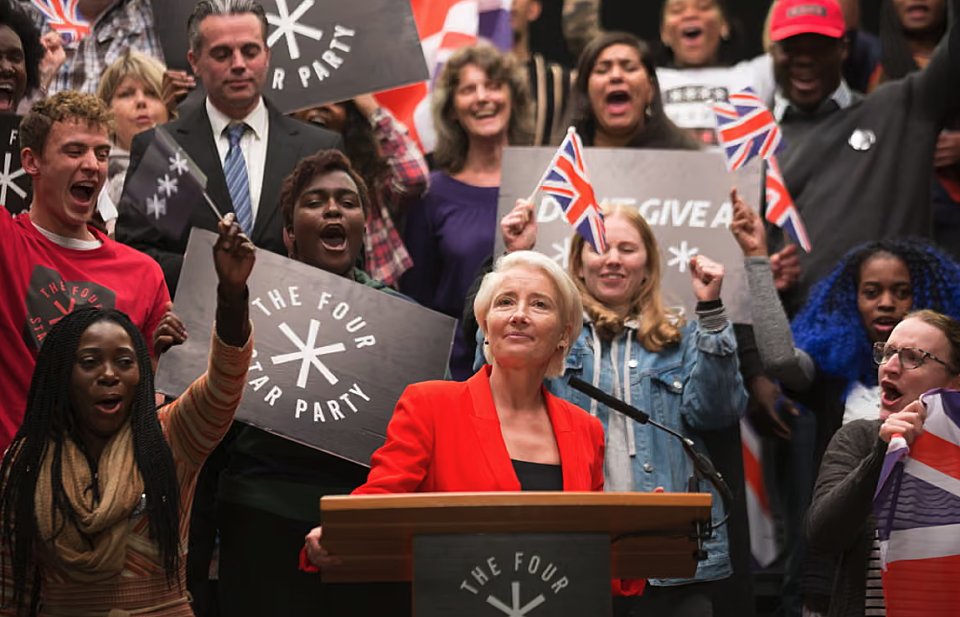
Pauline Hanson and the frightening lesson of ‘Years and Years’
Posted on 07 Oct 2026
Our Community's founder and leader, Denis Moriarty, writes that when he watched an over-the-top…
Posted on 03 Sep 2025
By Annabel Rattigan, Institute of Community Directors Australia, and founder, NeuroInclusive Coaching
The problem with the NDIS is not autistic families or children, says Annabel Rattigan, a leadership and governance trainer at the Institute of Community Directors Australia, as well as the founder of Neuroinclusive Coaching, and a parent to three neurodivergent teenagers.
This week I’ve been thinking about the way the NDIS is being talked about. The story we keep hearing goes something like this: costs are out of control, too many children are being diagnosed, and people with “mild” disabilities are taking resources from those with “severe” ones.
Federal Health Minister Mark Butler recently announced reforms geared at ensuring the financial sustainability of the NDIS. At the core of the reforms is Thriving Kids, a program that offers “foundational support” for “people with less profound disabilities”. According to Mr Butler’s announcement, “children with mild to moderate developmental delay or autism” will be diverted away from the NDIS and onto Thriving Kids from July 2026.
A federal government fact sheet on Thriving Kids opens by stating that “The Australian Government is restoring the [NDIS] to its original purpose – supporting people with permanent and significant disability – and ensuring the Scheme remains sustainable. Reforms... will secure the future of the Scheme and put people with disability and their families back at the centre of the NDIS”.
It makes it sound like the problem is autistic children and their families. But it isn’t us. As Katie Koullas, CEO and founder of Yellow Ladybugs put it, “the real problem isn’t us, it’s how the scheme is being run and how support is funded. Instead of fixing that, they set us up to compete with each other, arguing over who is ‘more deserving.’ That’s how the fight gets pushed sideways, when what we should be doing is pushing upwards.”
The government’s framing is harmful. It creates false hierarchies inside a community that’s already marginalised. It pushes us into comparing who’s “more deserving” instead of standing together for a system that supports everyone. Autistic and ADHD people aren’t affected “mildly” or “profoundly”: each person is different with different support needs that change over time. Saying one group is draining resources from another isn’t solidarity, it is distraction.
Claiming that “children with developmental delay or disability... can be better supported outside of the NDIS” is virtually meaningless when we don’t know what the alternative looks like. Few details have been offered (or perhaps determined) about how Thriving Kids will work.
It appears that consultation on program design is slated to begin next month, with next steps described in future tense (“Minister Butler will establish the Thriving Kids Advisory Group”) and oblique wording (“it is expected the Thriving Kids program would rollout in phases"). This is cold comfort for the many families who currently depend on the NDIS, regardless of how others may characterise their needs.
Disability support is not a “cost” to be cut. It’s an investment in rights, dignity, and quality of life. Early support for children with neurodevelopmental delays can change life trajectories, building confidence, skills, and independence. It strengthens families and communities.
“The government’s framing is harmful. It creates false hierarchies inside a community that’s already marginalised. It pushes us into comparing who’s ‘more deserving’ instead of standing together for a system that supports everyone.”
As a parent of a child on the NDIS, I’ve seen this firsthand. For our family, NDIS support meant my autistic ADHD child could see an occupational therapist every fortnight. This helped them develop more independence and social-emotional skills. We also accessed support before and after school for a period, which reduced the stress in our household and allowed me to go back to full-time work. That support didn’t just improve our lives; it also gave us the chance to contribute more to society.
At Community Directors, I work with leaders in the community sector whose organisations provide the day-to-day support to families that makes all the difference between coping and crisis. But when these services are underfunded, the pressure falls back onto the NDIS, pushing it beyond its limits.
Both of my fellow hosts of The Village – a podcast for neurodivergent families – have children who receive NDIS funding. One of the best supports they receive comes from highly trained behavioural support practitioners who work with their children and design interventions to improve their child’s quality of life and reduce challenging behaviours. This work helps parents, siblings, teachers, and peers to help the child to develop and live their best life. My fellow podcaster Char Adorjan, an advertising executive, says, “Before NDIS we had both autistic kids struggling to attend school, unable to the leave the house, not able to participate in social activities, pretty much confined to their rooms. It takes an adult per child to prepare them for school and support the transition, which would mean two parents had to be home to make that possible, making work impossible. Now, a support worker helps to get one ready and to school, while another parent does the other. Meaning a parent can now go out to work to support the family.”
The NDIS is a lifeline, but it can’t carry the weight of broken health, education and community systems. Until those are properly funded and fixed, families will continue turning to the NDIS because they have nowhere else to go.
Decision-makers should focus on reforming those struggling systems rather than scrutinising people who have sought support. It’s valid to consider different routes to meeting the broad range of support needs within our community. This is a very different matter from establishing a hierarchy of needs in which some children are “at the centre of the NDIS” while others are diverted to a program that is yet to be fully conceptualised.
How we talk about disability matters. Painting autistic and disabled people as a burden on taxpayers fuels shame and division. As Katie Koullas says, that’s the “classic playbook of oppression”, pushing people sideways instead of upwards, towards the real change we need. Real change also means a strong, well governed community sector, so the NDIS isn’t left to patch over every gap. Supporting disabled people isn’t a cost to cut. It’s an investment in a fairer Australia.
Annabel Rattigan is a leadership and governance trainer at Community Directors, the founder of NeuroInclusive Coaching, a co-host of The Village podcast and a parent of three neurodivergent teenagers.
Posted on 07 Oct 2026
Our Community's founder and leader, Denis Moriarty, writes that when he watched an over-the-top…
Posted on 30 Sep 2026
There's been a lot of talk about AI this week, and some of it has been frightening. So, is AI good…

Posted on 30 Sep 2026
After the biggest AFL game of the year, one player proudly wore the flag of his birth country and…

Posted on 23 Sep 2026
In his new book Our Place, policy expert Matt Lloyd-Cope argues that housing must be at the heart…

Posted on 23 Sep 2026
There are solutions to counter the rise of One Nation but they might not be residing in the mess…

Posted on 03 Sep 2026
Denis Moriarty has an issue with insurance companies varying premiums because of what they perceive…
Posted on 02 Sep 2026
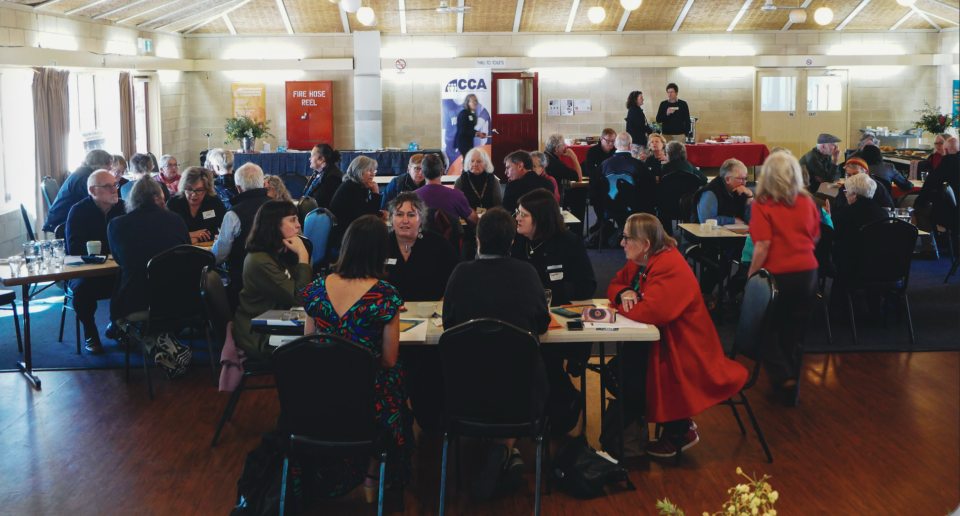
Yesterday, at a meeting just outside Castlemaine in Victoria, 70 people came together to hear…

Posted on 26 Aug 2026
Our Community's founder and leader, Denis Moriarty, says he commissioned a new piece of street art…

Posted on 19 Aug 2026
Government funding is at the centre of Australia's charity and not-for-profit sector – our number…

Posted on 12 Aug 2026
Our Community's founder and leader, Denis Moriarty, says fostering a child was his worst nightmare,…

Posted on 05 Aug 2026
The charity and not-for-profit sector is vital to our economy and the wellbeing of communities…
Posted on 05 Aug 2026
As the Global Impact Summit kicks off in Sydney today, Equitable Philanthropy’s Catherine Brooks…