25 years after Tampa, the politics of fear are still setting the terms
Posted on 14 Oct 2026
In the ongoing political debates about migration levels, Asylum Seeker Resource Centre founder Kon…
Posted on 29 Oct 2025
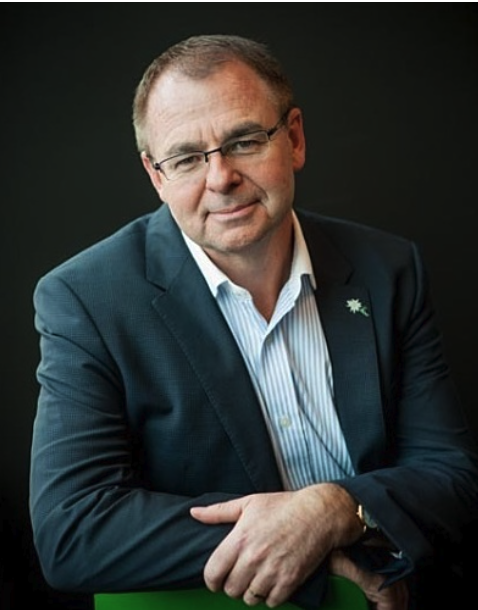
By David Crosbie, CEO, Community Council for Australia

One of the most contentious debates across many areas of human services is the for-profit versus not-for-profit debate.
It’s important to acknowledge that there are brilliant businesses doing amazing things for their communities, just as there are thousands of not-for-profits making a real difference to people in need. There are also exploitative businesses extracting money from the vulnerable to line the pockets of rich investors, and a minority of not-for-profits who seem driven by self-serving profit (surplus) over purpose.
What we know from repeated studies in Australia and around the world is that in certain parts of our sector, not-for-profit providers offer a higher quality of care to a more diverse client group than for-profit providers. Probably the three best-researched areas where this outcome can be demonstrated are healthcare, aged care and childcare.
This week saw the ABC’s Four Corners program reveal paedophiles operating in our early learning childcare settings. It made for difficult and concerning viewing.
One of the key findings of this investigation was that for-profit childcare providers appeared to have a significantly higher level of child abuse – so much so that reporter Adele Ferguson recommended that parents who are concerned about their child’s safety should try to get their children into not-for-profit childcare services.
The statistics cited in the Four Corners report were that 88 per cent of all child abuse in childcare settings occurred in for-profit providers, while for-profit providers currently make up around 70 per cent of childcare providers.
The studies comparing for-profit to not-for-profit services suggest there is evidence telling us why in some areas not-for-profits tend to provide a higher quality of care.
In aged care, not-for-profit providers tend to operate with higher staff to resident ratios. A higher staff ratio – more staff relative to the number of residents – translates into more staff time for each resident, a central factor in quality of care.
Studies within hospital settings have consistently found that higher staff ratios not only improve patient safety and care, but they also reduce staff burnout, improve safety, and drive better health outcomes.
It's not hard to understand how higher staff ratios might offer significant benefits in many services, including childcare.
It’s also easy to see how increasing the number of staff per client/resident/child drives up costs and drives down profitability.
Quality versus cost, or purpose versus profit, is an inherent dilemma for all human services provision. Organisations will make more money if they can reduce costs and maintain the same income.
The major cost in most service provision is staffing. Managers (both for-profit and not-for-profit) can choose to make more money by employing fewer staff, employing staff with lower skills, or paying staff less to provide the same services.
“When we allow our human services to be commodified, we invariably risk what is most important to our communities.”
Generating more profits in childcare has become an increasingly important priority across the sector. Childcare is now seen by investors as a business opportunity, in a market where demand continues to outstrip supply. In the past 12 years, the number of for-profit childcare centres has grown by 60 per cent while the number of not-for-profit childcare centres has grown by only 4 per cent. Private equity firms and large for-profit companies are actively buying up childcare businesses. For instance, the Only About Children centres featured on the Four Corners program were bought by the US multinational Bright Horizons for $450 million in 2022; Affinity Education Group was bought by the private equity firm Quadrant for $650 million in 2021.
There are now hundreds of childcare centres in Australia generating profits for international investors. What matters to these companies is return on investment.
Profit is not a dirty word. Without money, the capacity to pursue any purpose or mission is limited. But when we allow our human services to be commodified, we invariably risk what is most important to our communities: safety and quality of care.
The childcare story this week has yet again highlighted the real costs of human service commodification, costs that are a concern to all of us who want to see the highest possible level of service provision in our communities, especially for the vulnerable.
Putting profit before people is dangerous and needs to be challenged.
Purpose is more important than profit. As a sector we should always be proud and loud about the fact that we are driven by values and purpose.
David Crosbie has been CEO of the Community Council for Australia for the past decade and has spent more than a quarter of a century leading significant not-for-profit organisations, including the Mental Health Council of Australia, the Alcohol and Other Drugs Council of Australia, and Odyssey House Victoria.
Posted on 14 Oct 2026
In the ongoing political debates about migration levels, Asylum Seeker Resource Centre founder Kon…

Posted on 14 Oct 2026
Over the weekend, federal Liberal leader Angus Taylor told the Conservative Political Action…

Posted on 07 Oct 2026
Our Community's founder and leader, Denis Moriarty, writes that when he watched an over-the-top…

Posted on 30 Sep 2026
There's been a lot of talk about AI this week, and some of it has been frightening. So, is AI good…

Posted on 30 Sep 2026
After the biggest AFL game of the year, one player proudly wore the flag of his birth country and…

Posted on 23 Sep 2026
In his new book Our Place, policy expert Matt Lloyd-Cope argues that housing must be at the heart…

Posted on 23 Sep 2026
There are solutions to counter the rise of One Nation but they might not be residing in the mess…

Posted on 03 Sep 2026
Denis Moriarty has an issue with insurance companies varying premiums because of what they perceive…
Posted on 02 Sep 2026
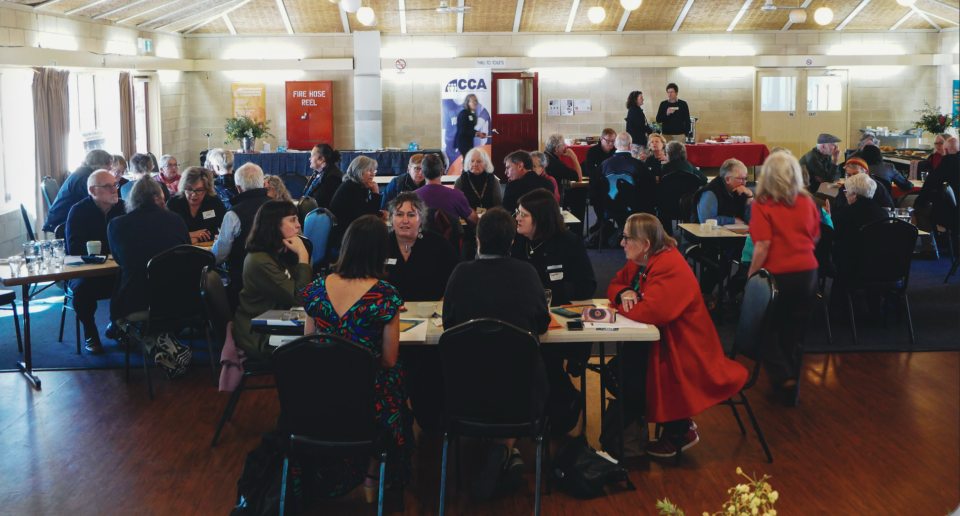
Yesterday, at a meeting just outside Castlemaine in Victoria, 70 people came together to hear…

Posted on 26 Aug 2026
Our Community's founder and leader, Denis Moriarty, says he commissioned a new piece of street art…

Posted on 19 Aug 2026
Government funding is at the centre of Australia's charity and not-for-profit sector – our number…

Posted on 12 Aug 2026
Our Community's founder and leader, Denis Moriarty, says fostering a child was his worst nightmare,…