Pauline Hanson and the frightening lesson of ‘Years and Years’
Posted on 07 Oct 2026
Our Community's founder and leader, Denis Moriarty, writes that when he watched an over-the-top…
Posted on 16 Sep 2024
By Nick Place

Some philanthropists work to offer tangible, help-now support to those who need it.
Other philanthropic foundations, however, are increasingly “going big”, seeking to make system change through larger, ambitious projects that require years of funding, commitment and evolution.
In the sector, this is known as a “moonshot”.
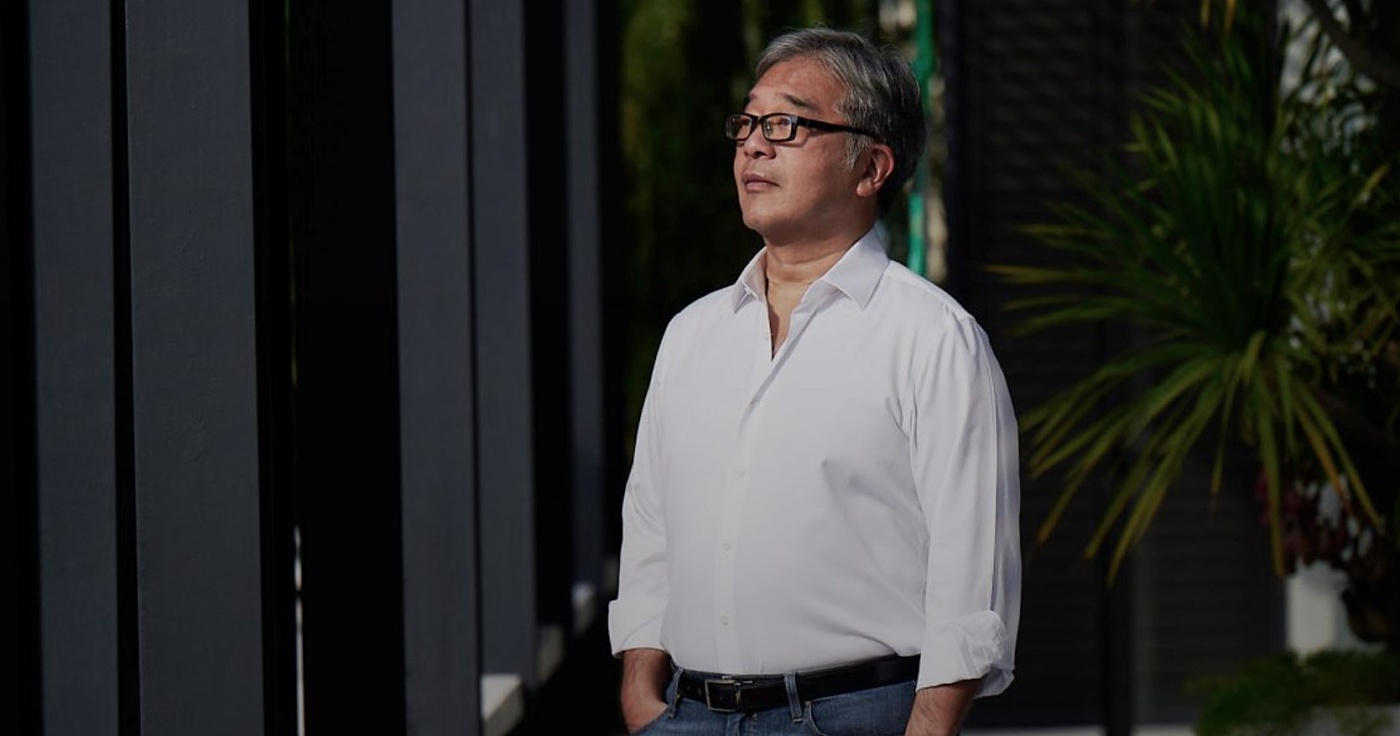
At the recent Philanthropy Australia conference in Adelaide, where the sector came together for three days of talks, debates and networking, James Chen, from the Chen Yet-Sen Family Foundation, spoke enthusiastically about moonshot giving.
His foundation has been working for years on Clearly, a global campaign to enable access to glasses for everyone in the world who needs them, as well as working towards universal access to affordable wider eye care.
A study sponsored by Clearly found that reading glasses provided, on average, a 21.7% boost to productivity for over-40s, rising to 31.6% for over-50s. According to its website, “If glasses were given to everyone who needed them in India’s entire crop sector, it would mean an extra US$19 billion from productivity gains alone.”
Providing glasses for everybody who needs them – estimated at 2.2 billion people globally. That’s a moonshot.
Of course, the image of a moonshot also suggests an element of risk and Jenna Palumbo from the Minderoo Foundation acknowledged this in a panel discussion with Chen, saying: “Failure and pain are a necessary part of thinking big.”
Mr Chen agreed.
"Most moonshots fail because they are not given enough time. We must be willing to embrace uncertainty, take calculated risks and invest in bold ideas that may not always guarantee success but hold the potential for transformative change,” he said.
In Australia, some of our largest philanthropic foundations are leaning into moonshots, setting their sights on system change, rather than individual projects to help a group of people here, or a community there – although such giving also remains essential in the here and now.
The increasing urgency of the need to combat climate change has led philanthropists to argue that the time for “business as usual” giving is over. Some philanthropists at the Adelaide conference even discussed the need to spend down their foundation’s corpus, to make a bigger impact now, and in one hit for genuine cut through, rather than the priority of keeping their foundation alive, nursing the philanthropic war chest by making smaller contributions over the longer period.
It doesn’t always have to be that dramatic, however moonshot philanthropy does demand years and require committed funding, expertise and support over that time to have a chance.
Philanthropists in the space say the key is to lock in for the time frame and not blink, even when results might not immediately appear. The idea is to attempt to solve real problems at the source, tackling society’s, Australia’s or the world’s biggest issues.
Children’s Ground is an astonishing endeavour backed by moonshot giving from several big philanthropists, along with a long list of other partners and supporters.
The aim is to spend 25 years developing an evidence-based approach to truly handing over learning, family health and wellbeing, economic and community development, and creative and cultural development and wellbeing back to First Nations people.
It’s the First Nations leaders and communities who are doing and will do the work to creative generational change. To succeed, the endeavour has asked for a quarter-century of support and belief from the funders.
"Most moonshots fail because they are not given enough time. We must be willing to embrace uncertainty, take calculated risks and invest in bold ideas that may not always guarantee success but hold the potential for transformative change.”
In an interview with me late last year, Children’s Ground CEO Jane Vadiveloo said long-term results are the name of the game.
"It’s not about outputs and it’s not about how many people come through the door on a given day or week – these are markers that are often given to or requested by funders, but they don’t tell the story of change or impact, often they’re just window dressing. We must create deep and enduring change with accountability to the people and share this in a meaningful way with our partners.”
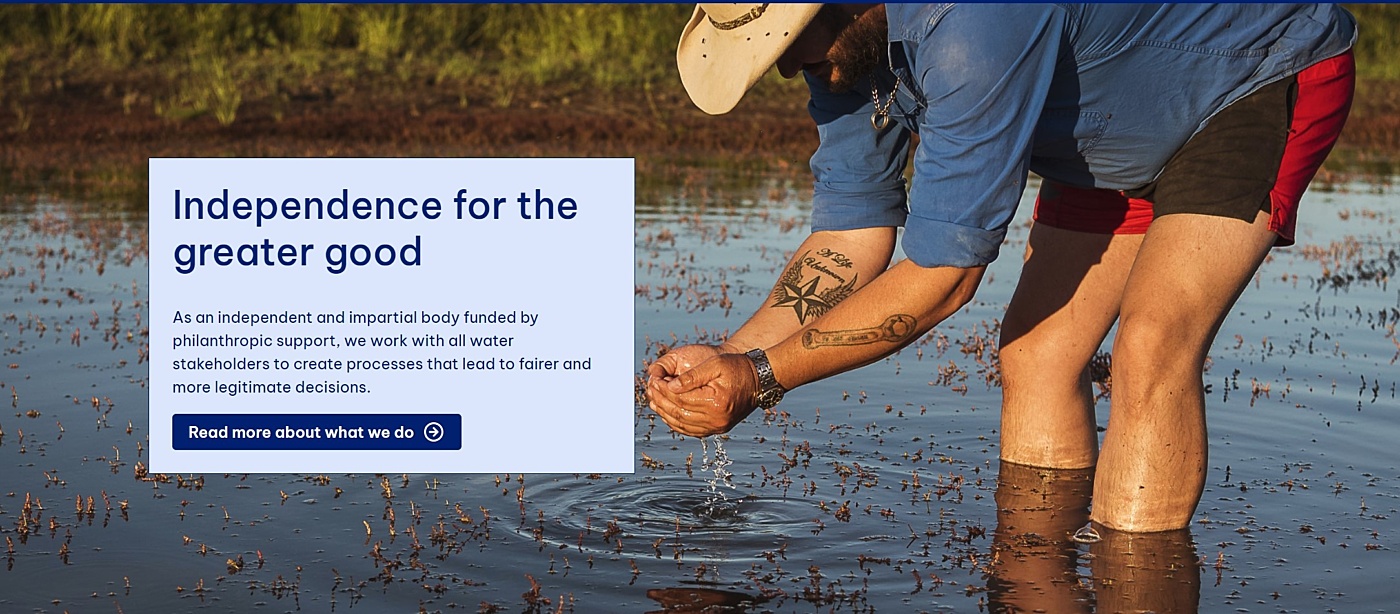
Another fascinating moonshot is Watertrust Australia – a not-for-profit organisation dedicated to improving water policy process, and backed by funders including The Ian Potter Foundation, The Myer Foundation, The Ross Trust, The Besen Family Foundation and the Colonial Foundation, among others.
Watertrust was created when the Potter and Myer Foundations asked Deloitte consultants to research how, or whether, they could genuinely impact the divisive, unsatisfactory blockage that was Australian water policy deliberation.
As the Murray Darling Basin choked, alongside other disturbing issues in the management and distribution of freshwater, Australia’s most precious natural resource, the foundations’ leaders wanted to know if there was a way to move past the endless arguments and lack of cohesive policy, at all levels of government.
The answer was that funding needed to be substantial and provided for at least a decade, with Watertrust’s experts in policy process given unwavering support and time to win trust across the various parties in the sector and then bring new policy creation tools to the debate.
True independence has been essential, so Watertrust can act impartially, speaking openly to all stakeholders without “a dog in the fight”, as it were.
By introducing world’s best practice process knowledge and expert negotiation, evidence gathering and presentation skills, Watertrust has started to influence discussions leading to better policy, where previously there had been only crossed arms and unreturned phone calls.
The organisation is just beginning its fourth year, has established its foundations and intends to accelerate its involvements and results from here.
James Chen told the Adelaide conference that a true moonshot requires determination, expertise, funding, ambition, boldness and collaboration. It’s a daunting list to maintain over a decade or longer, without wavering as results don’t immediately show.
On his website, he expanded, saying: “Without embracing the risk of testing unconventional out of the box ideas, we would never be able to shift the paradigm on the complex issues we each seek out to resolve. The superpower of philanthropists is the ability to take on the financial risks that institutions cannot.”
He also said, “It is time that a moonshot approach becomes the mainstream route to creating change through philanthropic means. The time for just writing cheques is over. The time for the high net-worth community to step up and invest in the ideas that will deliver world-defining change, is here.”
In Australia and globally, that momentum is building as philanthropists look to make generational change. The secret is not to blink.
Nick Place is founder of Noisy Boy Media, and specialises in storytelling, communications and strategy for charities, philanthropists and the giving sector.
Posted on 07 Oct 2026
Our Community's founder and leader, Denis Moriarty, writes that when he watched an over-the-top…

Posted on 07 Oct 2026
A major public campaign launched this morning is calling on the federal government to restore…
Posted on 07 Oct 2026
The Australian Literacy & Numeracy Foundation (ALNF) has announced a partnership with mining…
Posted on 07 Oct 2026
A conference in Darwin will this morning hear detailed, strategic plans for how Australia could…

Posted on 07 Oct 2026
Joseph Friedman is co-founder and publisher of About Time, Australia’s only newspaper for…

Posted on 30 Sep 2026
There's been a lot of talk about AI this week, and some of it has been frightening. So, is AI good…

Posted on 30 Sep 2026
After the biggest AFL game of the year, one player proudly wore the flag of his birth country and…
Posted on 30 Sep 2026
At 21 years old, Tate Donohoe is the founder of Ecodia, an AI-assisted software development company…

Posted on 30 Sep 2026
Not-for-profit leaders have been warned to be wary of approaches from potential “funding partners”…
Posted on 30 Sep 2026
More than 200 fully funded Centre for Social Impact (CSI) scholarships will help equip for-purpose…

Posted on 30 Sep 2026
Personal stories are among the most powerful tools a charity can have to raise funds and awareness,…

Posted on 23 Sep 2026
In his new book Our Place, policy expert Matt Lloyd-Cope argues that housing must be at the heart…