
Billion-dollar community funding pool is making a difference
Posted on 21 Oct 2026
Backed by tangible successes and government support, community foundations are gaining momentum as…
Posted on 19 Aug 2026
By Matthew Schulz, journalist, Community Directors

The federal government has announced a significant boost to the help available to small not-for-profits.
Charities Minister Andrew Leigh announced at an Australian Charities and Not-for-profits Commission (ACNC) forum in Melbourne late last week that the government was increasing the support it provided to small and volunteer-run groups to manage their governance, cyber and artificial intelligence risks.
The Charity Resilience and Productivity Project will channel the assistance via Australian Taxation Office (ATO) staff and resources, Leigh told officials attending ACNC’s Governing for Good forum.
The extent and value of the support are unclear at this stage, with the ACNC saying only that the project would involve additional staff and resources from the ATO.
The extra help comes in the wake of about 6,000 new charity registrations in the past two years, an increase of about 10 per cent. Many of those organisations were not-for-profits that sought to avoid new requirements requiring them to lodge a self-review return with the ATO verifying their income tax exemption status.
Registered charities do not have to lodge a self-review return.

The requirement for the returns prompted widespread confusion among the 155,000 affected NFPs and led to a Senate inquiry that heard complaints about poor communication, a complex process, unnecessary red tape and high costs for organisations seeking accounting and legal advice. There were also calls for the ACNC to take the lead in handling the returns.
About a year ago, ATO assistant commissioner Jennifer Moltisanti said the tax office was “building a roadmap for the not-for-profit sector with a view to looking at those pain points and pressure points”.
The surge in charity numbers has continued in the past year, with another 3,696 charities added to the charity register in the year to June, with a total of 66,071 charities now on the books. About half of all charities are run by volunteers, while about 60 per cent have less than $500,000 in annual revenue.
Minister Leigh said the regulator had fielded 20,000 phone calls and 12,000 written inquiries in the same time.
Leigh said the project to provide extra help would begin in October and run until June 2028. It would focus on small and volunteer-run groups, newly registered charities, organisations facing language barriers, and charities in regional and rural Australia.
“It will strengthen the ACNC’s work under its second statutory object: supporting and sustaining a robust, vibrant, independent and innovative charity sector,” Leigh said.
The project would provide more practical and easy-to-digest help to address common governance challenges, such as handling records, conflicts of interest, internal disputes and the misuse of funds, Leigh said. The effort would also seek to improve cyber “hygiene”, fraud awareness, data protection and the safe use of artificial intelligence.
Leigh said the ACNC’s role in educating organisations was vital in helping them to properly understand their roles and avoid problems.
“The Charity Resilience and Productivity Project recognises the actual conditions in which charities operate,” he said.
“As any sailor can tell you, little cracks can admit a great deal of water.”
“About 60 per cent are micro or small, with annual revenue below half a million dollars. Their boards are often composed of people who bring goodwill, local knowledge and professional skill, but who may never have encountered the ACNC governance standards, a related-party transaction policy or a cyber incident plan.
“A governance failure in such an organisation may begin with a password shared too widely, a treasurer who keeps the only copy of the accounts, a committee member voting on a contract involving a relative, or an invoice that nobody quite remembers approving.
“As any sailor can tell you, little cracks can admit a great deal of water.
“Prevention is therefore part of productivity. A charity that avoids a fraud, a destructive internal dispute or a preventable compliance breach has more time and money for its purpose,” Leigh said.
The project would also mean opportunities for charities to meet regulators in person, with “Meet the Regulators” sessions providing access to officials from the ACNC, the ATO and the Office of the Registrar of Indigenous Corporations.
Leigh said the effort would build on related initiatives, such as the Not-for-profit Cyber Uplift Community of Practice, the NFP Digital Futures program and work by the National AI Centre on safe AI adoption for the sector.
The ACNC operates under the umbrella of the ATO for staffing and funding, while retaining independence over regulatory decisions. The minister referred questions about funding, budgets, staffing and resource levels for the project to the ACNC.
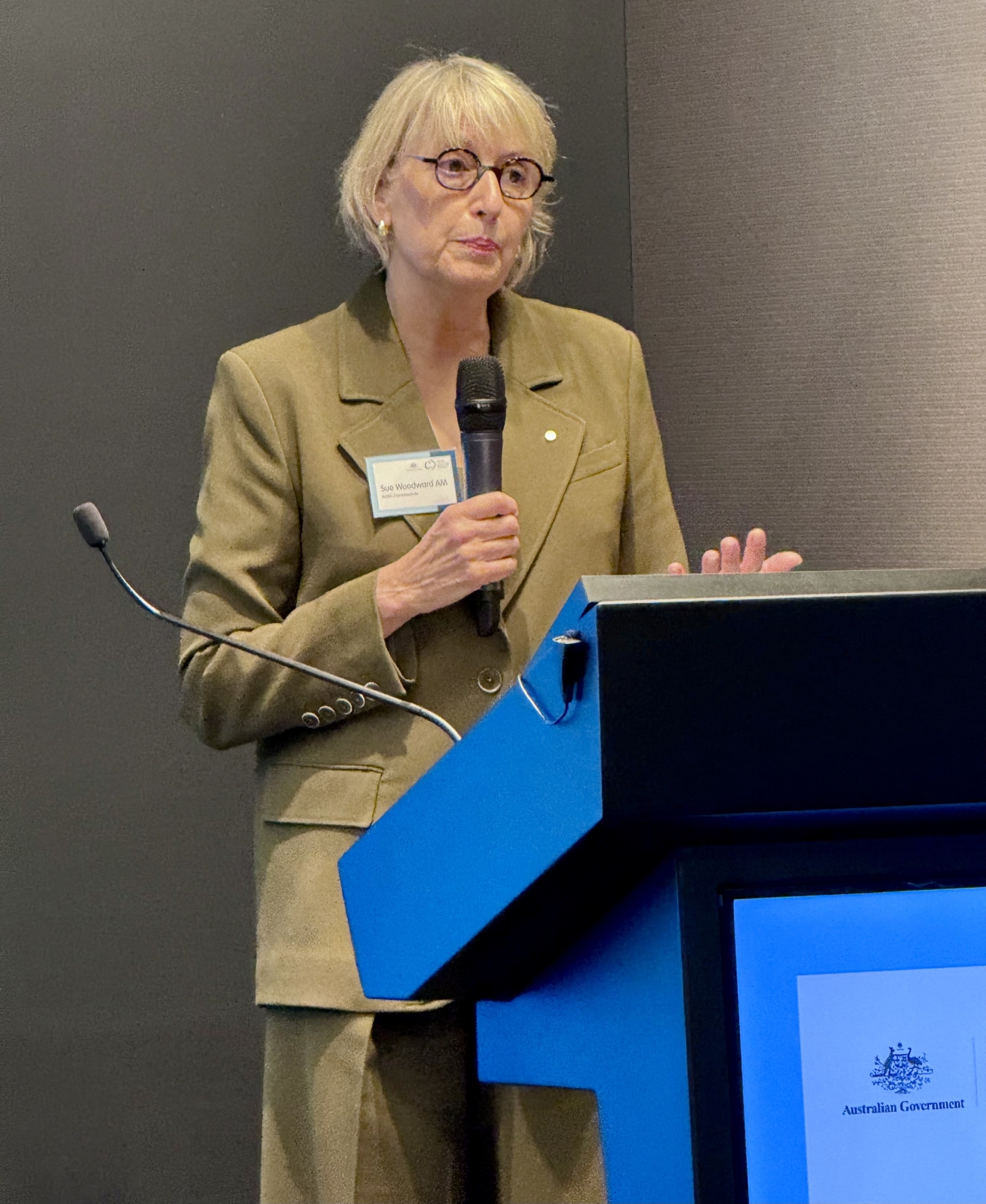
In turn, ACNC Commissioner Sue Woodward – speaking after the announcement and asked about the support arrangement – said the commission would need to “scope that out”.
“Some of that will be by way of extra project staff, and some of it will be extra resources.”
Woodward said the extra resources would assist the commission in tackling work it had identified, “but we haven't had enough capacity and resources to do. I think now's the right time because the sector is really facing some big challenges.”
“We're thrilled that we've got this extra support for this project, and I think it will really increase our capacity to do … some of that face-to-face work, and to also really focus on those small charities, perhaps those in remote areas, perhaps those working with diverse communities that need some extra support to understand what they need to do in order to be a registered charity.”
Woodward said over the past decade there had been a 17 per cent increase in the number of registered charities, with the recent spike “predominantly” because of the new ATO reporting rules.
Thousands of small groups had been added to the charity register after confirming their eligibility, she said.
She stressed that many had “never dealt with a regulator before, and we really want to make sure that they understand whether they're eligible [and] they put in their best registration application, but just as importantly, once they've gone to all that trouble, that they understand what their obligations are. We make that as easy as possible for them.”
Woodward said last week’s forum aimed to give the sector “a sense of the breadth of work that we’re doing … but also showcasing the best examples [of work] from the sector”.
Posted on 21 Oct 2026
Backed by tangible successes and government support, community foundations are gaining momentum as…

Posted on 21 Oct 2026
A national campaign to restore federal funding for Ask Izzy has attracted such strong grassroots…
Posted on 21 Oct 2026
In the wake of an act of violence against federal independent MP Helen Haines, Charities Minister…

Posted on 21 Oct 2026
If your charity takes a stance that happens to align with a political party’s stance in a public…

Posted on 14 Oct 2026
The federal government’s special envoy for social housing and homelessness, Josh Burns MP, has…

Posted on 14 Oct 2026
The Reserve Bank’s move to ban card payment surcharges has led to complications for charities and…

Posted on 14 Oct 2026
A special guest with her finger on the pulse of one of the biggest issues facing Australia –…

Posted on 07 Oct 2026
A major public campaign launched this morning is calling on the federal government to restore…

Posted on 07 Oct 2026
The Australian Literacy & Numeracy Foundation (ALNF) has announced a partnership with mining…

Posted on 07 Oct 2026
A conference in Darwin will this morning hear detailed, strategic plans for how Australia could…

Posted on 30 Sep 2026
Not-for-profit leaders have been warned to be wary of approaches from potential “funding partners”…
Posted on 30 Sep 2026
More than 200 fully funded Centre for Social Impact (CSI) scholarships will help equip for-purpose…