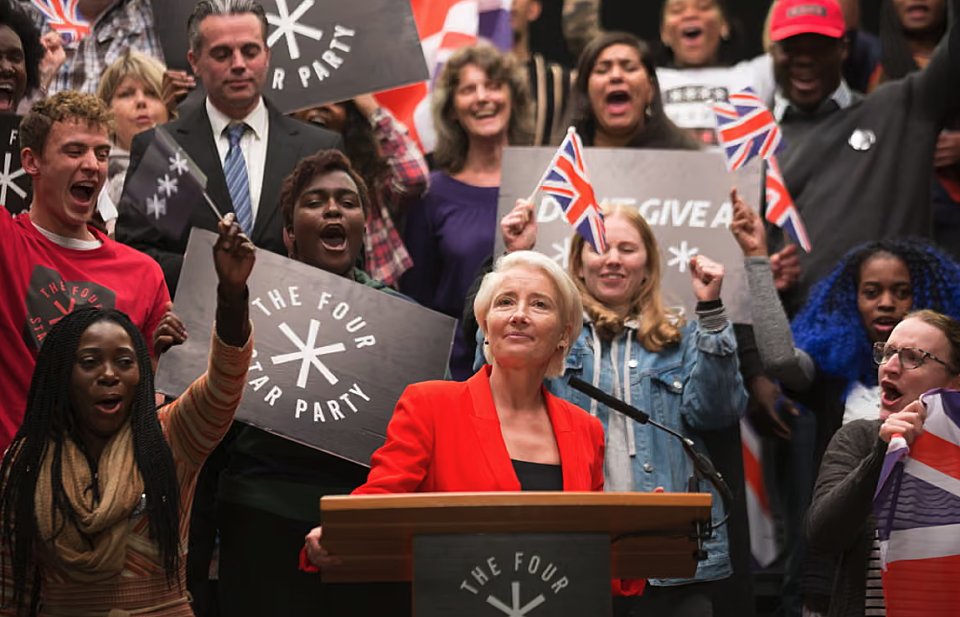
Pauline Hanson and the frightening lesson of ‘Years and Years’
Posted on 07 Oct 2026
Our Community's founder and leader, Denis Moriarty, writes that when he watched an over-the-top…
Posted on 24 Mar 2025
By Angus Crowther

Political commentator and advocacy expert Angus Crowther, who works with not-for-profits wanting to build their influence in government circles, warns that social media can backfire if organisations make missteps in their political messaging.
Social media, along with its “new media” counterparts such as podcasting, is the latest publicity vehicle providing visibility opportunities like no other. However, savvy not-for-profits (NFPs) run the risk of being misunderstood or even labelled “political trolls” if they just dive straight in, with no clear strategy.
There is no question that social media provides the opportunity to engage with younger and unique audiences that may otherwise be difficult to reach through more traditional ways, like newspaper commentary or AM radio interviews.
Politicians have increasingly embraced social media, most recently Prime Minister Anthony Albanese, who was interviewed a few weeks ago on popular media personality Abbie Chatfield’s podcast, It’s a Lot. This move mirrors strategies seen in the USA during its recent election campaign – think of former vice president Kamala Harris’s appearance on the podcast Call Her Daddy or President Trump’s interview on Joe Rogan’s The Joe Rogan Experience.
Polling published a couple of days ago suggested that Labor had managed to “claw back ground” in critical marginal seats. Voters cited the Abbie Chatfield interview as a reason why they viewed the party favourably.
It is interesting to consider how much the media landscape has changed. Just a few years ago, a politician would have been advised against appearing on a podcast hosted by a controversial former reality star, despite her large following.
Today, that same podcast proves to be a savvy choice for engaging with a demographic that may be difficult to reach through traditional media. Video reels from these podcasts are widely shared across social media, news outlets, and lifestyle platforms, significantly extending their reach.
"Many Australian charities have done an excellent job in using social media to their advantage, connecting with their audience and sharing their messages."
This demonstrates the growing importance of podcasts and social media as tools for connecting with younger audiences, who almost all have daily access to social media, and many of whom use it as a means of staying in touch with the news.
Many Australian charities have done an excellent job in using social media to their advantage, connecting with their audience and sharing their messages. UNICEF is a great example. The organisation uses its social media platforms to share its critical work in advocating for children’s rights, which includes meeting with politicians and other government stakeholders.
Supporters can view posts and reels about child protection, health and education, as well as this advocacy. A focus on storytelling brings a human element to the challenges faced by youth globally, and these real-life encounters inspire donations and local action. Meanwhile, political posts build goodwill with decision-makers, while also showcasing UNICEF’s advocacy capabilities.

However, NFPs must be mindful of how they engage online. Without the right guidance, social media posts can backfire and lead to reputational damage or other crises. In the last federal election campaign, we saw a number of NFPs caught out for being seen as too partisan.
Guide Dogs Victoria, for example, was in the news for all the wrong reasons because of the unfortunate actions of its (now former) chief executive. Guide Dogs Victoria wasn’t alone in taking a political misstep, and it’s likely we’ll see even more through the upcoming campaign.
With ACNC advocacy guidelines looming in the minds of NFPs, it’s important to remember that while social media is a convenient tool for visibility and engagement, it needs to be handled cautiously. It’s wise to have a plan, and treat your social media strategy like any other business area in your organisation. Keep these principles in mind:
Share your wins and let your voice be heard: Be loud and proud about your achievements, but ensure your audience understands the context.
Don’t pick sides: Engage with both sides of the political aisle and share content from both equally.
Keep it concise: Social media is set up for short-form content. Complex ideas should be shortened into digestible snippets that engage your audience and encourage them to explore your other communication channels.
Share what’s important to you and provide insightful commentary: Use your platforms to engage in constructive conversations and provide useful commentary on trends and news that aligns with your vision.
Stay authentic: Use social media as the place to share your perspective on the news and your own objectives, ensuring your messaging remains clear, consistent, and true to your organisation's values.
By following these strategies, NFPs can maximise their visibility and impact on social media, while avoiding missteps.
Political commentator and advocacy expert Angus Crowther works with not-for-profits that want to build their influence in government circles.
Posted on 07 Oct 2026
Our Community's founder and leader, Denis Moriarty, writes that when he watched an over-the-top…
Posted on 30 Sep 2026
There's been a lot of talk about AI this week, and some of it has been frightening. So, is AI good…

Posted on 30 Sep 2026
After the biggest AFL game of the year, one player proudly wore the flag of his birth country and…

Posted on 23 Sep 2026
In his new book Our Place, policy expert Matt Lloyd-Cope argues that housing must be at the heart…

Posted on 23 Sep 2026
There are solutions to counter the rise of One Nation but they might not be residing in the mess…

Posted on 03 Sep 2026
Denis Moriarty has an issue with insurance companies varying premiums because of what they perceive…
Posted on 02 Sep 2026
Yesterday, at a meeting just outside Castlemaine in Victoria, 70 people came together to hear…

Posted on 26 Aug 2026
Our Community's founder and leader, Denis Moriarty, says he commissioned a new piece of street art…

Posted on 19 Aug 2026
Government funding is at the centre of Australia's charity and not-for-profit sector – our number…

Posted on 12 Aug 2026
Our Community's founder and leader, Denis Moriarty, says fostering a child was his worst nightmare,…

Posted on 05 Aug 2026
The charity and not-for-profit sector is vital to our economy and the wellbeing of communities…
Posted on 05 Aug 2026
As the Global Impact Summit kicks off in Sydney today, Equitable Philanthropy’s Catherine Brooks…