NFP tech experts urge orgs to scale up cybersafety
Posted on 15 Oct 2026
Good cybersecurity must be the foundation of not-for-profits’ efforts to adopt artificial…
Posted on 10 Jun 2026
By Matthew Schulz, journalist, Community Directors
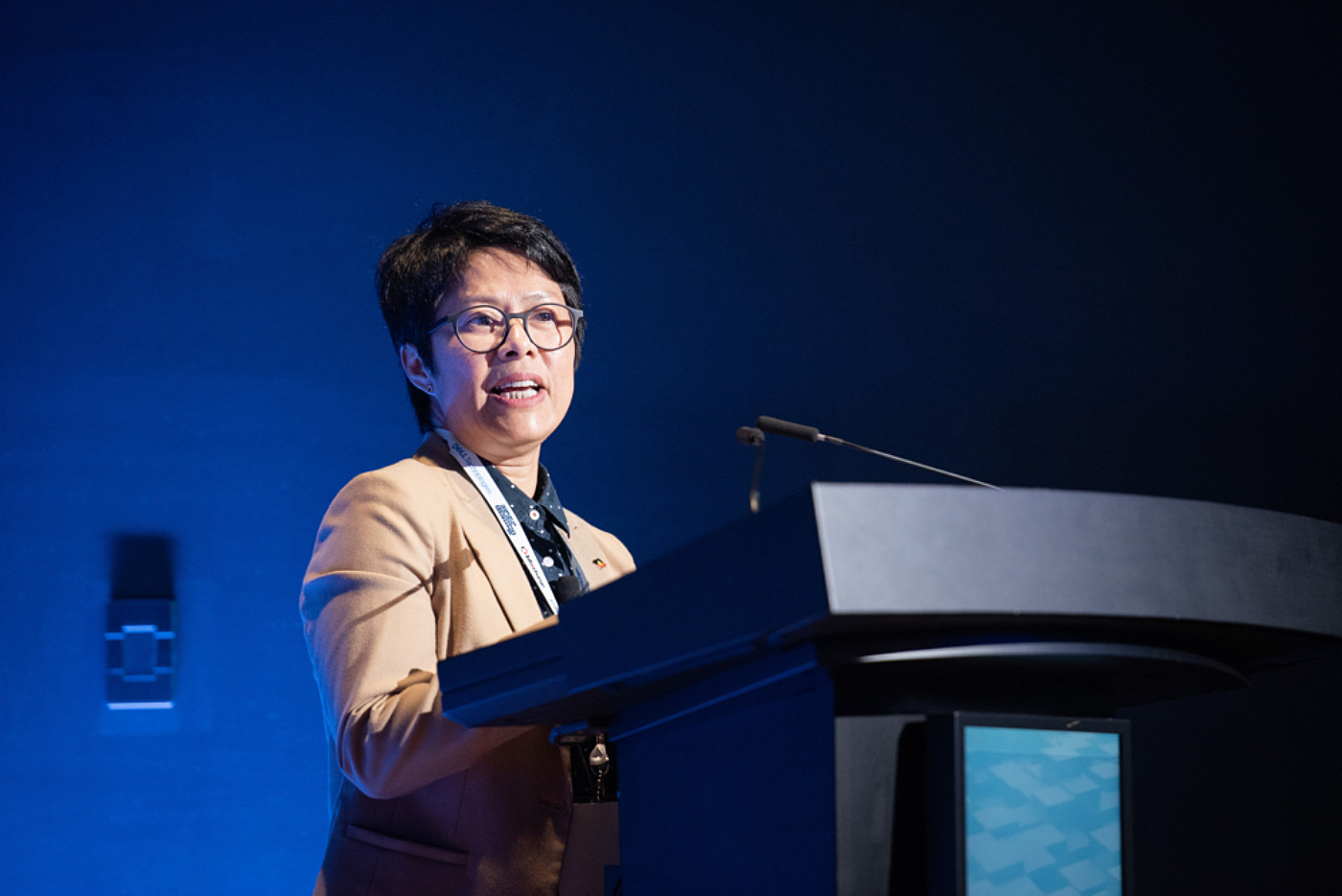
The not-for-profit sector's greatest asset in the age of artificial intelligence is its ability to see clients as human beings, not data points, according to the Australian Council of Social Service (ACOSS).
But that asset is under threat, ACOSS president and Sacred Heart Mission chief executive Hang Vo has told sector leaders in Melbourne.
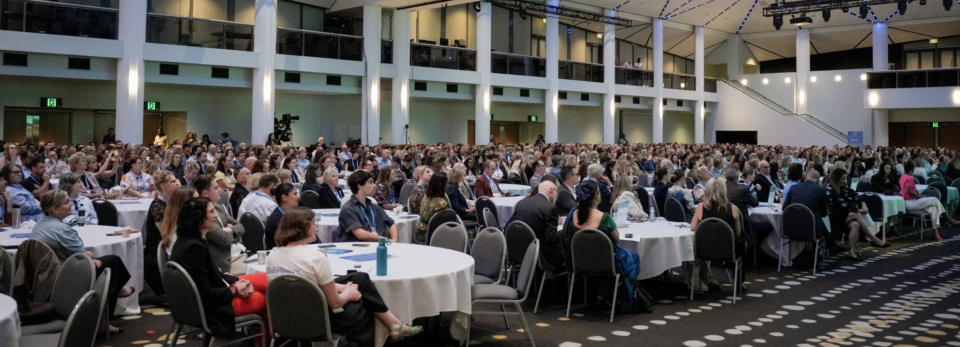
Delivering the opening keynote at the recent three-day Infoxchange Tech for Social Justice conference, Vo issued a provocative call to delegates to use their people skills when rolling out new tech.
"Our superpower is our ability to see and understand people as people – in all their dimensions, fully and completely – and to act from that understanding with care, attention, and accountability," she said. "Our responsibility is to use that superpower intentionally with technology: not simply to adopt it, but to shape it."
Vo said poorly designed digital systems hurt the most vulnerable, and she cited the federal government’s notorious “Robodebt” scheme, in which 443,000 people were issued automated welfare debt demands later found by a Royal Commission to be unlawful.
She said there were growing concerns about algorithm-based assessments in aged care that were assigning older people lower support levels with limited capacity for human review.
"Our superpower is our ability to see and understand people as people."
"Technology without humanity causes harm," she said. "Any system that fails to place humanity at its core will inevitably fail the people it serves."
The challenge for the sector, she said, was that it was facing this new threat amid significant and growing pressure. At Sacred Heart Mission, for example 1,400 more people each month have accessed the meals program over the past six months, including many families forced to choose between paying for food and paying for electricity.
Across Australia, she said, rental properties affordable for people on JobSeeker were effectively non-existent in major cities, and around 34,800 people were sleeping rough on any given night. Childcare, disability care and aged care were increasingly oriented towards financial return rather than care.
While AI was being adopted across government, business and social services at speed, the impact did not benefit everyone equally, she said.
" AI is not neutral. It reflects existing bias, and at scale it accelerates inequality." Technology, she said, was rarely designed with marginalised communities in mind, meaning vulnerable people were frequently excluded from using tools now considered mainstream.
Vo cited the fact that almost one in five Australians were digitally excluded, based on the Australian Digital Inclusion Index, even as governments continued to shift services to online-only delivery.
"There's so much pressure on not-for-profits to use technology to make our work more efficient, to be faster," she said.
"But when we're working with people, the most important thing is to slow down and to start from where people are at,” she told Community Directors Intelligence directly after her speech.
“As a queer woman of colour, and someone who came to Australia as part of the Vietnamese refugee ‘boat people’, the rise in hate and violence feels deeply personal and frightening.”
After recent anti-immigration rallies, her sister messaged to ask whether it was safe to walk outside, a feeling she said took her back to the mid-1990s rise of Pauline Hanson and One Nation. The consequences of failing social cohesion, she said, extended well beyond individual service failures to the fabric of Australian society.
Social cohesion – according to the OECD – relies on systems that enable everyone to participate and thrive, but it is eroding faster than at any previous point in her experience, Vo said. She said rising racism, antisemitism and Islamophobia and ongoing harm towards First Nations peoples were driven in part by a "social depression": a collective sense of despair and polarisation shaped by global instability and widening inequality.
Left unaddressed, she said, that erosion could trigger weaker economic growth, poorer health outcomes, and division that could escalate into hate crimes. The NFP sector, she said, was both on the frontline of that breakdown and uniquely placed to push back against it, but only if it held to its core purpose rather than chasing efficiency at the expense of human connection.
To do this, NFP leaders must address two non-negotiables when deploying AI: governance before scale, and human oversight “upstream”. The starting point for any new technology, she said, should be people, not tools.
Organisations also needed to build digital inclusion support directly into their service models rather than assuming clients shared the digital literacy of their staff, she said.
Vo said co-design efforts with Aboriginal-controlled organisations were a test case for whether the sector's commitment to self-determination was genuine. She said mainstream providers needed to resist importing pre-existing models and instead ask what communities actually needed.
Headspace, the youth mental health service, stood up as an example of what genuine co-design looked like, where young people were decision-makers, not just users. Vo said her niece, who had struggled at 15, told her the website was so easy to navigate it gave her the confidence to ask for help. "Help that changed her life," Vo said.
"Technology is a tool," she said. "It's a human that we really need to deeply listen to."
Community Directors houses a huge web library of free, practical resources, and here's where to find help related to technology and artificial intelligence. You’ll find guidebooks, templates, policies and more articles covering issues such as data, cybersecurity, technology planning, ethics and using artificial intelligence.
Posted on 15 Oct 2026
Good cybersecurity must be the foundation of not-for-profits’ efforts to adopt artificial…

Posted on 15 Oct 2026
A few years ago, I sat on a small community board that was still held together by email threads and…

Posted on 15 Oct 2026
“Build a better mousetrap, and the world will beat a path to your door”, the old saw goes.…

Posted on 15 Oct 2026
The nation's digital inclusion advocate is pushing for more equity in the rollout of AI in light of…

Posted on 15 Oct 2026
Not-for-profit leaders should be conducting regular “fire drills” that replicate AI-powered…

Posted on 15 Oct 2026
Boards that leave cybersecurity to the one director with IT expertise are leaving their…

Posted on 15 Oct 2026
Community Directors has a warehouse-style office filled with artworks, and if I glance up towards…
Posted on 15 Oct 2026
As the manager of a palliative care service, Stephanie Kirkman Meikle has learnt that the prospect…

Posted on 14 Oct 2026
A special guest with her finger on the pulse of one of the biggest issues facing Australia –…
Posted on 17 Sep 2026
Australia’s biggest gathering of philanthropists, which drew more than 1200 delegates to Brisbane…
Posted on 17 Sep 2026
Experts in Australian philanthropy say there are stark differences between philanthropic money and…

Posted on 17 Sep 2026
One of Australia’s foremost fundraising observers says Australian not-for-profits must get the…