
NFP tech experts urge orgs to scale up cybersafety
Posted on 15 Oct 2026
Good cybersecurity must be the foundation of not-for-profits’ efforts to adopt artificial…
Posted on 10 Jun 2026
By Matthew Schulz, journalist, Community Directors
An AI assistant designed with input from the frontline care workers who use it is saving staff hours of admin time at one of Australia's largest not-for-profits.
Less than a year after its official launch, Buddy the AI assistant is already in the hands – and pockets – of more than 1,200 Uniting NSW.ACT home and community care workers.
Uniting serves 148,000 clients each year, and the new app is proving a boon to carers, slashing the time taken to take case notes from 15 minutes to less than two minutes.
The app handles multilingual voice-to-text progress notes, automates translation, provides real-time policy guidance, and allows carers to focus on their primary job of looking after clients.
It is getting noticed across the aged care and community care industry, with the 344,000-worker shortfall in the sector making any tools that reduce the admin burden attractive.
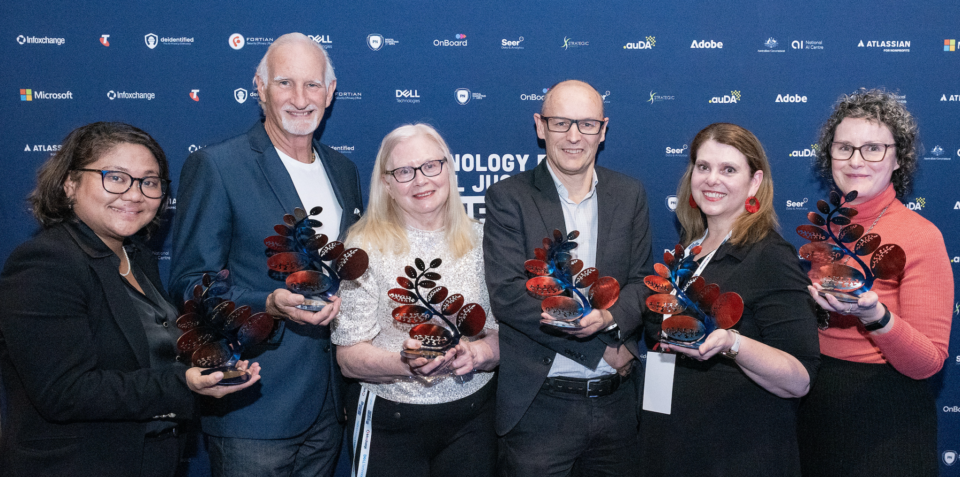
The project won the “Best use of AI for community impact” award at the 2026 Australian Not-for-profit Technology Awards and has scooped a swag of other awards in tech, innovation, and the not-for-profit sector.
“The ability to translate between languages … translate colloquialisms and phraseology between languages so that it still maintains its impact, that’s a super important AI capability."
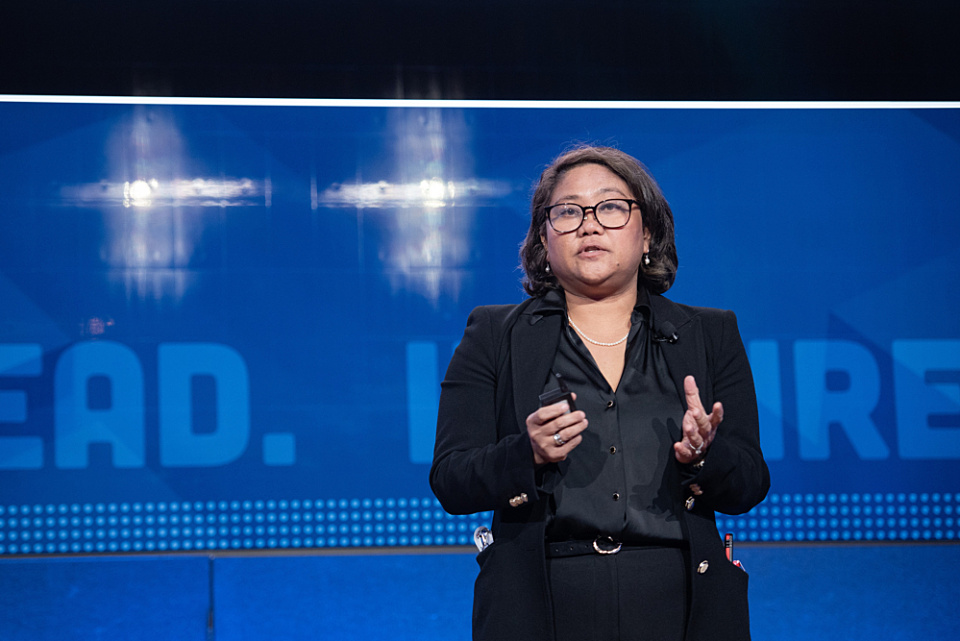
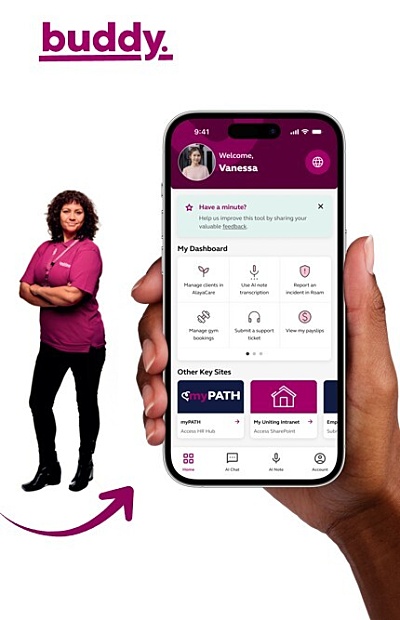
Jowe Esguerra, Uniting's digital innovation lead, told Community Directors Intelligence during the recent Infoxchange Technology for Social Justice conference that the catalyst for Buddy was straightforward: carers were drowning in administration.
"If we dissect the everyday experience of our frontline workers, the question we had to answer was: how can we make their day easier and simpler so they can focus on providing care rather than doing documentation, or navigating multiple systems trying to find information?" Esguerra said.
"That creates a lot of burden and cognitive overload, and it can be quite stressful.”
The project involved a collaboration with five other major aged care organisations, with support from Microsoft’s Tech for Social Impact program.
Early data showed support workers saved about 30 minutes a day on notetaking, while non-support workers in the office won back as much as two hours per day, largely through having quicker access to documentation and references.
The app supports multiple languages, including Hindi, Nepali, Indonesian, and Mandarin and Cantonese Chinese, reflecting the diversity of Uniting's worker base. It guides users through its features, and staff can submit feedback from within the app itself.
Before Buddy, Uniting was already using a chat assistant for policy queries and an AI multilingual transcription service, but the tools existed separately. Uniting partnered with technology consultants Engage Squared to merge the tools into a mobile-first application, with close involvement with frontline workers.
Asked what other NFPs should do when considering AI projects, Esguerra was adamant: "Please, please, please partner closely with your people and your frontline teams."
And with Uniting working with government agencies and highly vulnerable people, Esguerra said data governance was integral to Buddy's design.
"We partnered closely with our legal and data governance teams to ensure the solution adhered to all relevant policies, standards and regulations," she said.
"We also made sure our policies covered the safe, ethical and responsible use of AI."
Uniting continues to develop the app and related AI policies. Esguerra’s teams have been consulting with the organisation's First Nations group to ensure cultural considerations including language are embedded in both policy and consent documentation.
Buddy has been extended into Uniting's mission and chaplaincy services, with a further rollout into residential aged care and mental health teams to come. By the start of the June 2026, the entire organisation was expected to have access to the system.
Esguerra hopes the Infoxchange award will encourage others to “be bold, to lean in, to learn, and innovate”.
She said other NFP leaders considering rolling out an AI app should be methodical: understand the core problem first, find the lowest-risk opportunity to demonstrate value, and let momentum build from there.
"We look for opportunities where we can deliver impact quickly with low risk and then iterate through the process," she said.
"Experiment, test fast, fail fast, and learn from it."
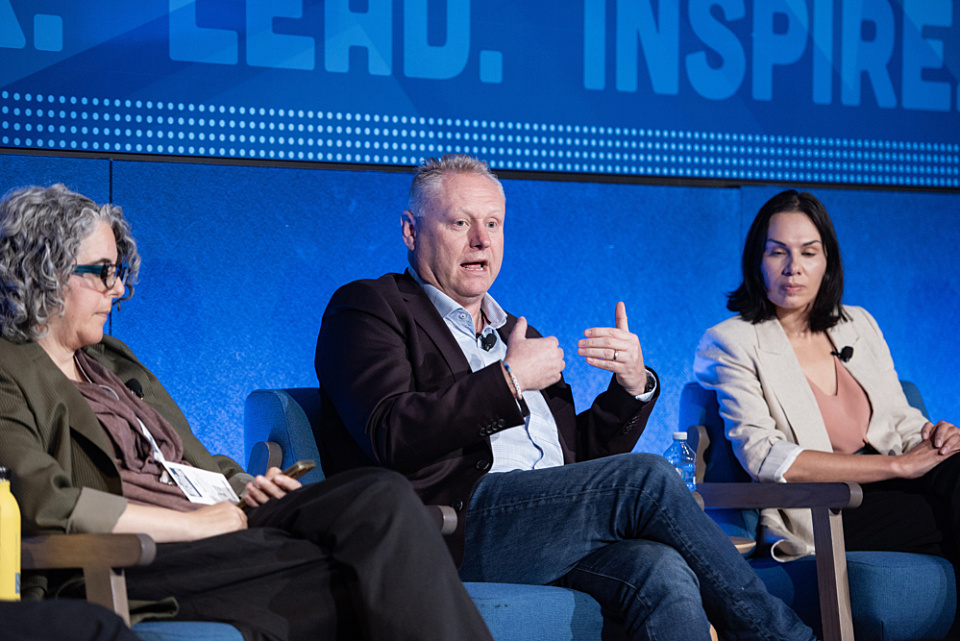
The app is gaining accolades from Australian AI leaders.
The National Artificial Intelligence Centre’s executive director, Lee Hickin, said he was “transfixed” by the project.
“It was the way they’d come at the problem. Aged care is a human-centric role in dealing with people at a very difficult, delicate time in their life, whether it’s through dementia or other issues, or just simply caring for older people.”
Hickin said some critics were concerned that AI had the potential to dehumanise people, but instead Uniting had tackled the underlying problem.
“They looked at this and said … the problem we really have is we have a diverse workforce of multi-languages. We have a workforce that is already pressured to do many things and remember so many things and be the best they can to everybody they deal with. So, why not use AI to make sure that they surface the most appropriate information at the most appropriate time in a language or a format that that person can best interpret?
“The ability to translate between languages … translate colloquialisms and phraseology between languages so that it still maintains its impact, that’s a super important AI capability.
“When [an aged care worker] wants to capture some information about a patient or a person they’re working with, and they use their colloquialisms in their native language, it gets maintained.”
Hickin, who also attended the Technology for Social Justice conference spoke at length to Community Directors recently, arguing that the benefits outweighed the risks of AI for the NFP sector.
Community Directors houses a huge web library of free, practical resources, and here's where to find help related to technology and artificial intelligence. You’ll find guidebooks, templates, policies and more articles covering issues such as data, cybersecurity, technology planning, ethics and using artificial intelligence.
Posted on 15 Oct 2026
Good cybersecurity must be the foundation of not-for-profits’ efforts to adopt artificial…

Posted on 15 Oct 2026
A few years ago, I sat on a small community board that was still held together by email threads and…

Posted on 15 Oct 2026
“Build a better mousetrap, and the world will beat a path to your door”, the old saw goes.…

Posted on 15 Oct 2026
The nation's digital inclusion advocate is pushing for more equity in the rollout of AI in light of…

Posted on 15 Oct 2026
Not-for-profit leaders should be conducting regular “fire drills” that replicate AI-powered…

Posted on 15 Oct 2026
Boards that leave cybersecurity to the one director with IT expertise are leaving their…

Posted on 15 Oct 2026
Community Directors has a warehouse-style office filled with artworks, and if I glance up towards…

Posted on 15 Oct 2026
As the manager of a palliative care service, Stephanie Kirkman Meikle has learnt that the prospect…

Posted on 14 Oct 2026
A special guest with her finger on the pulse of one of the biggest issues facing Australia –…

Posted on 17 Sep 2026
Australia’s biggest gathering of philanthropists, which drew more than 1200 delegates to Brisbane…

Posted on 17 Sep 2026
Experts in Australian philanthropy say there are stark differences between philanthropic money and…

Posted on 17 Sep 2026
One of Australia’s foremost fundraising observers says Australian not-for-profits must get the…