Pauline Hanson and the frightening lesson of ‘Years and Years’
Posted on 07 Oct 2026
Our Community's founder and leader, Denis Moriarty, writes that when he watched an over-the-top…
Posted on 26 Aug 2025
By Matthew Schulz, journalist, Institute of Community Directors Australia

Not-for-profits and charities are well placed to take advantage of the surge of Australians listening to podcasts, according to a national study that shows podcast listeners are more likely than the average Australian to act in response to what they hear, whether it’s to donate, attend a rally or contribute to a cause.
PodPoll25, the most comprehensive study of Australian podcast listening habits, has found that 47 per cent of Australians, or 9.6 million, are now regular podcast listeners, about 1.47 million up on 2024 figures.
The survey was commissioned by podcast production house Deadset Studios through market research agency Insightfully.
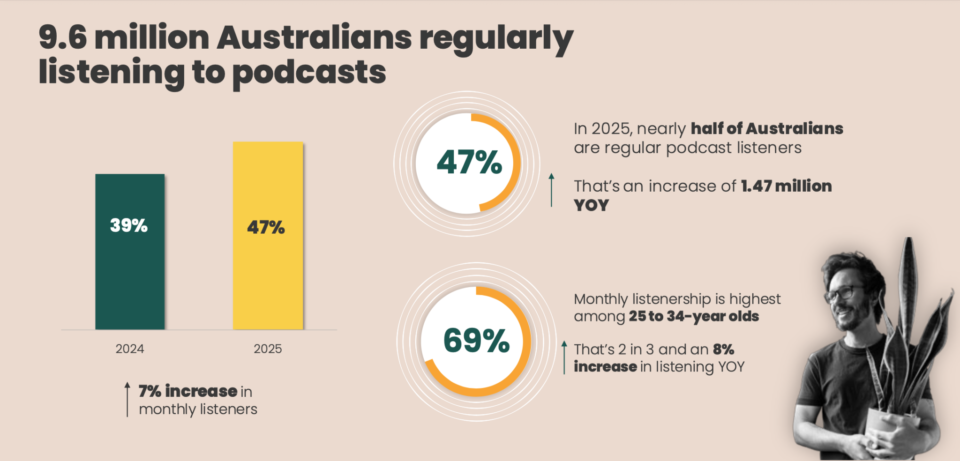
Deadset Studios director Kellie Riordan said the research showed that podcasting was “a high influence medium”, which could hold people’s attention in a noisy media landscape.
“Podcasts speak directly to listeners’ hearts and minds, as they seek connections in a world of digital overload,” Riordan said.

That deep connection meant that podcast users were active listeners, rather than passive consumers.
“This active listening prompts podcast audiences to do something after listening, meaning brands and podcast creators have a unique direct line to share their stories, raise awareness, and motivate audiences to take an action”.
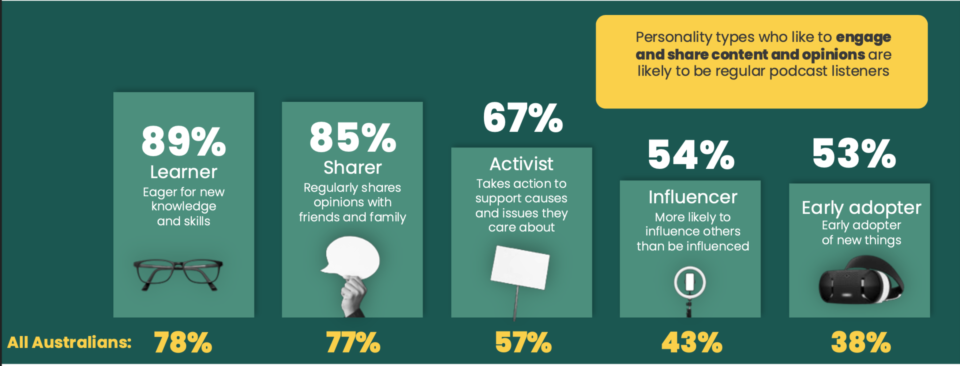
Insightfully managing director Leanne White said 67 per cent of podcast listeners were what she labelled “activists”, compared to 57 per cent of the general population, with a growing number of listeners taking action for a cause or purpose after listening to a show.
“1.5 million Australians [16 per cent] have gone as far as taking action for a cause or purpose after listening to a podcast. Nearly 500,000 listeners have put their money where their mouth is by donating money after consuming a podcast, and an incredible 200,000 Australians have attended a rally after listening.”
“These numbers demonstrate just how powerful podcasts can be at motivating audiences to put time and money behind a cause they heard about through a podcast.”
Riordan said personality types that like to engage and share content and opinions were more likely than other types to be podcast listeners.
“We asked survey respondents what type of person they are – if they’re an early adopter of new things, eager for new knowledge and skills, someone who regularly shares opinions with friends and family, someone who is more likely to influence others than be influenced, or if they take action to support causes and issues. In every category, podcast listeners over-index compared to the general population.”
“It’s really about thinking about where you can win, what your organisation has to say that nobody else is saying, the access that you have to guests and expertise that no one else has, and then just create a series.”
Speaking at the release of the report, Riordan said not-for-profits should not be afraid of dipping their toes into podcasting.
“It’s really about thinking about where you can win, what your organisation has to say that nobody else is saying, the access that you have to guests and expertise that no one else has, and then just create a series. It doesn’t have to be a weekly show,” Riordan said.
“If you’re a not-for-profit … your measure of success is not advertising revenue. It is: Have we got to the right audience?
“I come back to the Dementia Australia example because the Hold the Moment podcast is aimed at people with dementia – or their families – which equates to a couple of million Australians a year. Their measure of success is that podcast getting to those people, and is it helping them deal with dementia?

“So, if your measure of success is that, make a short run series, five episodes, put a big marketing campaign around that. It doesn't have to be 30 episodes. There is still a way that those smaller organisations can tackle podcasting.”
Speaking to a not-for-profit communications forum hosted by Communication and Public Relations Australia (CPRA) earlier this year, she urged NFPs to avoid falling into the trap of having their CEO talk to a different expert every week.
“So many clients come to me and say: ‘We want to do a podcast. We want our CEO to talk to an expert, and the next episode is that our CEO talks to another expert and then we repeat that 10 times.
“I would rather you keep your money and I don't make this podcast, because I guarantee you it will not work. Two people sitting at a table can only work if they're really amazing celebrities, or it's super sharp and very polished and super-edited.
“Other than that, you've got to be more dynamic to cut through in the podcast space. You've got to have an interesting format, and do something to cut through. You've got to make bold storytelling decisions and do something that will make people talk about this podcast.”
Done well, podcasts can hit the sweet spot for not-for-profits through “contagious stories” that “ignite conversations” and deeper engagement, Riordan said.
She said not-for-profits were in a great position to discuss hot topics such as the cost of living, climate change, social issues, crime, tax reform, housing and health.
And she said in key areas, podcasting still had more “head room” for growth.Those areas included health and wellbeing, history, and lifestyle, with listeners saying they would tune in if those topics were covered.
PodPoll25: Download the full study
Hold the Moment podcast (Dementia Australia)
Posted on 07 Oct 2026
Our Community's founder and leader, Denis Moriarty, writes that when he watched an over-the-top…

Posted on 07 Oct 2026
A major public campaign launched this morning is calling on the federal government to restore…

Posted on 07 Oct 2026
The Australian Literacy & Numeracy Foundation (ALNF) has announced a partnership with mining…

Posted on 07 Oct 2026
A conference in Darwin will this morning hear detailed, strategic plans for how Australia could…

Posted on 07 Oct 2026
Joseph Friedman is co-founder and publisher of About Time, Australia’s only newspaper for…
Posted on 30 Sep 2026
There's been a lot of talk about AI this week, and some of it has been frightening. So, is AI good…

Posted on 30 Sep 2026
After the biggest AFL game of the year, one player proudly wore the flag of his birth country and…
Posted on 30 Sep 2026
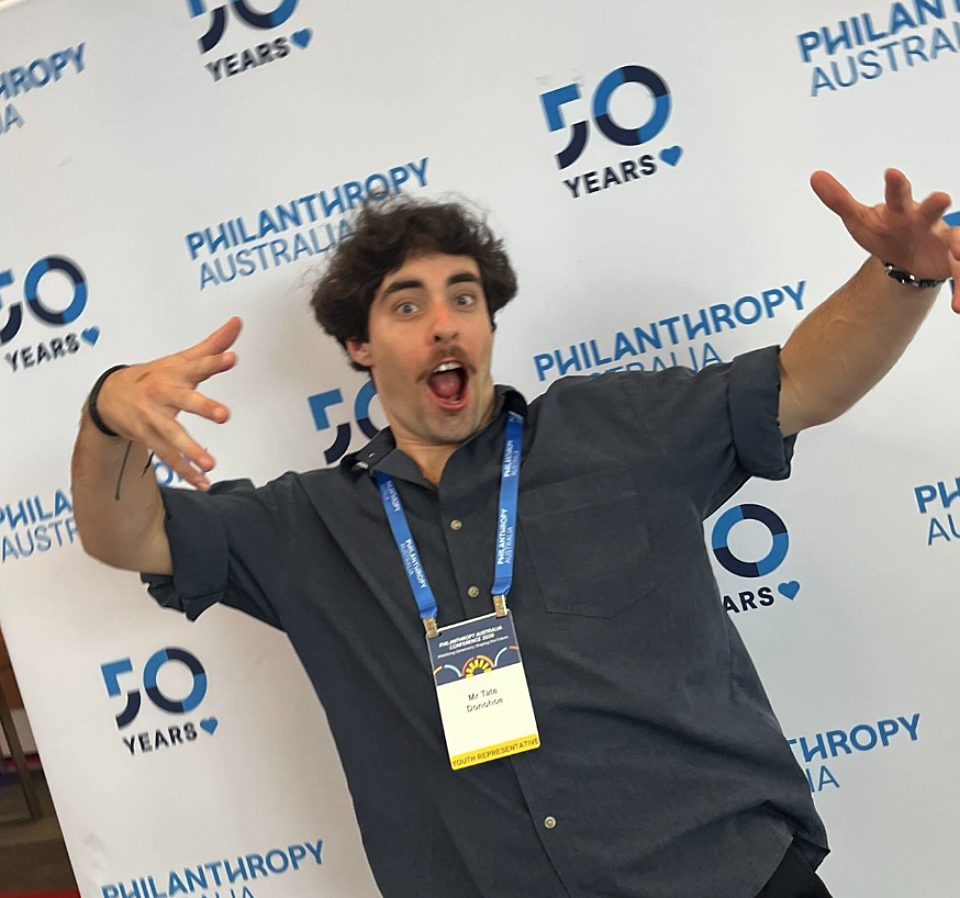
At 21 years old, Tate Donohoe is the founder of Ecodia, an AI-assisted software development company…

Posted on 30 Sep 2026
Not-for-profit leaders have been warned to be wary of approaches from potential “funding partners”…
Posted on 30 Sep 2026
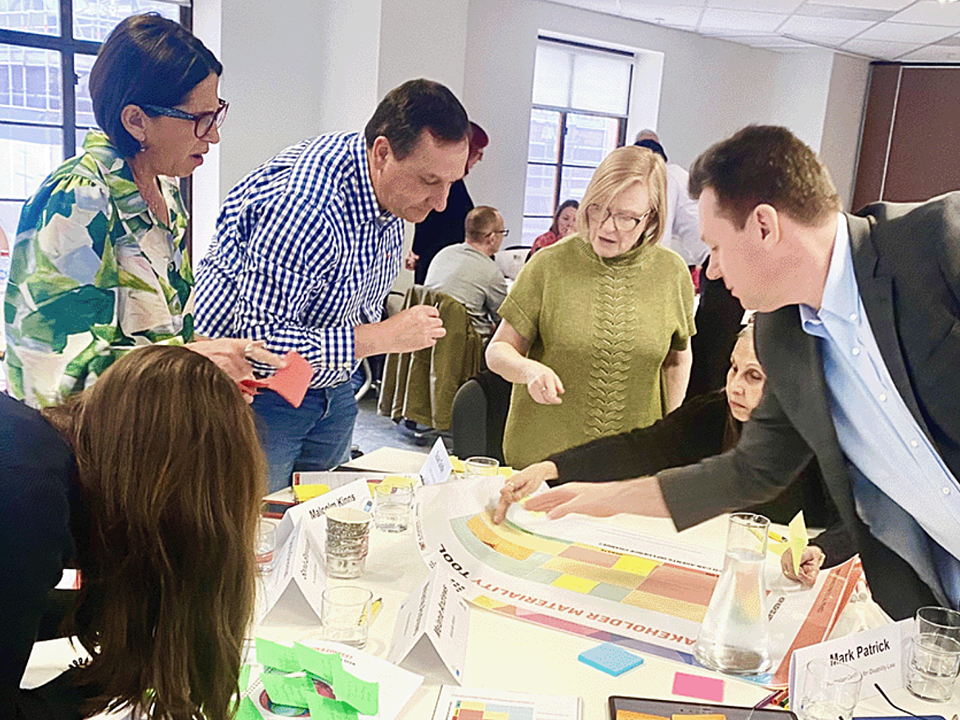
More than 200 fully funded Centre for Social Impact (CSI) scholarships will help equip for-purpose…

Posted on 30 Sep 2026
Personal stories are among the most powerful tools a charity can have to raise funds and awareness,…

Posted on 23 Sep 2026
In his new book Our Place, policy expert Matt Lloyd-Cope argues that housing must be at the heart…