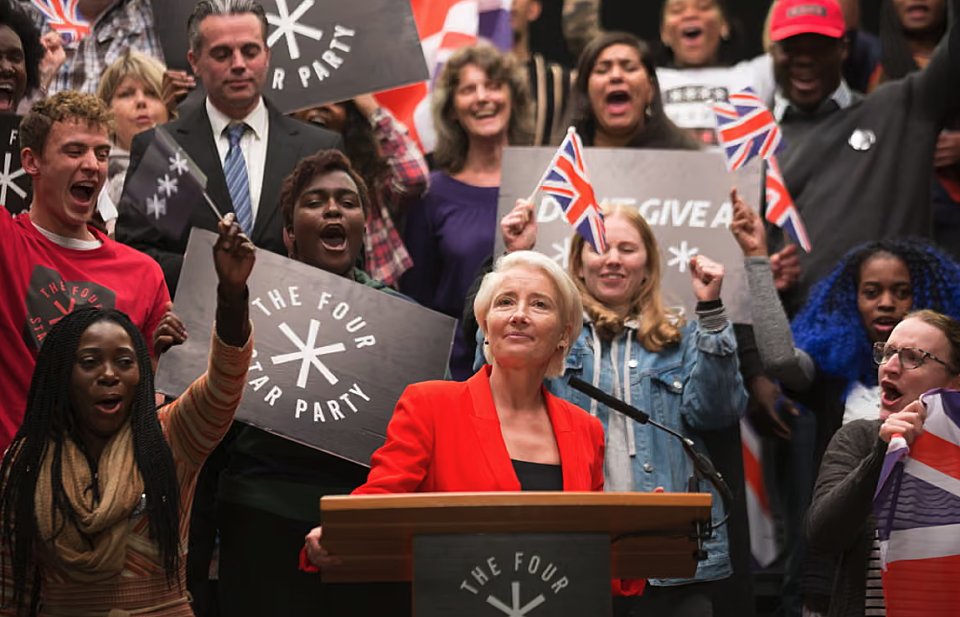
Pauline Hanson and the frightening lesson of ‘Years and Years’
Posted on 07 Oct 2026
Our Community's founder and leader, Denis Moriarty, writes that when he watched an over-the-top…
Posted on 01 Apr 2025
By Greg Thom, journalist, Institute of Community Directors Australia

Many sector organisations viewed the Albanese government’s 2025 Budget as a missed opportunity to tackle entrenched disadvantage.
Those hoping for Opposition leader Peter Dutton to offer some positive solutions to pressing issues such as the lack of affordable housing and climate change in his Budget reply speech were largely disappointed.
With its depressing, dystopian overtones of a nation in crisis, Dutton vowed to scrap the $10 billion Housing Australia Future Fund, ditch the government’s proposed income tax cuts, reverse the decision to hire an extra 41,000 public servants and turn his back on renewable energy in favour of gas.
Instead, Dutton’s initiatives to help struggling Australians included slashing fuel excise for a year in a move designed to reduce the price of petrol for millions of motorists and a pledge to allocate $50 million for food relief charities.
Dutton said many Australians are working hard but can’t get ahead.
“For so many Australians, aspiration has turned to anxiety, optimism to pessimism, and national confidence to national uncertainty,” he said.
“The truth is, Australians can’t afford three more years of the Albanese government.”
Prime Minister Anthony Albanese attempted to starve Dutton’s Budget reply of oxygen by announcing May 3 as the date of the federal election the day after his speech.
The formal announcement of the election campaign prompted many sector organisations to call on both parties to place the interests of struggling Australians ahead of politics.
Anglicare Australia executive director Kasy Chambers wasted no time in attacking Dutton’s plan to scrap Labor’s signature social housing policy if elected, warning such a move would worsen Australia's social housing shortfall.
“Across the country, there are people in severe rental stress,” said Chambers.
“They are being forced to make unfair choices every day, from skipping meals to getting into debt, just to keep a roof over their heads.
“At a time when we need more social housing, the Opposition is proposing to build less by scrapping the Housing Australia Future Fund. That would see our already large social housing shortfall get even worse.”
Chambers said the nation currently faced a shortfall of 640,000 affordable homes, a number set to grow to 940,000 over the next two decades.
“Nobody will benefit from this plan, and tens of thousands will be left in limbo as the housing crisis worsens,” she said.
Chambers said Dutton’s proposed Super for Housing scheme could push up costs and lower retirement incomes.
“We saw during the pandemic that people who drew down on their retirement savings were those who had the least,” said Chambers.
“On top of that, we know that schemes like these push up the cost of housing instead of bringing them down.”
Chambers said the solution to making homes more affordable was obvious – boost social housing and reform investor tax concessions.
“Ahead of the election, we hope to work with all parties and candidates on plans to tackle the housing crisis – and put an end to band-aid solutions that make it worse.”
“If candidates are serious about tackling the cost of living, they must have policies that help the people with the least.”
The Australian Council of Social Services (ACOSS) said the election campaign must focus on easing hardship, not stoking fear and division.
ACOSS CEO Dr Cassandra Goldie urged all parties and candidates to deliver real solutions to address the hardship people are facing, rising inequality and climate change.
“Some voters have experienced a historic fall in their living standards, and many are feeling afraid – they’re scared they won’t be able to keep a roof over their heads, put food on the table and cover the cost of basic essentials,” she said.
“They’re crying out for leaders with clear plans to address these issues – not inflammatory rhetoric that stokes fear and division.
“If candidates are serious about tackling the cost of living, they must have policies that help the people with the least.”

Goldie said rather than poorly targeted election sweeteners, the nation needs politicians of all persuasion to deliver an ambitious policy agenda designed to reduce inequalities and deliver permanent relief for communities facing hardship.
ACOSS called on the next government to:
Catholic Social Services Australia (CSSA) urged politicians to prioritise the common good over sectional interests.
CSSA executive director Dr Jerry Nockles called on all political parties to elevate the standard of debate during the election campaign.
“Every policy discussion should recognise the inherent, inalienable and inviolable dignity of every human person.
“We must firmly reject the dishonest scare campaigns that have unfortunately become commonplace in recent elections.”
Nockles urged candidates to champion policies that lift-up the most vulnerable in society.
“The true measure of Australia’s progress lies in how we treat those on the margins.”
In his Budget reply speech, Dutton promised to deliver a $50 million funding boost to food relief agencies who have experienced a surge in demand amid the cost-of-living crisis.
“Amidst Labor’s cost-of-living pressures, charities are experiencing increased demand – including from Australians who have never previously relied on their support,” he said.
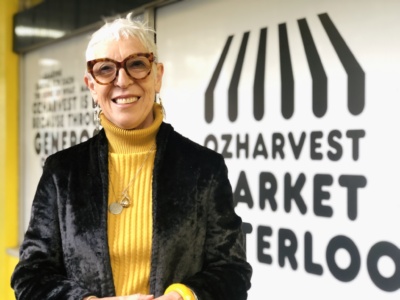
“To scale up assistance and provide immediate relief, we will commit $50 million over four years for food charities – like Foodbank, SecondBite and OzHarvest – to expand their services, including school breakfast programs.”
OzHarvest founder Ronni Kahn said the Coalition commitment was recognition of the extent of ongoing food insecurity in Australia.
“This country is facing a hunger crisis, and urgent action is needed,” said Kahn.
“The Opposition’s funding promise is a welcome step in the right direction – but with 3.4 million Australians living with food insecurity, there’s a lot more to be done.”
Kahn said she would like to see the Albanese government either match the Coalition pledge or increase its funding for the food relief sector.
“Feeding people is above politics, and alongside our sector peers Foodbank and Secondbite/Fareshare, we are working towards a bipartisan approach to solving these critical issues.”
Posted on 07 Oct 2026
Our Community's founder and leader, Denis Moriarty, writes that when he watched an over-the-top…

Posted on 07 Oct 2026
A major public campaign launched this morning is calling on the federal government to restore…
Posted on 07 Oct 2026
The Australian Literacy & Numeracy Foundation (ALNF) has announced a partnership with mining…
Posted on 07 Oct 2026
A conference in Darwin will this morning hear detailed, strategic plans for how Australia could…
Posted on 07 Oct 2026
Joseph Friedman is co-founder and publisher of About Time, Australia’s only newspaper for…

Posted on 30 Sep 2026
There's been a lot of talk about AI this week, and some of it has been frightening. So, is AI good…

Posted on 30 Sep 2026
After the biggest AFL game of the year, one player proudly wore the flag of his birth country and…

Posted on 30 Sep 2026
At 21 years old, Tate Donohoe is the founder of Ecodia, an AI-assisted software development company…

Posted on 30 Sep 2026
Not-for-profit leaders have been warned to be wary of approaches from potential “funding partners”…

Posted on 30 Sep 2026
More than 200 fully funded Centre for Social Impact (CSI) scholarships will help equip for-purpose…

Posted on 30 Sep 2026
Personal stories are among the most powerful tools a charity can have to raise funds and awareness,…

Posted on 23 Sep 2026
In his new book Our Place, policy expert Matt Lloyd-Cope argues that housing must be at the heart…