
Philanthropists ask: Can we forge a better future?
Posted on 17 Sep 2026
Australia’s biggest gathering of philanthropists, which drew more than 1200 delegates to Brisbane…
Posted on 15 Oct 2025
By Matthew Schulz, journalist, Institute of Community Directors Australia
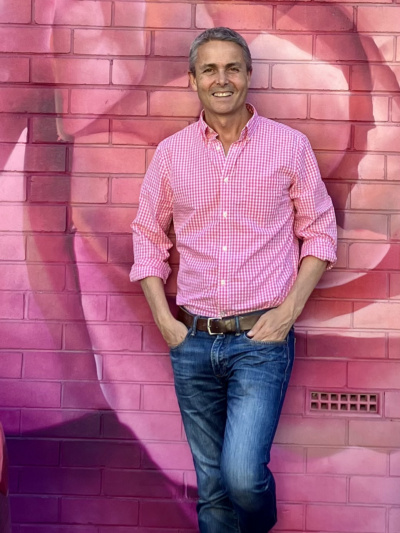
As a middle-aged white guy, Dennis Banfield sure has his work cut out for him convincing people he’s the one to advance culturally and linguistically diverse (CALD) leaders.
But the Community Directors Diploma graduate is up for the challenge and has got the results to prove it. He believes his pathway is a model for others to consider.
Banfield is a co-founder of CALD2LEAD, a volunteer-run not-for-profit (NFP) that funds and supports governance and leadership training for women from culturally and linguistically diverse communities. He helped build the organisation, then deliberately moved aside to make space for the very leaders CALD2LEAD exists to elevate.
“We use that term on purpose,” Banfield said of his description of the three founders (Banfield, Hugh Wareham and Stephen Landsell) as “middle-aged white guys”. “We want to be useful, not get in the way.”
The model is as straightforward as it is intentional: raise funds, remove financial and confidence barriers for CALD women to access reputable programs such as the Diploma of Governance offered by Leadership Victoria and the Institute of Community Directors Australia (ICDA), and require each scholar to be “the face” of their own fundraising. Then, place CALD women on the board, and let them lead.
Banfield traces his governance instincts to his grandfather, Walter Dwyer, whose post-war career mixed technical expertise as a distinguished aeronautical meteorologist, with community service on boards including those of Villa Maria Society and St Paul’s School for the Blind.
“In the evenings he’d go to board meetings; during the day we’d paint fences and pave,” Banfield said. “I was 10 years old and my brothers and I weren’t allowed to be idle.”
His mother, Frances, gave him an early sense of the value of multiculturalism. As a child growing up in Ringwood, in the eastern suburbs of Melbourne, Banfield recalls long drives to St Albans to join Maltese community events. That early exposure left a mark. “Reflecting since Mum died recently, I think that early exposure planted a subliminal multicultural thread that led me to focus on this work. I’m grateful to Mum,” he said.
"Good intentions aren’t enough. One of our scholars uses the word “allyship” – that’s the bar.”
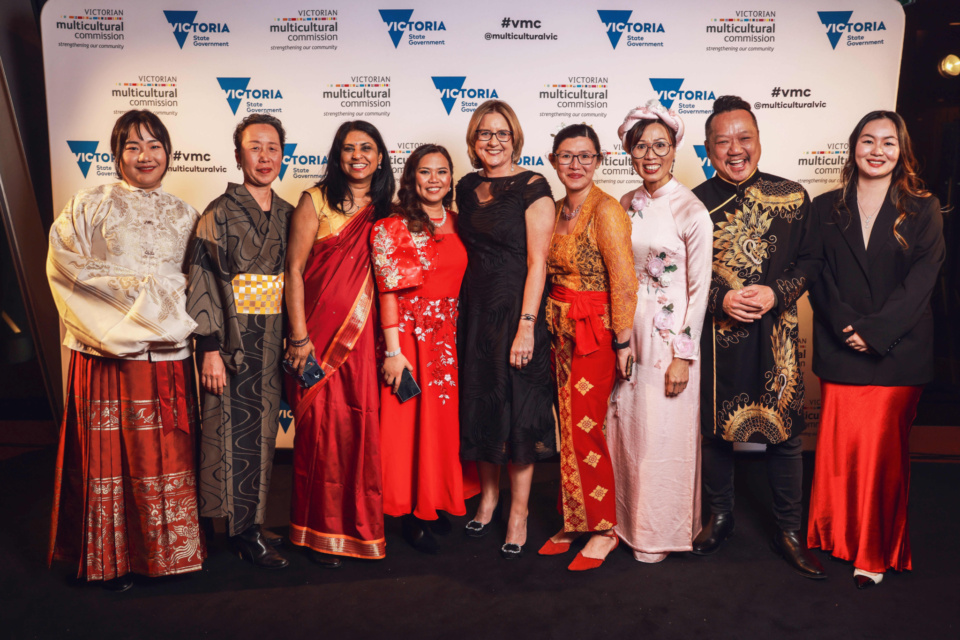
The spark for CALD2LEAD came when Banfield undertook a 10-month Leadership Victoria community leadership program. Banfield’s group was asked what members would do after graduating, and they landed on a simple concept: fund an $8,000 scholarship for someone who could not afford it themselves.
The concept developed into funds for two more scholars and crystallised after they realised the gap they needed to fill. “In the training rooms the diversity was lacking,” Banfield said. “It didn’t reflect Australia’s modern multicultural mix … no Sudanese, Burmese, Chinese, Vietnamese.”
The turning point came when the trio sought advice from Victorian Multicultural Commission chair Vivienne Nguyen. “She said there’s a need: women community leaders without the money, networks, background, confidence, or competence could benefit from us raising funds,” Banfield said.
“Lightning bolt, we had a purpose,” Banfield said.
The founders incorporated and set up a constitution, and CALD2LEAD took shape in 2019.
Since then, the organisation has:
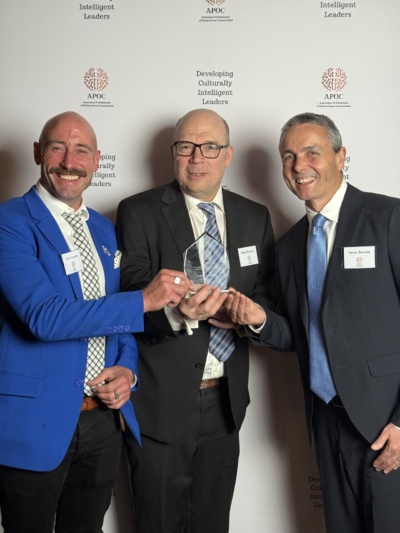
This month, the founding trio won the Allyship Award presented by Australian Professionals of Multicultural Communities.
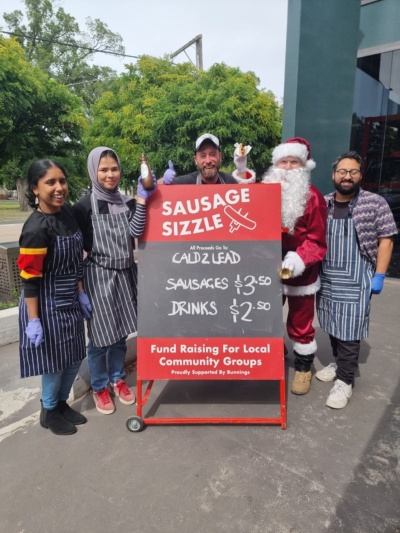
CALD2LEAD’s funding engine is refreshingly unglamorous: Bunnings sausage sizzles. “You can gross around $3,000 at Mentone Bunnings on a Saturday,” Banfield said. “About 95 per cent of funds raised go to scholarships – no rent, no salaries.” Tasman Meats, Bunnings and Baker’s Delight often help with supplies, meaning each sausage sizzle can run on “the smell of an oily rag”.
Scholars also get their hands dirty. “Scholars must front their fundraising campaign and attend a sizzle,” Banfield said. Over time, the faces of the stalls have changed as CALD scholars, including board members, have taken on public-facing roles and the founders have “hid in the back and cooked”.
To date, CALD2LEAD has funded more than 20 scholarships, including several in collaboration with Community Directors. Some alumni now erve on the CALD2LEAD board after completing governance training.
Banfield said developing the model had been challenging on many levels and had included some bracing self-reflection. He tells the story of applying for a large grant for women’s leadership when in the process he contacted an organisation called Two Square Pegs, a social enterprise supporting entrepreneurs from under-represented communities.
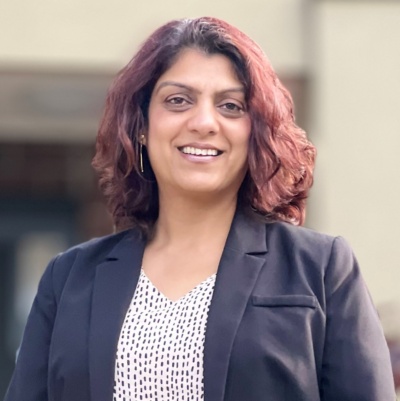
He recalls a forthright conversation with founder and CEO Trang Du, who challenged him: “Who do you think you are?” when he began pitching about the need to raise funds.
“It was a shock. I thought I was well meaning, well intended, but I spent 30 minutes explaining our intent. It was a great test, and she later became an advocate, came to Christmas drinks, sat on our interview panels. It made us check ourselves: good intentions aren’t enough. One of our scholars uses the word “allyship” – that’s the bar.”
That sense of allyship is a key reason the founders have agreed to eventually make themselves redundant. Lansdell brought three gold notebooks to a strategy day and asked the team to describe their five- to 10-year vision. Banfield pictured “three old white guys sitting at the back of a theatre, watching scholars on stage … with us nowhere near the microphone. At our annual Christmas drinks at Federation Square, the aspiration is a square filled with scholars, not us.”
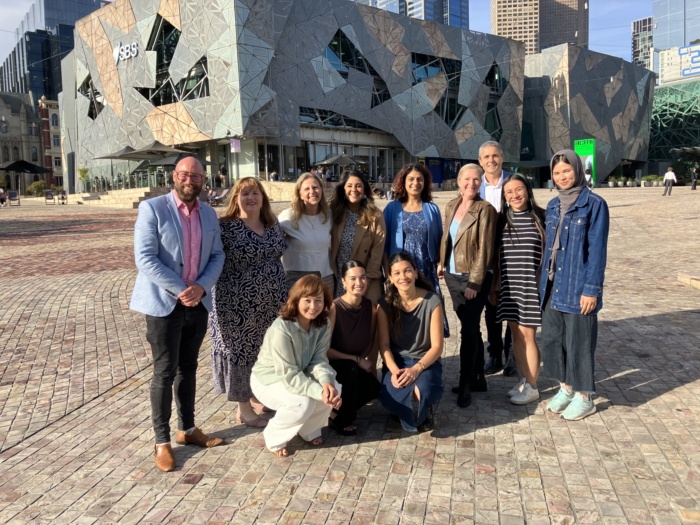
Visitors to the CALD2LEAD website need to dig to discover the trio behind the organisation, for many of the old images showing Banfield, Landsell and Wareham at events have been superseded by photos of women graduates.
The trio’s plan to erase themselves from the picture is built into the organisation’s governance. Each founder will cycle through deputy chair, treasurer and chair positions before recruiting a successor and then stepping off. Banfield and Wareham are already off, and that’s partly to create that gap.
“I wasn’t seeing enough culturally diverse women materialising onto the board,” he said. “If I stayed, people would be happy for me to keep doing it. If I got out of the way, either someone fills the vacuum or they don’t. Another good test.”
Banfield is still obviously keen to see the organisation succeed, and he still “gently interferes” by mentoring scholars, suggesting candidates, or nudging capable people to step up.
Banfield’s governance view is shaped by a private-sector bias towards action and fiscal discipline. “Drive to outcomes. Stop talking and do it,” he said. “If we fund scholars, they need to finish the program. Set expectations and have the conversations to get it done.”
He is equally direct on money. “I’ve been around people who take money responsibility seriously, sometimes to extremes,” he said, citing his experience under tight operators in retail and franchising. “In not-for-profits, there should be more back-end efficiencies; there’s waste.”
He believes many organisations should “skinny down to the core”, scaling what works and dropping what does not. The aim is not austerity for its own sake, but impact for clients, “the true shareholders”. He sees practical collaboration opportunities across the sector: shared payroll, shared lease broking and shared staff training among organisations working on similar causes.
Banfield wants more business leaders to lend their skills while they are at the height of their influence. “You have power, influence and networks now,” he said. “You can make things happen.” For those who say they are too busy, he offers a gentle rebuke and a practical path: start with one commitment and deliver.
“I always say and have said, if I can help one person, I have had an impact, so I will just keep trying to help one person at a time.”
His own reasons for completing ICDA’s Diploma of Governance were simple: to share the same learning journey as CALD2LEAD scholars and to keep sharpening his practice.
“I carry the learning, knowledge and new skills with me every day.”
If the job of governance is stewardship, Banfield’s story is a reminder that stewardship sometimes means stepping back. Or, to use his own image, cooking the sausages out the back while new leaders take the stage out front.
CALD2LEAD scholarship winners | Profile of alumnus Rakhi Khanna
Posted on 17 Sep 2026
Australia’s biggest gathering of philanthropists, which drew more than 1200 delegates to Brisbane…
Posted on 17 Sep 2026
Experts in Australian philanthropy say there are stark differences between philanthropic money and…

Posted on 17 Sep 2026
One of Australia’s foremost fundraising observers says Australian not-for-profits must get the…
Posted on 17 Sep 2026
As direct giving dries up, charities face growing dependence on big donors and negotiating the…

Posted on 17 Sep 2026
Charities reported $14.8 billion in donations and bequests last financial year, the second-highest…

Posted on 17 Sep 2026
My father often googles my name, and as a result, years ago, I received a surprising gift in the…
Posted on 17 Sep 2026
Where Evelyn Mugisha grew up in rural Uganda, the subjects and careers considered suitable for…
Posted on 09 Sep 2026
A global gathering of philanthropists in Brisbane this week is aiming to tackle society’s biggest…
Posted on 09 Sep 2026
Media attention about women's philanthropy has more than doubled in three years, according to new…
Posted on 26 Aug 2026
Sector leader Violet Roumeliotis has called on funders to stop treating not-for-profit…

Posted on 13 Aug 2026
As a teenager, I attended summer camp for seven years, first spending two weeks at a time camping…

Posted on 13 Aug 2026
Not-for-profits are full of people with great ideas, but that doesn’t mean they are set up for…