
Pauline Hanson and the frightening lesson of ‘Years and Years’
Posted on 07 Oct 2026
Our Community's founder and leader, Denis Moriarty, writes that when he watched an over-the-top…
Posted on 21 Dec 2023
By Sharon Callister

This season of giving, let’s give our attention, compassion and voice to ending homelessness, writes Mission Australia CEO Sharon Callister.
The recent Mid-year Economic and Fiscal Outlook has shown that the Federal Government is in a strong financial position.
While Treasurer Chalmers has made a virtue of banking unexpected revenues, this choice leaves Australians doing it tough with little comfort this festive season, particularly those without a place to call home.
Every hour, 3,000 people in Australia need help from homelessness services like those provided by Mission Australia.
That’s 3,000 Australians like eight-year-old Ruby* who has been living in a run-down motel with her Dad Justin who can’t afford the constant rent increases. Or the elderly couple Mr and Mrs Liu, who are paying to live in an old suburban garage, while enduring yet another year on the waiting list.
All too often, staff in homelessness services cannot assist people like Ruby and Justin, or Mr and Mrs Liu, into housing because there simply isn’t any available.
Even worse, our staff are increasingly unable even to offer even crisis accommodation (shelters and refuges), which means families and individuals are forced to return to unsafe homes or to live for months in cars, motels, in tents in parks, on couches, or on the streets.
It breaks our heart to tell people that we can’t help them into a home or - too often now - that we can’t even help them with short-term accommodation.
For such an entrenched wicked problem, it is a national shame that it has been 15 years since Australia last had a national policy on homelessness, and over 30 years since we had a national housing policy. This neglect has left us with a chronic and compounding homelessness and housing emergency.
Mission Australia, alongside many others, and especially people who’ve experienced homelessness, welcomed the Federal Government’s intention to develop, finally, a new National Housing and Homelessness Plan.
We and they know that it must be ambitious, comprehensive and properly resourced: a Plan which not only supports the construction of new homes, but goes further to once and for all ending homelessness.
"Without substantial and sustained action, community need will spike to almost one million in the next 20 years."
First, governments need to take the same approach to natural disasters – such as bushfires, floods and pandemics - and apply it to national disasters like homelessness and housing affordability. That is, act with urgency, collaboration and clear resolve.
Second, action must be taken that is appropriate for the scale of the problem.
As a patient, you would not accept a doctor giving you a band aid for your broken arm. Yet, half-measures like this are the norm for people experiencing homelessness due to an underfunded service system, lack of investment in preventative measures and a dysfunctional housing system.
Start by setting up a $500 million Prevention Transformation Fund.
Presently, Mission Australia and others are working within a service system designed primarily to respond to people when they are currently homeless. This is too late. Responding sooner with the right assistance will avoid unnecessary human misery and taxpayer funds, and is far more effective in helping people maintain or find housing (with or without complementary supports).
Rather than providing more ambulances at the bottom of the cliff – that is, crisis accommodation for when people have fallen into homelessness – it makes better sense to fix the fence at the top of the cliff so people can avoid homelessness in the first place.
One example: ensuring people leaving hospitals, correctional facilities and out-of-home-care placements have a safe stable place to live would prevent many becoming homeless, for a comparatively low cost and with good long-term outcomes.
Follow up by delivering one million social and affordable homes over 20 years. UNSW’s City Futures Research Centre estimates 640,000 households need this housing right now.
Without substantial and sustained action, community need will spike to almost one million in the next 20 years.
Current commitments by governments are a huge step forward, contributing around 50,000 social and affordable homes over the next five years, but this must be the first step in a transparent planned pathway of sustained future investment.
Some may baulk at the magnitude of intervention and investment this involves, but fundamentally that’s why we have governments – to lead on the big things that as private citizens, we cannot do on our own.
Our society, our communities and our neighbourhoods are all better off when we address the inequalities that otherwise divide us.
This season of giving, let’s give our attention, our compassion and our voice to ending homelessness in Australia.
*name changed to protect the identity of the people Mission Australia serves.
Posted on 07 Oct 2026
Our Community's founder and leader, Denis Moriarty, writes that when he watched an over-the-top…

Posted on 30 Sep 2026
There's been a lot of talk about AI this week, and some of it has been frightening. So, is AI good…

Posted on 30 Sep 2026
After the biggest AFL game of the year, one player proudly wore the flag of his birth country and…

Posted on 23 Sep 2026
In his new book Our Place, policy expert Matt Lloyd-Cope argues that housing must be at the heart…

Posted on 23 Sep 2026
There are solutions to counter the rise of One Nation but they might not be residing in the mess…

Posted on 03 Sep 2026
Denis Moriarty has an issue with insurance companies varying premiums because of what they perceive…
Posted on 02 Sep 2026
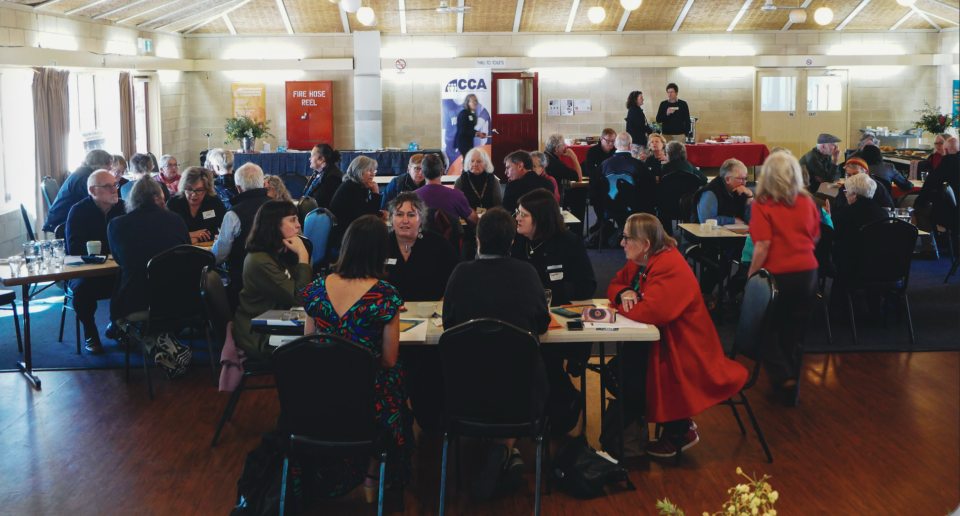
Yesterday, at a meeting just outside Castlemaine in Victoria, 70 people came together to hear…
Posted on 26 Aug 2026
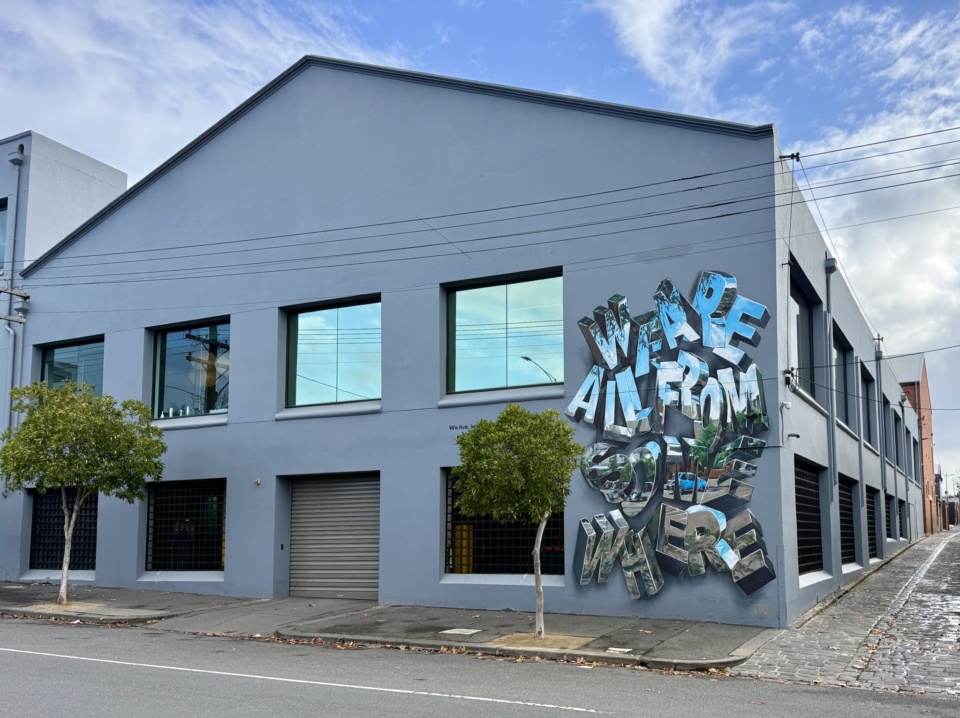
Our Community's founder and leader, Denis Moriarty, says he commissioned a new piece of street art…

Posted on 19 Aug 2026
Government funding is at the centre of Australia's charity and not-for-profit sector – our number…

Posted on 12 Aug 2026
Our Community's founder and leader, Denis Moriarty, says fostering a child was his worst nightmare,…

Posted on 05 Aug 2026
The charity and not-for-profit sector is vital to our economy and the wellbeing of communities…
Posted on 05 Aug 2026
As the Global Impact Summit kicks off in Sydney today, Equitable Philanthropy’s Catherine Brooks…