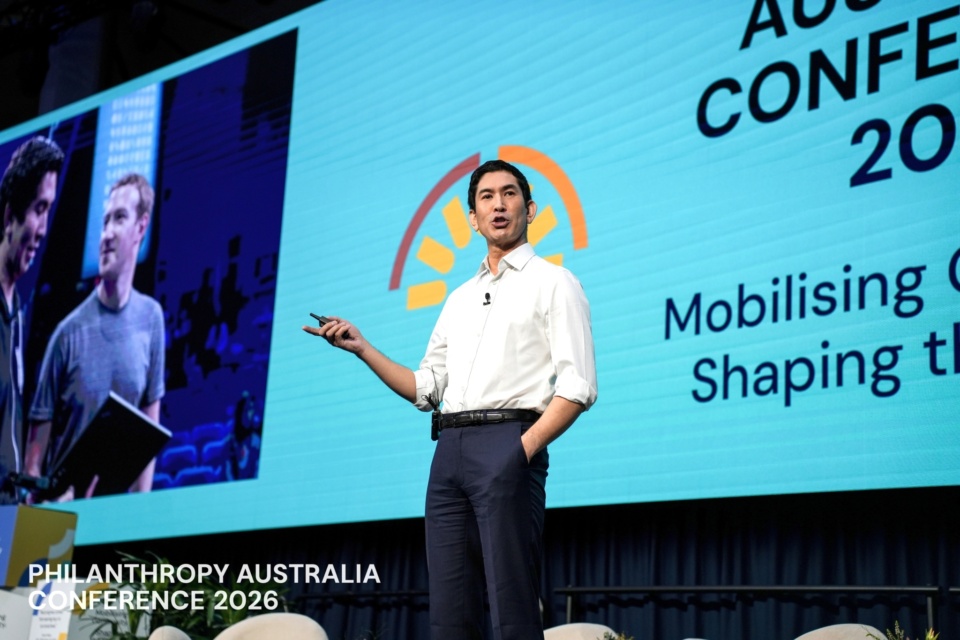
Philanthropists ask: Can we forge a better future?
Posted on 17 Sep 2026
Australia’s biggest gathering of philanthropists, which drew more than 1200 delegates to Brisbane…
Posted on 17 Sep 2026
By Matthew Schulz, journalist, Community Directors
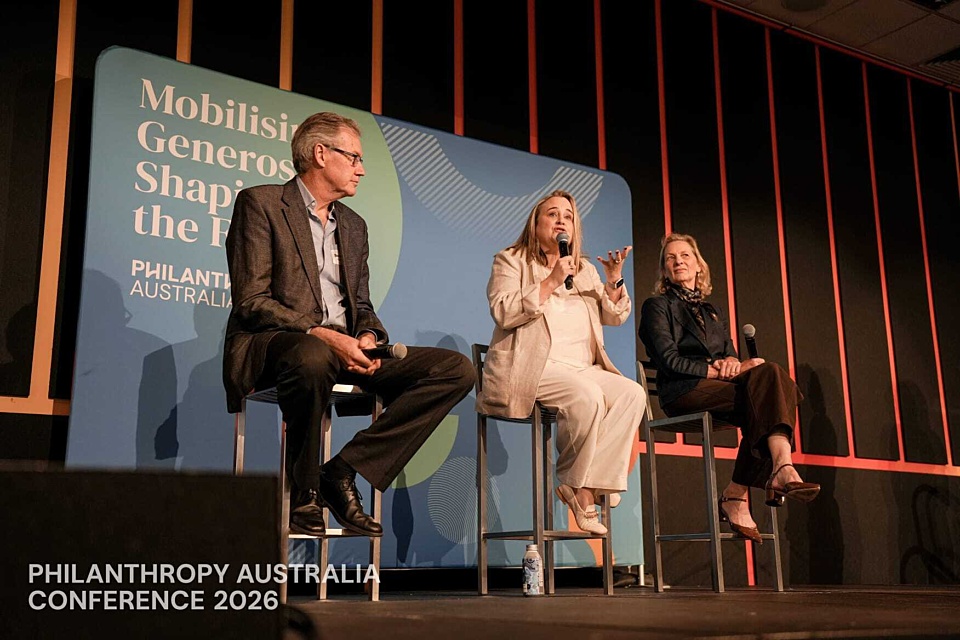
As direct giving dries up, charities face growing dependence on big donors and negotiating the power dynamic that comes with it, Australia’s philanthropy sector chief says.
Fewer Australians are donating to charities, in line with global trends. At the same time, larger scale philanthropic giving through private, corporate and community foundations is growing sharply.
That shift means charities are increasingly reliant on institutional funders who are, in turn, narrowing the list of organisations they support.
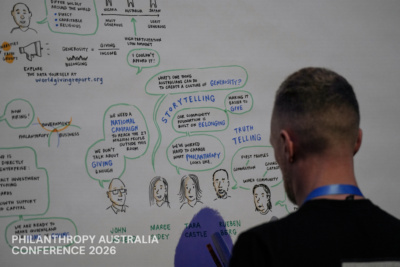
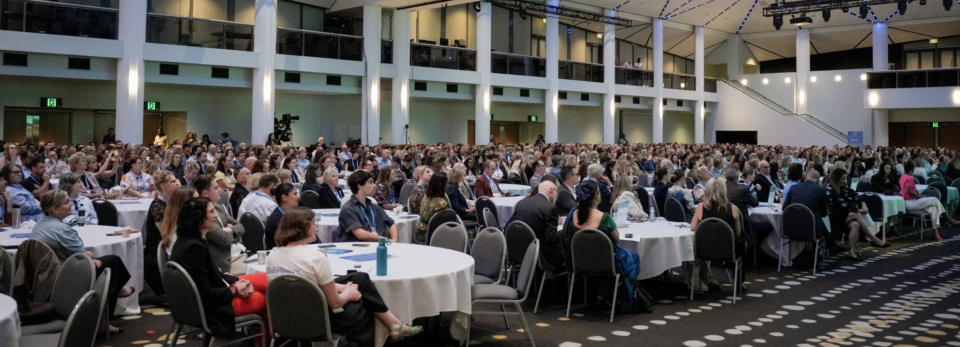
In the wake of the gathering of the nation’s leading philanthropists for Philanthropy Australia’s national three-day conference – which attracted more than 1200 delegates to Brisbane last week – its chief executive, Maree Sidey, says that growing dependence comes with power attached.
"So the giving landscape is changing, and the way not-for-profits relate to philanthropy needs to shift too."
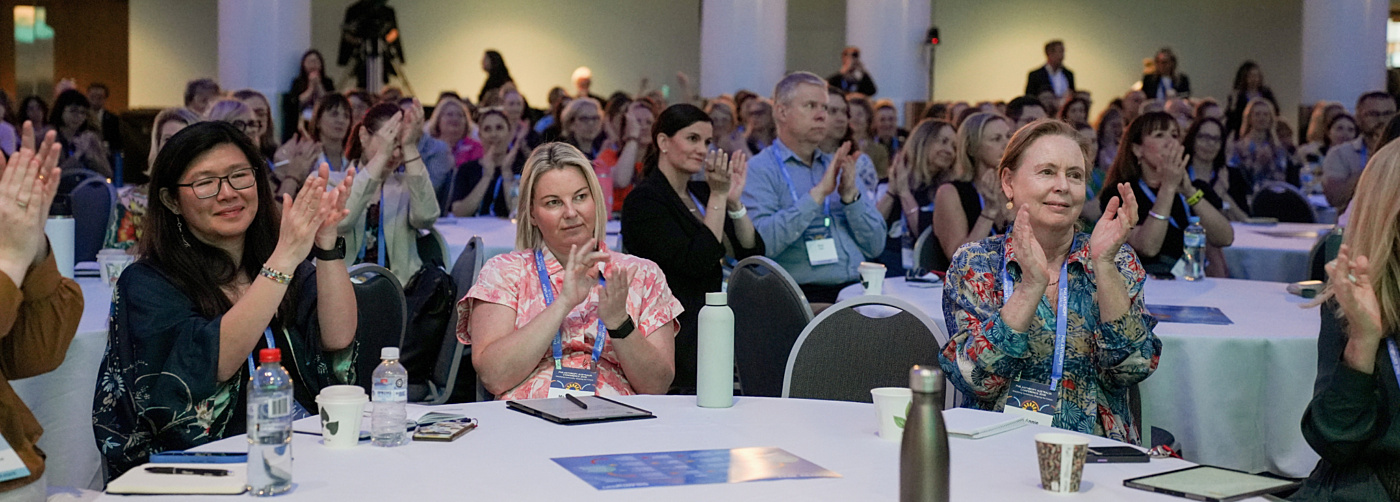
According to the charity regulator, the smaller the charity, the more dependent it is on donations, including structured philanthropic income. The latest count from the Australian Charities Report shows that for organisations earning between $500,000 and $3 million per year, nearly one quarter (23.9%) of funding comes from donations, including structured philanthropic gifts. That rises to nearly 39 per cent for the smallest charities. By comparison, the biggest charities in the country source just over two per cent of their income from donations.
Most Australians associate philanthropy with structured philanthropic giving from wealthy individuals or foundations. At the other end of the giving spectrum are smaller tax-deductible donations by individuals.
That said, the growth of community foundations, collective giving circles and other innovative models such as the Five Bucks movement are breaking down the traditional understanding of what counts as philanthropy.
Sidey said the conference from 8 to 10 September had sought to make Australia a more generous place, and she moderated a plenary of global and local experts who spoke on the topic "The State of Generosity: Global Trends and Local Implications" and dissected findings from the World Giving Report 2026 produced by the UK-based Charities Aid Foundation.
Speaking to Community Directors at a charity forum hosted by the Australian Charities and Not-for-profits Commission (ACNC) ahead of the conference, Sidey said there was no doubt that giving was changing, and that charities needed to adapt.
"We're seeing a steep decline in direct giving, so for those of you who've relied on direct giving from fundraising campaigns – sometimes as a single source of income – that nature of giving is decreasing, and decreasing quite markedly," Sidey said.
She said that simultaneously giving from private, corporate and community foundations was "increasing very markedly", which meant that fundraising teams should work harder to strengthen major-donor institutional funders relationships.
“So the giving landscape is changing, and the way not-for-profits relate to philanthropy needs to shift too. When I talk to not-for-profit leaders, I talk about building donor stewardship and donor relationship skills into fundraising teams, to make sure that's at the core of the fundraising strategy, so they can really take advantage of that changing nature of giving.”
Several recent studies identify the philanthropic shift to fewer donors giving more.
The World Giving Report’s assessment – backed by its local partnership with Philanthropy Australia – found Australians donated an average of 0.8 per cent of their income to charity in 2025, below the global average of one per cent.
Fundraising Institute Australasia (FIA) chief executive Katherine Raskob last year said data from the series showed Australia's generosity ranking had slipped from 8th to 13th globally, and the proportion of Australians donating to charity also fell from 59 per cent to 56 per cent.
And in its most recent State of the Sector Report, the Australian Council for International Development (ACFID) – the peak for international aid charities – found donations to member organisations had slid about 20 per cent since 2015.
Earlier this year, Community Directors reported analysis by The Benchmarking Project, which tracked fundraising data from more than 55 major Australian and New Zealand charities, found single-gift donor recruitment had dropped 27 per cent over five years.
Despite the fall in donations, total giving had held up overall, Raskob said, because "the people giving are giving more".
Sidey argues that as charities lean more heavily on a smaller pool of larger funders, the sector needs to be upfront about what comes with the money.
"I think it's really important, when we talk about philanthropy, to acknowledge right at the top that it's about a transaction around dollars," she said. "That also means you need to think about where power sits in that transaction. We don't often name power – we don't often talk about the power imbalance when money's involved."
That framing echoes Philanthropy Australia's own strategic positioning. Strategy 2033, the organisation's plan published recently to mark the 50th anniversary, acknowledges "the material wealth, privilege and power that philanthropy holds", and frames the sector's growing maturity around the accountability considerations: what to give and how, "who decides and who benefits", and who is accountable for the outcomes.
Sidey says that the power imbalance can lead to a funder relationship reshaping a charity's mission, and that can be a problem.
"If the values alignment isn't there, if you feel like you're having to contort your own mission, that's a really big red flag that the dollars on the table aren't worth it," she said. "If it's not working, walk away, particularly in a relationship with a funder."
But asked how boards should weigh that advice against budget pressure, Sidey was pragmatic: "It's the $50 million question, isn't it? About how you think about sustainability and then also make sure that you're in dialogue with dollars that are going to enable your organisation to thrive.”
“I'm not suggesting that we are all in a luxurious position of being able to walk away from ten thousand dollars, my organisation included. However … if we find ourselves in a situation where we're spending too much time trying to do the heavy lifting in making the relationship work, or taking us off mission, that's a really important red flag for boards to be thinking about. Sometimes, it's just not worth it, particularly in the not-for-profit space.”
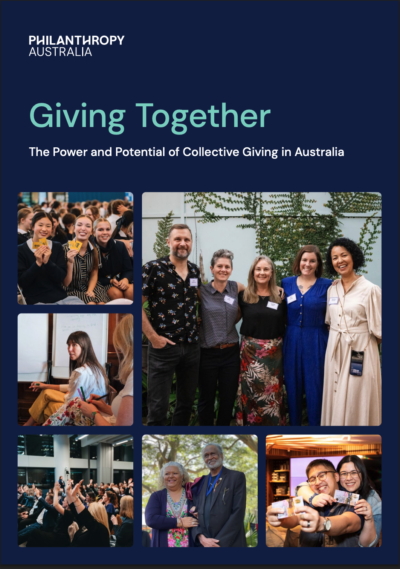
Sidey pointed to growth in collective giving as one way that charities could diversify away from dependence on any single funder, citing a new national report from Philanthropy Australia showing about 11,000 people are now connected to a collective giving group, across roughly 5,500 groups nationally.
She said Philanthropy Australia also backed the government’s bid to double philanthropy by 2030 and the biggest action that could be taken was a reform of the DGR (deductible gift recipient) system, which determines which organisations can offer tax-deductible donations.
That reform was the organisation's top priority following five separate reports over 20 years had recommended it, most recently a detailed study by the Productivity Commission.
She said recent DGR changes had shown what was possible. With reforms benefiting community foundations, that had "unlocked a huge amount of capital" able to flow from private philanthropy into public ancillary funds and community foundations.
But broader reform was still needed, she said, and Philanthropy Australia continued to press government, including Charities Minister Andrew Leigh, for further commitments.
Posted on 17 Sep 2026
Australia’s biggest gathering of philanthropists, which drew more than 1200 delegates to Brisbane…
Posted on 17 Sep 2026
Experts in Australian philanthropy say there are stark differences between philanthropic money and…

Posted on 17 Sep 2026
One of Australia’s foremost fundraising observers says Australian not-for-profits must get the…

Posted on 17 Sep 2026
Charities reported $14.8 billion in donations and bequests last financial year, the second-highest…

Posted on 17 Sep 2026
My father often googles my name, and as a result, years ago, I received a surprising gift in the…
Posted on 17 Sep 2026
Where Evelyn Mugisha grew up in rural Uganda, the subjects and careers considered suitable for…
Posted on 09 Sep 2026
A global gathering of philanthropists in Brisbane this week is aiming to tackle society’s biggest…
Posted on 09 Sep 2026
Media attention about women's philanthropy has more than doubled in three years, according to new…
Posted on 26 Aug 2026
Sector leader Violet Roumeliotis has called on funders to stop treating not-for-profit…

Posted on 13 Aug 2026
As a teenager, I attended summer camp for seven years, first spending two weeks at a time camping…

Posted on 13 Aug 2026
Not-for-profits are full of people with great ideas, but that doesn’t mean they are set up for…
Posted on 13 Aug 2026
Charities Minister Andrew Leigh – a former professor of economics at the Australian National…